
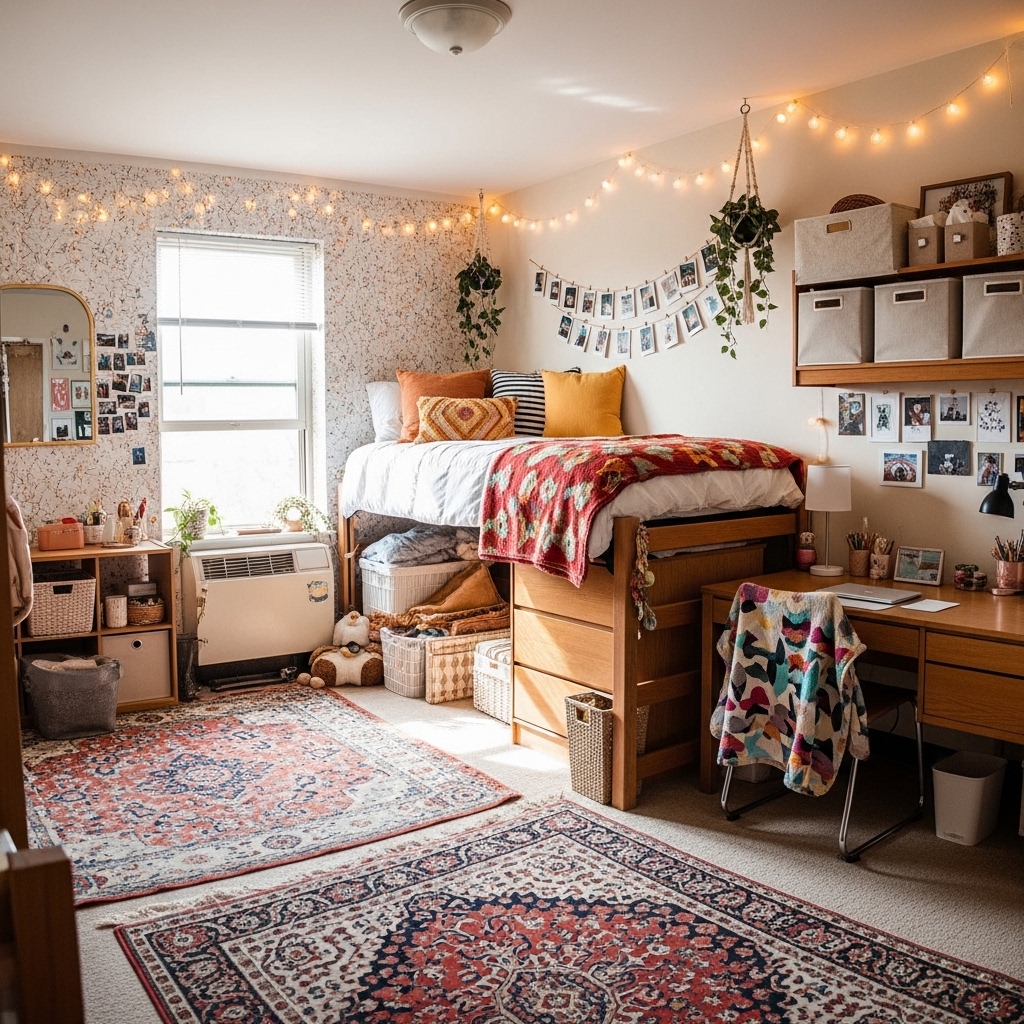
You stare at those beige walls and wonder how anyone expects you to thrive in what looks like a budget hotel from 1987. Your dorm room doesn’t have to scream “institutional sadness” – it can actually feel like home with some clever tricks and zero construction skills required. Whether you’re working with a shoebox-sized single or splitting a double with a roommate who collects vintage traffic cones, you can create a space that makes you want to hang out instead of hide out. These ideas work for any budget, any style, and any level of decorating experience (yes, even if you once hot-glued your fingers together).
1. Layer Rugs Like Your Floor Deserves Better Than Linoleum
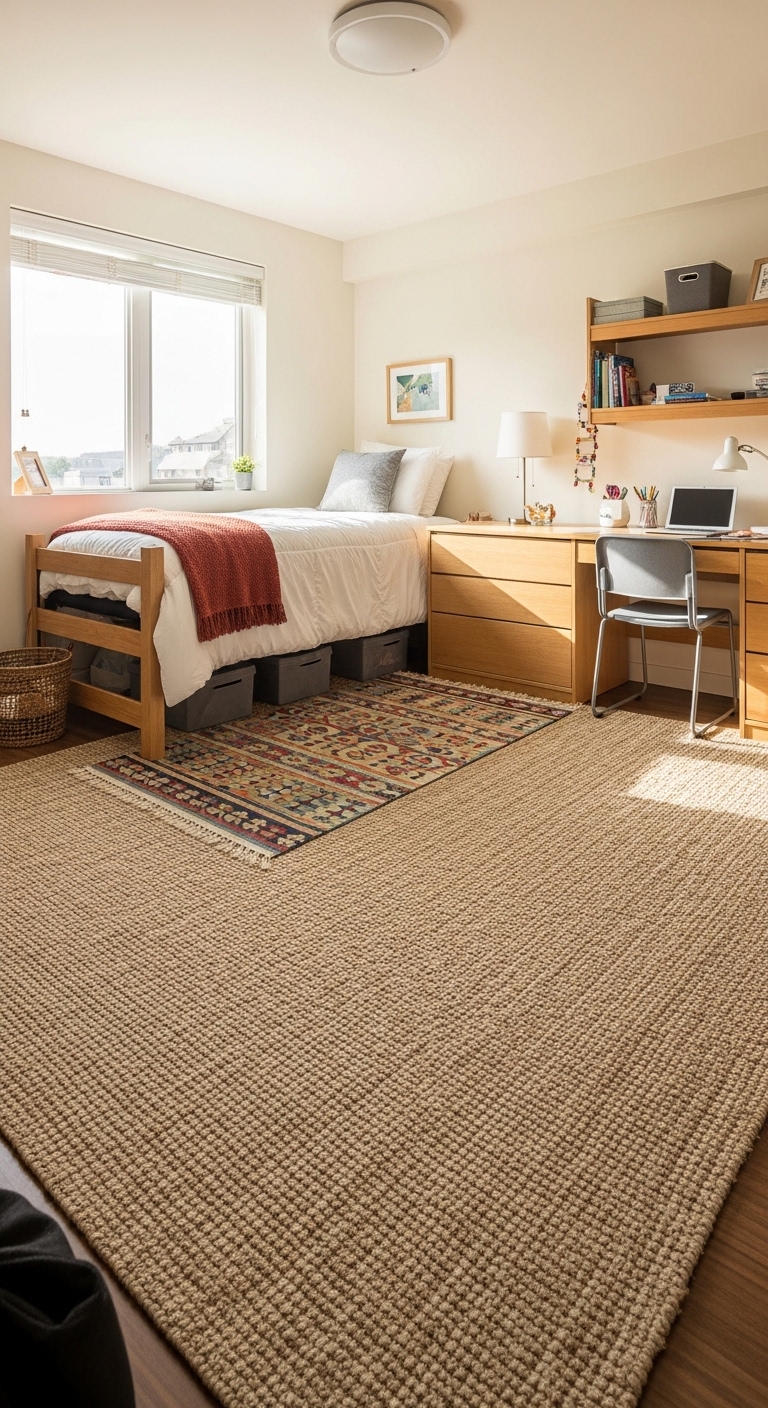
Start with function, then add flair: You grab an inexpensive utility rug first – something washable that covers the worst of that mystery-stained floor. Then you layer a smaller, prettier rug on top where you’ll actually see it daily, like beside your bed or under your desk chair. This combo gives you warmth underfoot and visual interest without committing your entire budget to floor coverage. You can swap the top rug seasonally or when you get bored, keeping the practical base layer in place. Mix textures for dimension: Your base rug might sport a simple jute or sisal weave, while your accent rug brings in a bold pattern or plush shag texture. The contrast creates depth and makes your floor look intentionally designed rather than accidentally covered. You avoid matching them too perfectly – that’s what makes layering work instead of looking like you bought a rug set from a catalog.
READ MORE: 21 Genius Shoe Storage Ideas for Every Home
2. Command Hooks Become Your New Best Friends
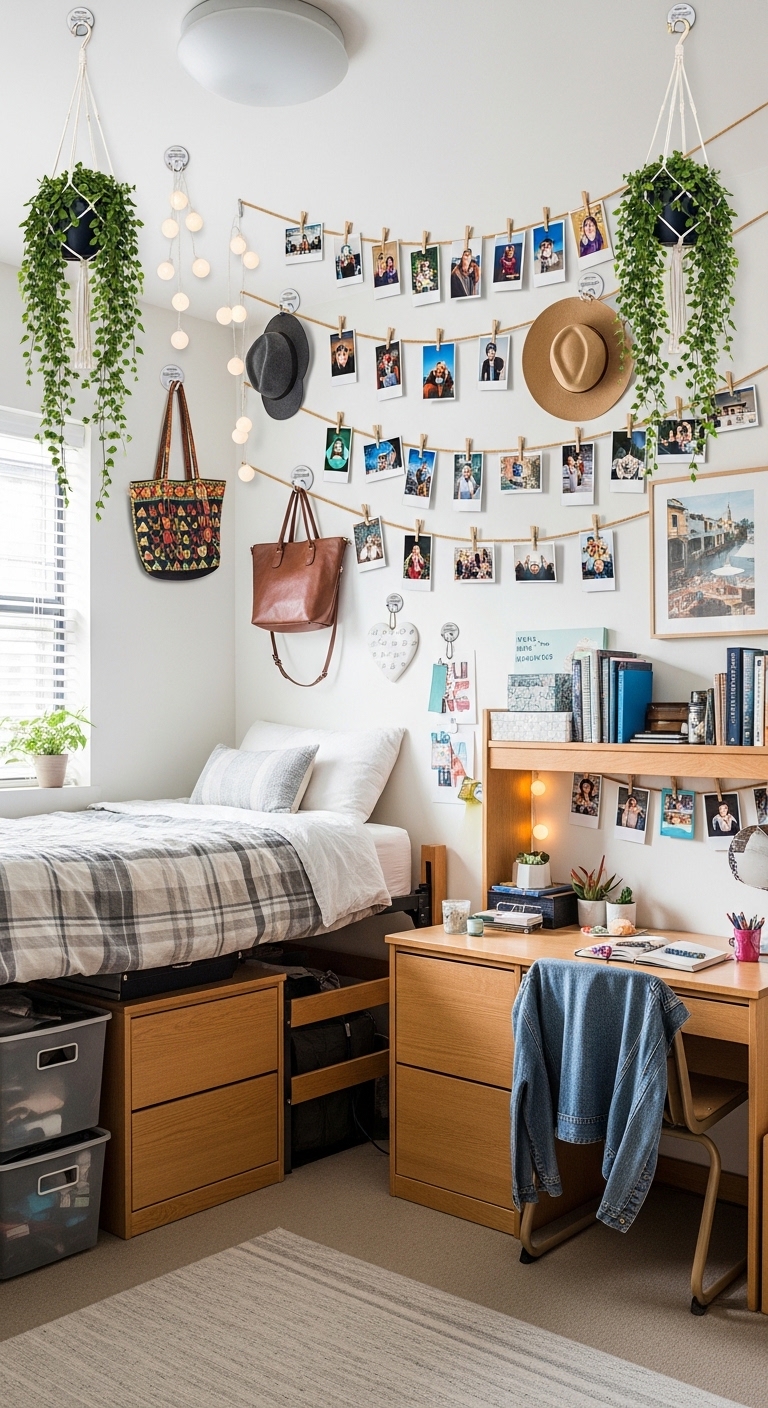
Hang everything vertically: You stick these magic adhesive hooks on every available wall surface to maximize your vertical real estate. Bags, hats, jewelry, string lights, plants, calendars – if it can dangle, it goes on a hook instead of cluttering your limited surfaces. You create instant organization without nails, screws, or losing your security deposit. The variety of sizes and weight limits means you can customize your hanging situation for everything from delicate necklaces to your heaviest winter coat. Create a gallery wall without frames: You clip photos, postcards, concert tickets, and art prints to twine or wire strung between command hooks. This gives you a rotating display that changes with your mood and doesn’t require measuring or leveling picture frames. You swap items in and out throughout the semester, keeping your walls fresh without redecorating from scratch.
READ MORE: 21 Clever Garage Storage Ideas for Small Spaces
3. Bed Risers Unlock Secret Storage Territory
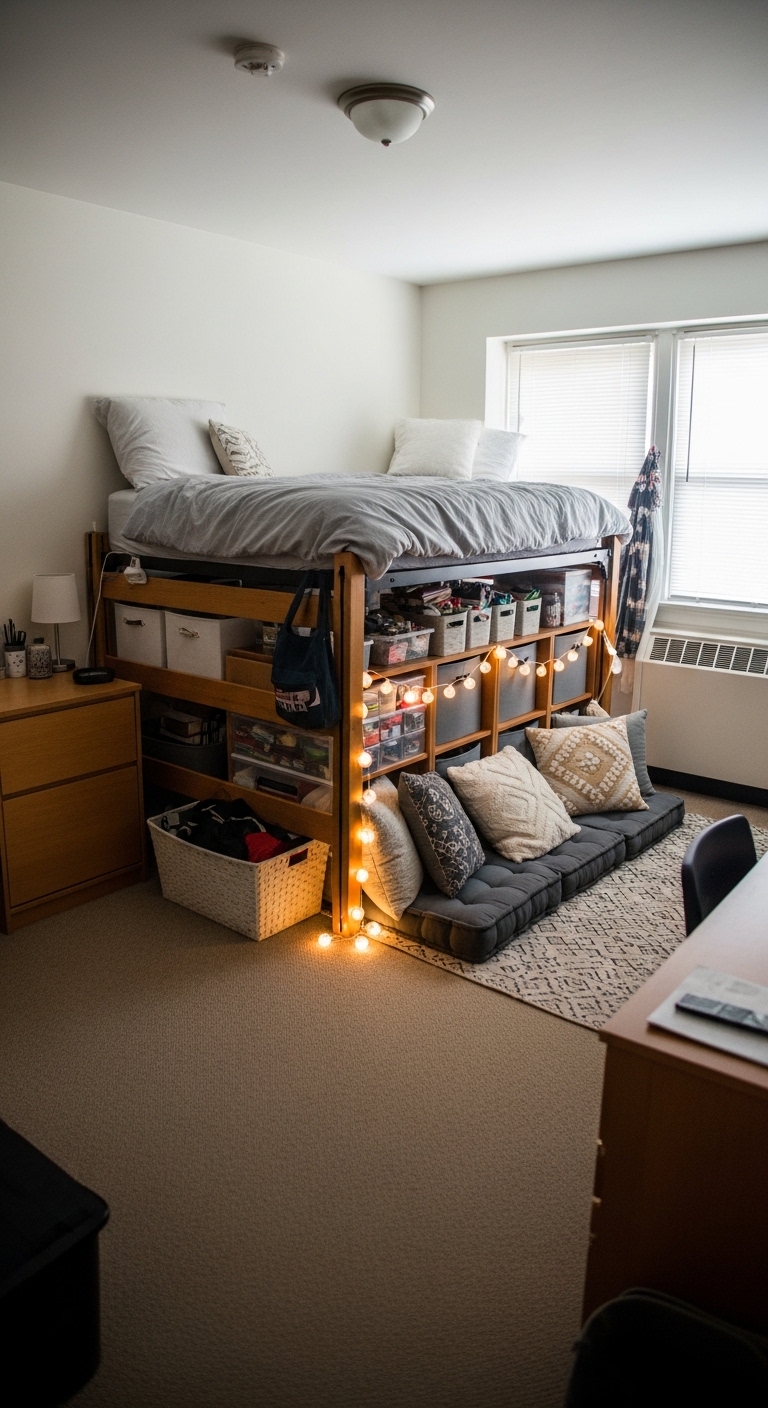
Lift your bed sky-high: You install risers under each bedpost to create an entire storage zone underneath your mattress. This newfound cavern fits rolling storage bins, a mini fridge, extra shoes, or seasonal clothing you don’t need daily. You gain possibly the most valuable commodity in a dorm room – floor space – by moving stuff vertically. The extra height also makes your bed feel more substantial and less like you’re sleeping on the floor. Turn it into a reading nook: You string fairy lights under the raised bed and toss some floor cushions underneath to create a cozy hideaway. This spot becomes perfect for studying when your roommate has friends over, or just existing somewhere that feels separate from the rest of your tiny room. You essentially create two functional zones from one piece of furniture.
READ MORE: 21 Stunning Thanksgiving decor ideas for your home 2026
4. Tension Rods Solve Problems You Didn’t Know You Had
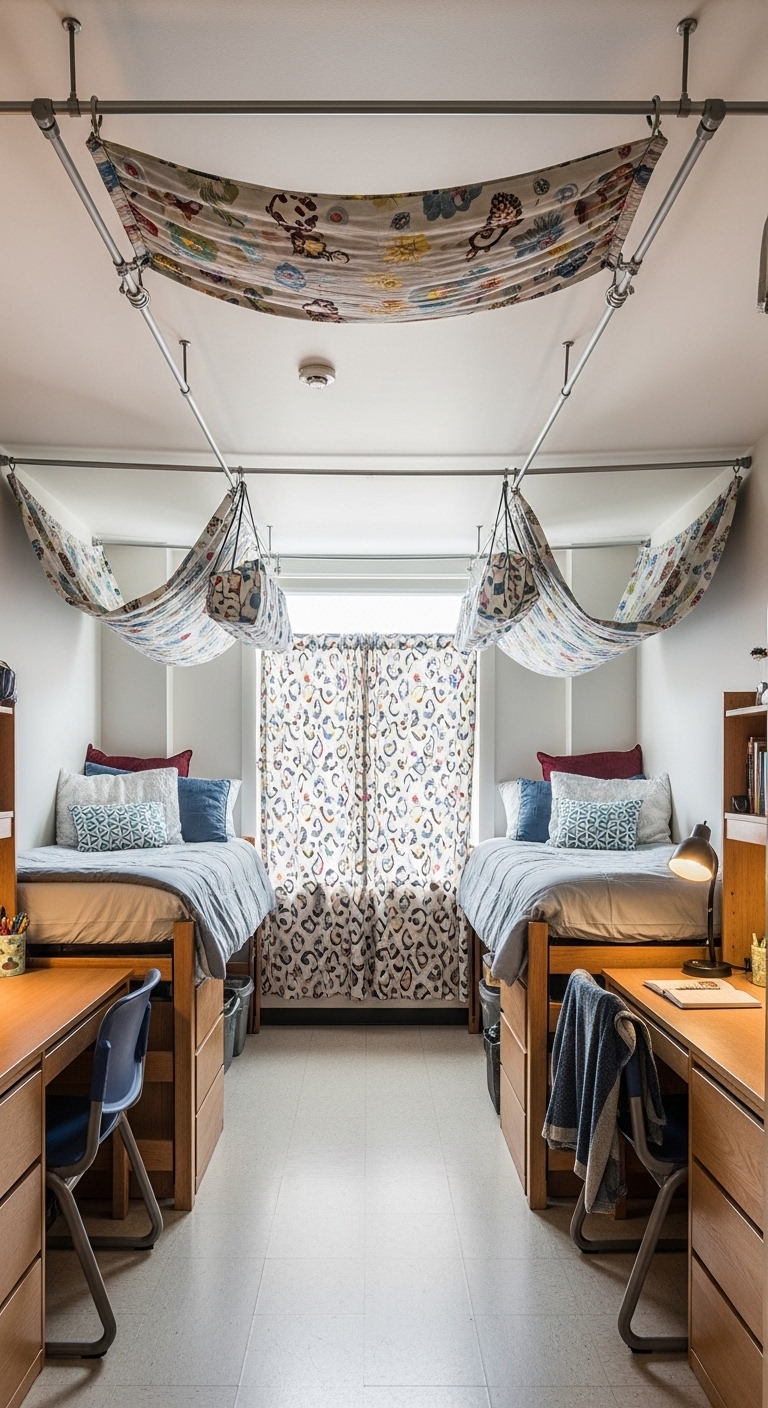
Divide and conquer shared spaces: You install a tension rod across part of your room and hang a curtain to create instant privacy from your roommate. This works especially well if one of you is a night owl and the other crashes at nine – the curtain blocks light and creates a psychological boundary. You remove it in seconds when you want the room to feel open again. The same concept works inside closets to double your hanging space or create a separate shoe rack level. Build a headboard from fabric: You mount a tension rod horizontally above your bed and drape tapestry, fabric, or a cool sheet over it. You create the illusion of a headboard without tools, permanent fixtures, or spending money on actual furniture. The fabric adds color, texture, and personality while hiding that sad dorm wall behind it.
READ MORE: 21 Blanket Storage Ideas That’ll Save Your Sanity
5. Clip Lights Banish Overhead Fluorescent Sadness
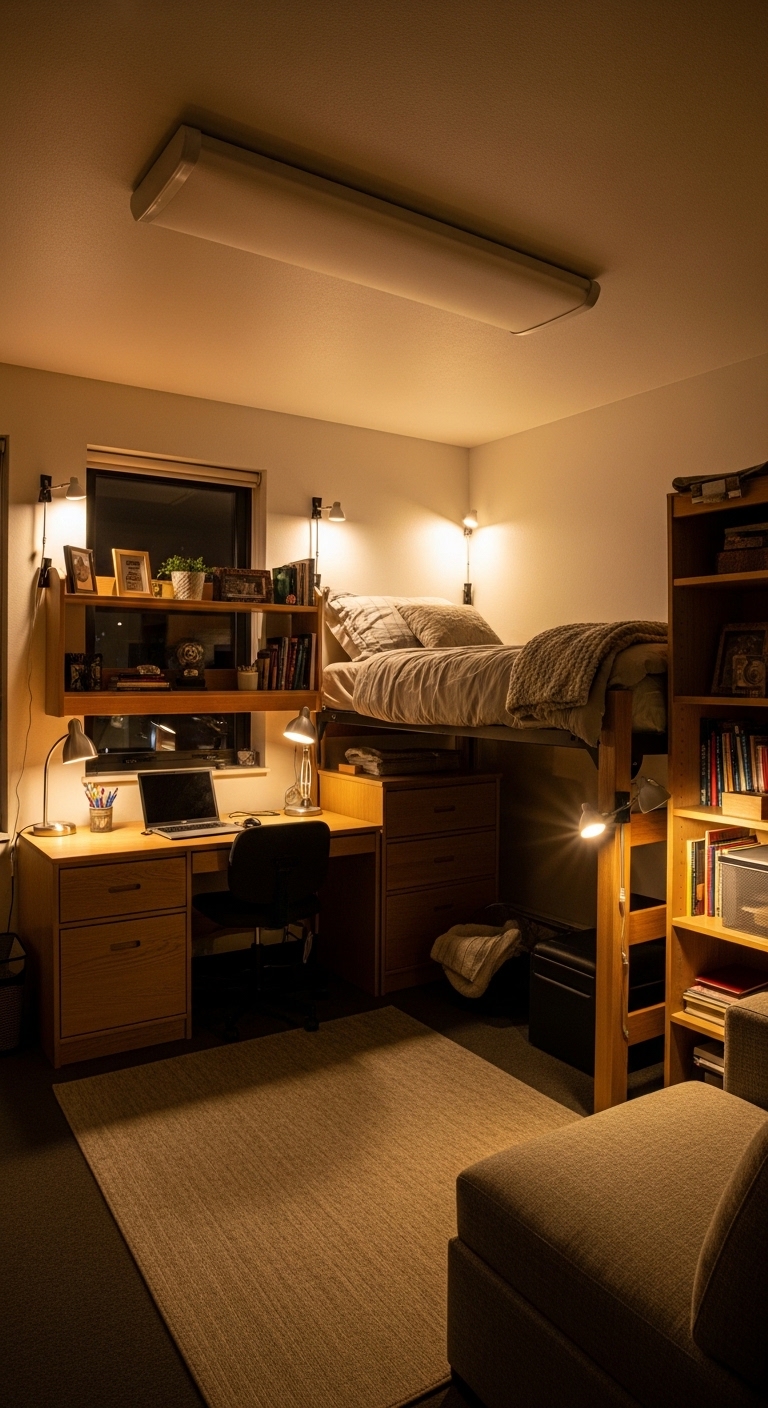
Create ambient lighting zones: You clamp adjustable clip lights onto shelves, headboards, and desk edges instead of relying on that horrible ceiling light that makes everyone look sick. These portable fixtures let you direct light exactly where you need it – over your keyboard for late-night essay writing, toward the wall for mood lighting, or illuminating your closet’s dark depths. You control the vibe of your entire room with strategic light placement and bulb choices. Switch to warm bulbs immediately: You replace any standard bulbs with warm white or soft white options because cool-toned light makes dorm rooms feel like interrogation chambers. The warmer glow transforms your space from institutional to inviting. You can even grab color-changing smart bulbs if you want to get fancy and match your lighting to your mood or study needs.
READ MORE: 12 Fun Sleepover Ideas for Teenagers They’ll Actually Love 2026
6. Pegboards Turn Walls Into Functional Art
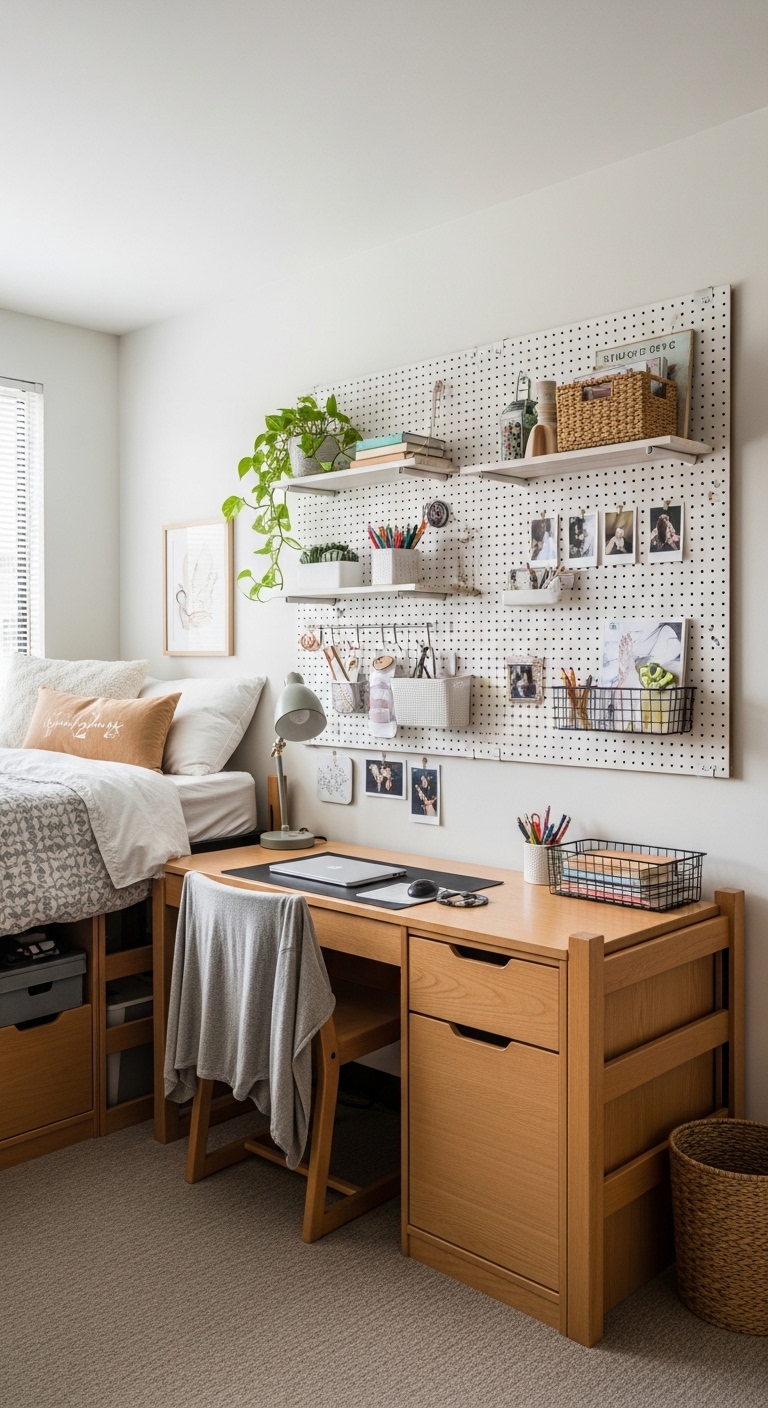
Organize your chaos visibly: You mount a pegboard section above your desk and outfit it with hooks, baskets, and shelves that hold supplies, plants, photos, and whatever else you reach for constantly. Everything stays visible and accessible instead of buried in drawers where you’ll forget it exists. You rearrange the configuration whenever your needs change, making it endlessly adaptable. The pegboard itself becomes a design element – you can paint it, leave it natural, or choose colored options that complement your room. Display collections intentionally: You use pegboard to showcase things you actually want to see – your mug collection, vinyl records, hats, or small plants. This beats shoving meaningful items in a closet because you lack display space. You create an ever-changing installation that reflects your personality and makes your room feel curated rather than cluttered.
7. Folding Furniture Gives You Options
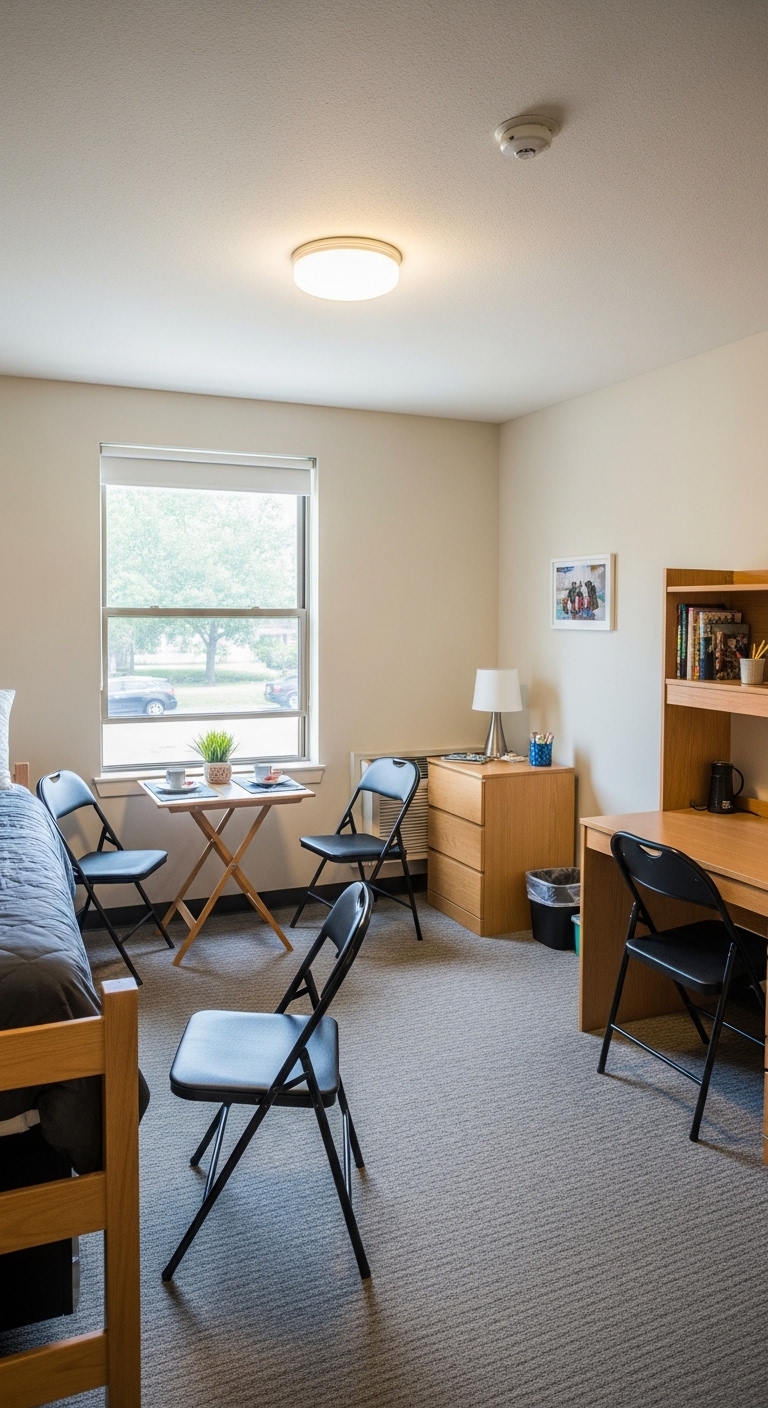
Invest in pieces with multiple lives: You bring a folding chair or two that collapse flat and slide under your bed when you don’t need extra seating. When friends visit, you pull them out in seconds instead of making people sit on the floor like cave dwellers. You maintain floor space most of the time while having entertaining capabilities when necessary. The same goes for folding tables that expand your desk surface for projects then disappear afterward. Create a breakfast nook: You set up a small folding table and chairs near your window for coffee and studying when you can’t face the dining hall. This gives you a dedicated eating space that isn’t your bed or desk – revolutionary, honestly. You fold it away when you need the room for other activities, maintaining flexibility in your limited square footage.
8. Magnetic Boards Replace Bulletin Boards
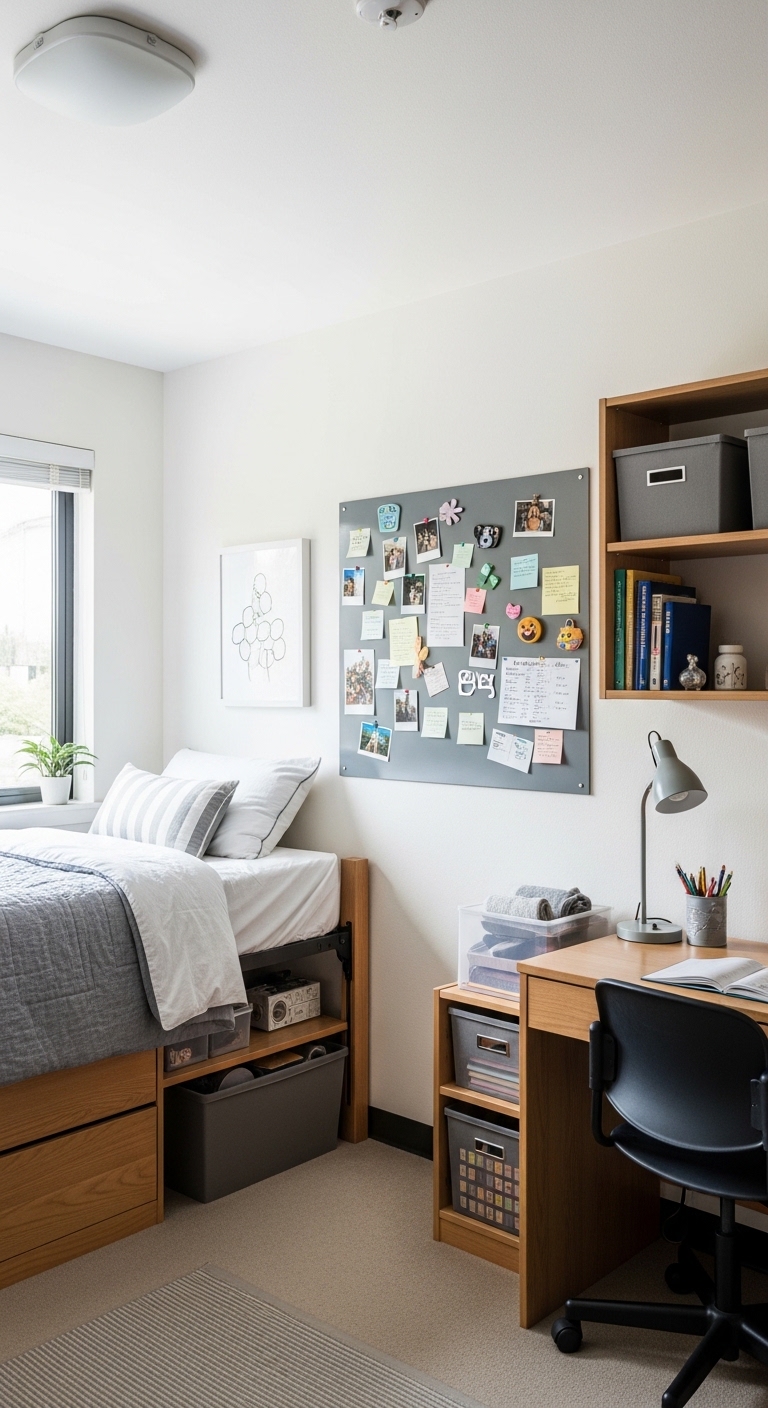
Stick things without stabbing holes: You hang a magnetic board or buy magnetic paint for a section of wall where you can attach notes, photos, and reminders with magnets instead of pushpins. This looks cleaner and more intentional than a traditional cork board covered in random holes. You swap items easily and don’t accidentally knock everything off when you brush past it. Magnetic strips also work inside metal closet doors for bonus organization space. Build a rotating inspiration wall: You use magnets to create a mood board that changes with your interests – fitness goals one month, travel plans the next, study motivation after that. The magnetic surface lets you rearrange and refresh your visual inspiration without commitment. You avoid the sad look of old photos and outdated reminders that plague traditional bulletin boards.
9. Ottoman Storage Hides Clutter in Plain Sight
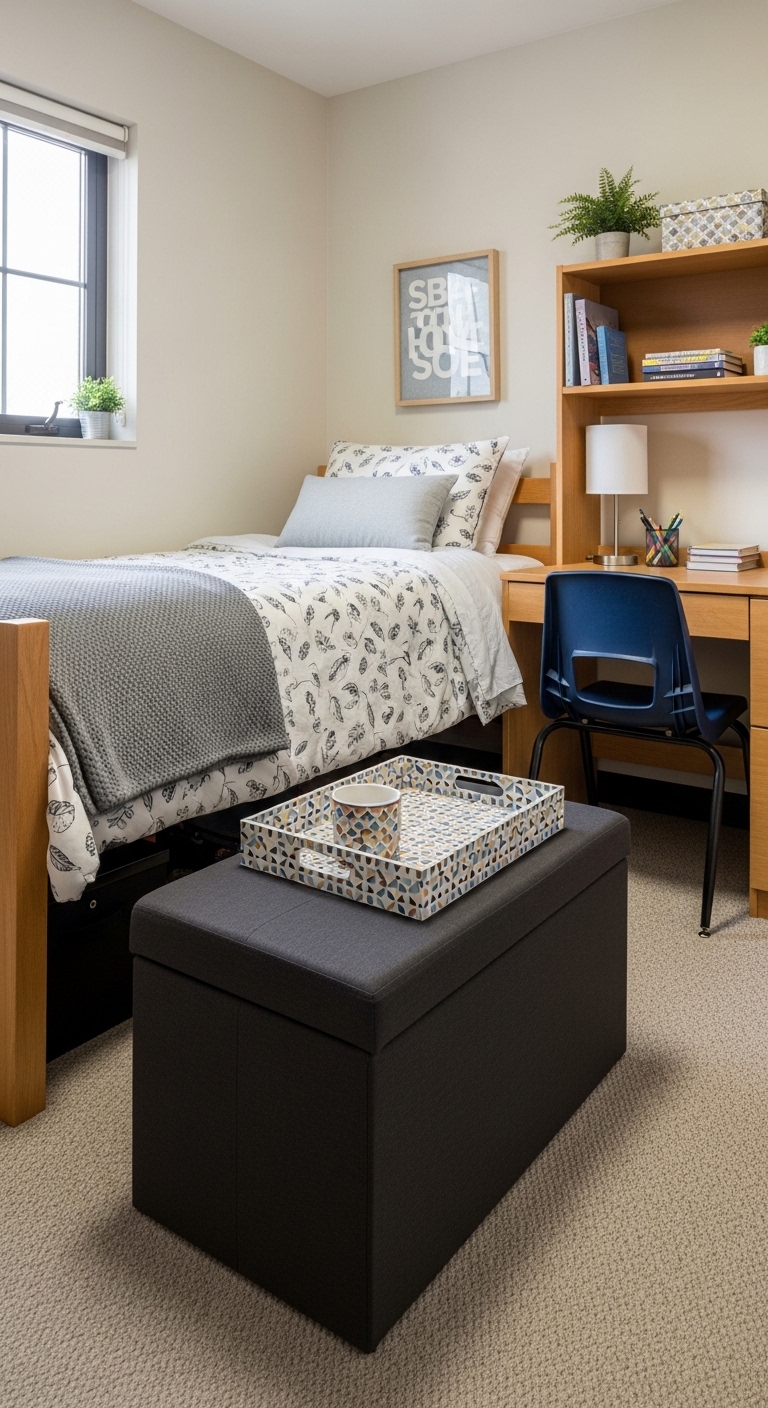
Sit on your storage: You grab a storage ottoman that serves as seating, a footrest, and a place to stash blankets, books, or random stuff you don’t know where else to put. This dual-purpose furniture maximizes function per square foot, which matters tremendously in a dorm. You can pull it up to your desk as a chair alternative or move it around as needed. Many fold flat for easy transport during moves. Create an impromptu coffee table: You top your ottoman with a tray and suddenly have a surface for drinks, snacks, or laptop work while you lounge on your bed. The tray lifts off when you need the ottoman for sitting or digging through its contents. You add functionality without bringing in another piece of furniture that eats up precious floor space.
10. Removable Wallpaper Covers Institutional Beige
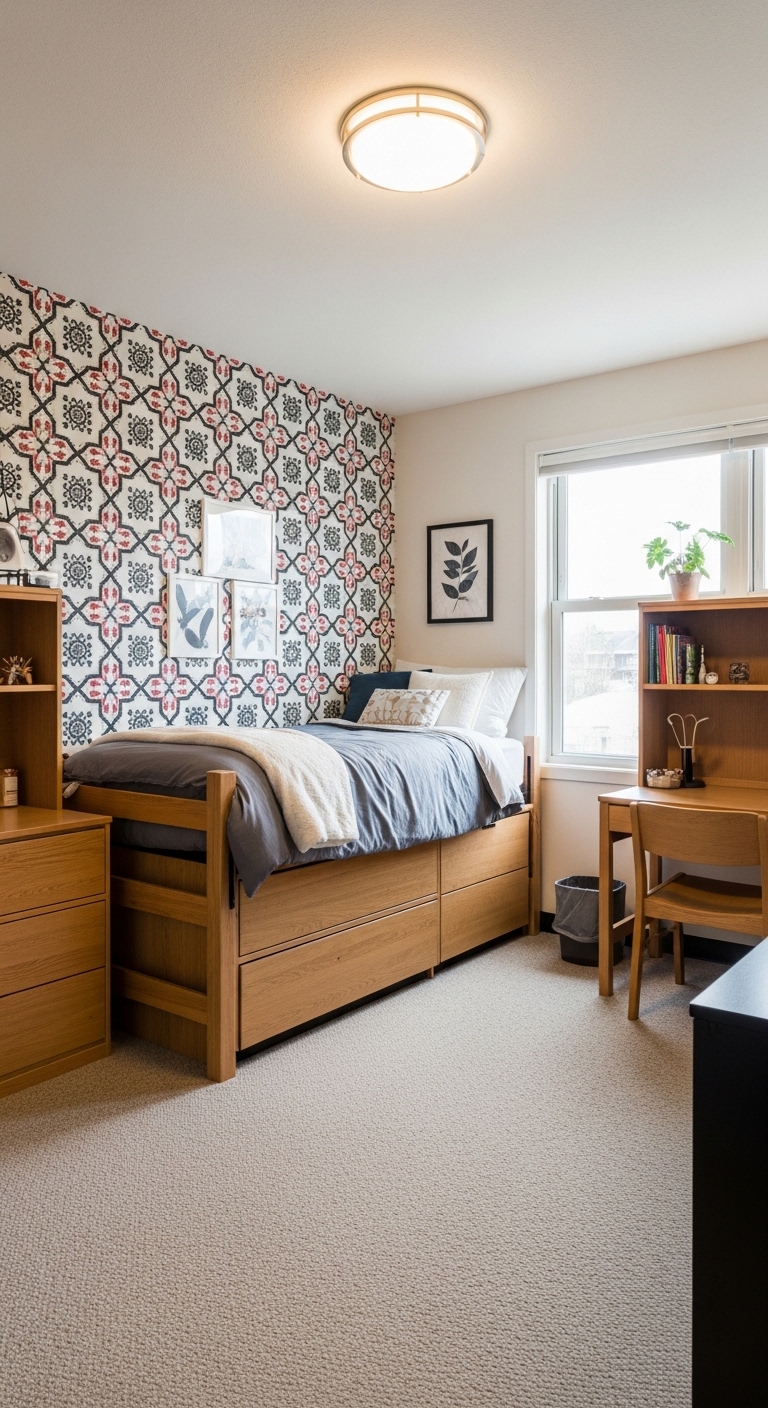
Apply temporary personality: You paper one accent wall or section with peel-and-stick wallpaper that transforms your space without violating housing rules. The process takes maybe an hour and reverses completely when you move out, leaving zero evidence behind. You choose from thousands of patterns – geometric, floral, textured, whatever matches your vibe. This single change makes the biggest visual impact of almost anything on this list. Line boring furniture: You apply wallpaper to the back of your basic bookshelf or inside your closet doors for surprise pops of pattern. These hidden touches make even mundane storage feel special and intentional. You use up leftover scraps from larger projects instead of tossing them, maximizing your wallpaper investment.
11. Shower Caddies Organize More Than Bathrooms
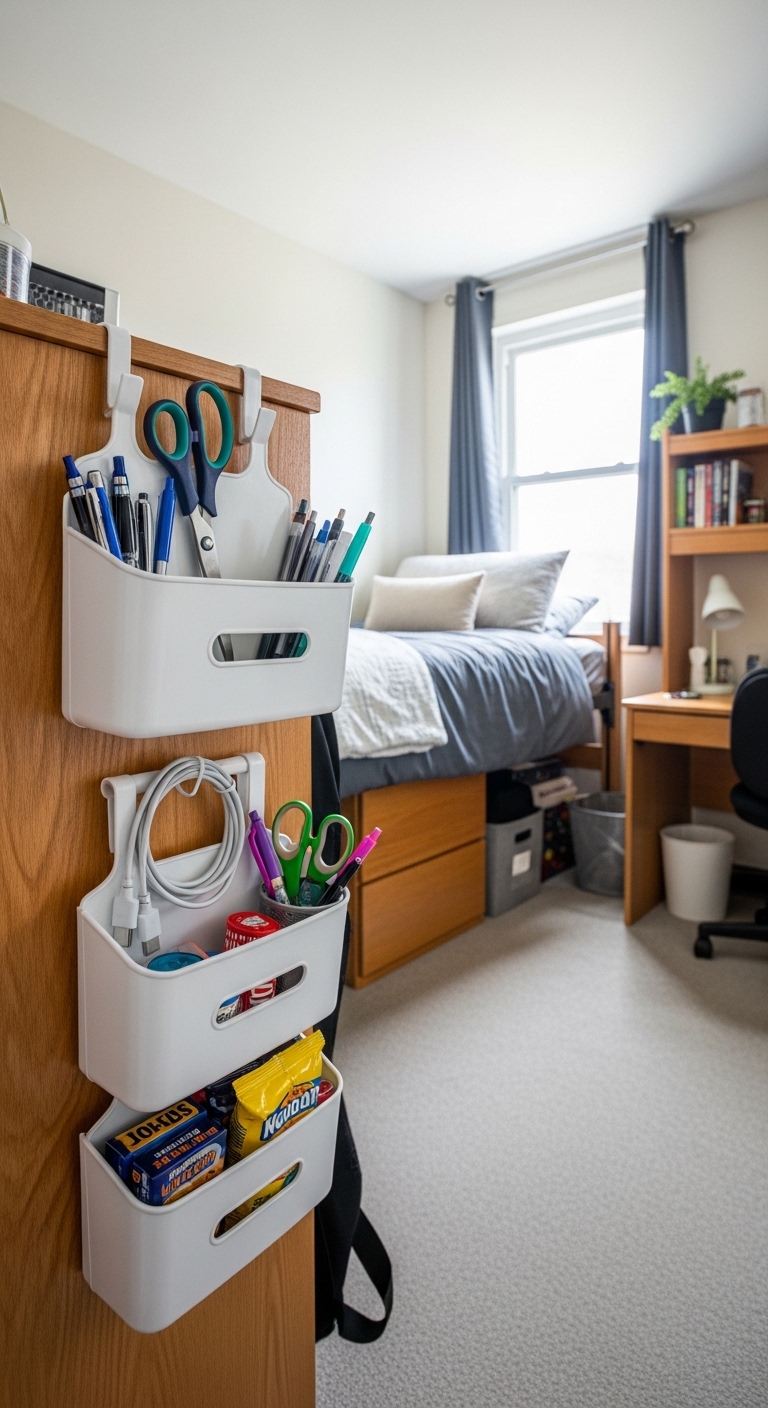
Repurpose for desk supplies: You hang a shower caddy on the side of your desk or bookshelf to hold pens, scissors, chargers, and other small items that usually create desk chaos. The divided compartments keep everything separated and visible. You grab what you need without digging through drawers or pencil cups where things hide at the bottom. The caddy’s portability means you can move your supply station wherever you’re working. Create a snack station: You dedicate a shower caddy to your favorite munchies, keeping them contained and off your desk surface. The drainage holes even work for crumbs (though you should probably still clean it). You transport the whole thing to study sessions or movie nights in friends’ rooms without making twelve trips.
12. Tension Shelves Maximize Weird Corners
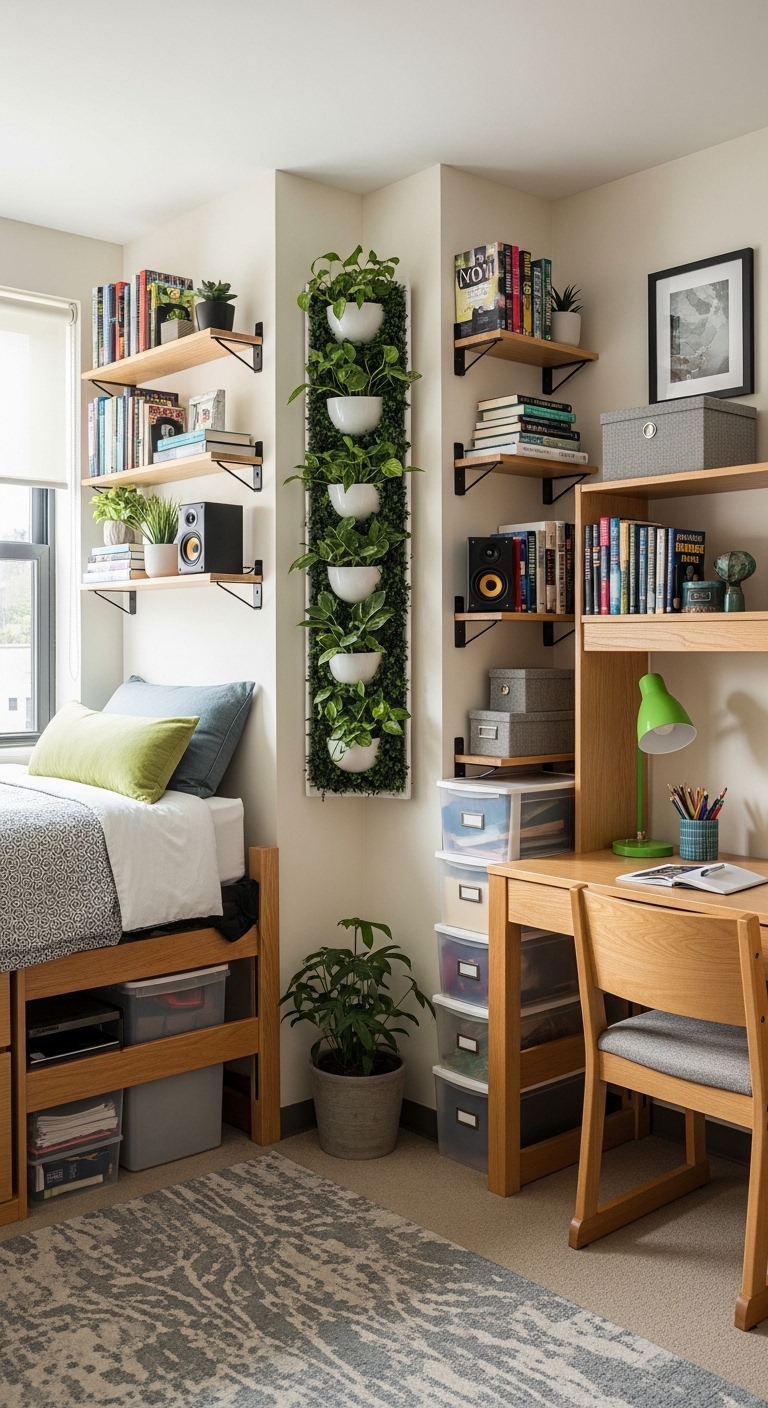
Use every inch vertically: You install adjustable tension shelves in corners, alcoves, or that awkward space between furniture pieces. These require zero drilling and hold books, plants, speakers, or decorative items that would otherwise lack a home. You customize the shelf spacing for your tallest items or create uniform rows – whatever works. The tension mechanism means you move them whenever your needs change. Build a plant tower: You stack tension shelves at varying heights specifically for your plant collection, creating a living wall that purifies your air and looks intentional. Each shelf gets adequate light exposure, and you water them easily without moving furniture. You rotate plants between shelves as they grow or change seasonally.
13. Drawer Organizers Tame the Dresser Chaos
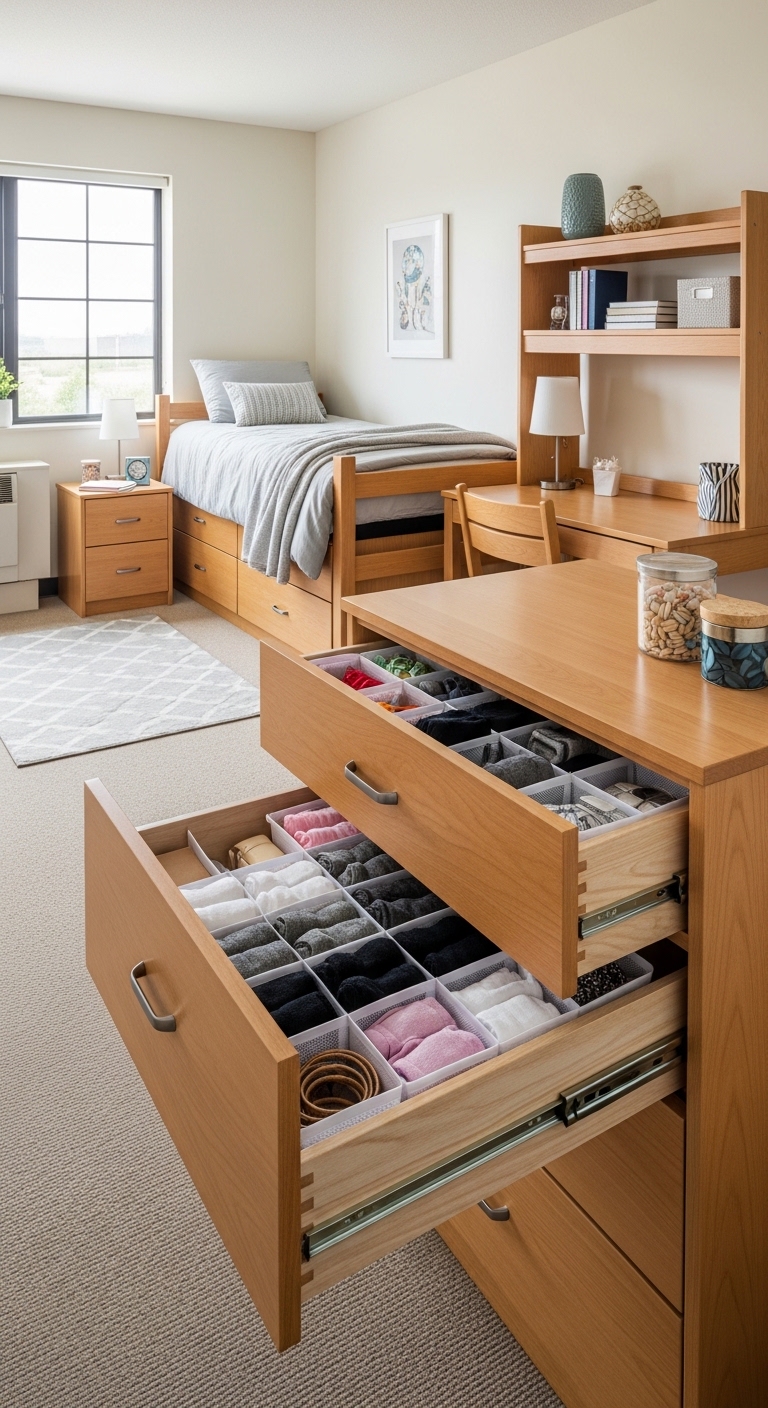
Divide and actually conquer: You fill your dresser drawers with organizers that create compartments for socks, underwear, accessories, and other small items that typically turn into tangled messes. You stop wasting five minutes every morning searching for matching socks in a drawer that looks like a tornado hit it. These bins or dividers maintain order even when you’re rushing and just toss items vaguely toward their designated zones. Repurpose kitchen organizers: You use utensil trays, spice racks, or even ice cube trays for jewelry, hair accessories, or desk supplies. These cost less than “official” organizers and work identically. You find creative solutions in unexpected aisles rather than paying premium prices for storage items marketed specifically to dorm dwellers.
14. String Lights Set the Mood Without Overhead Harshness
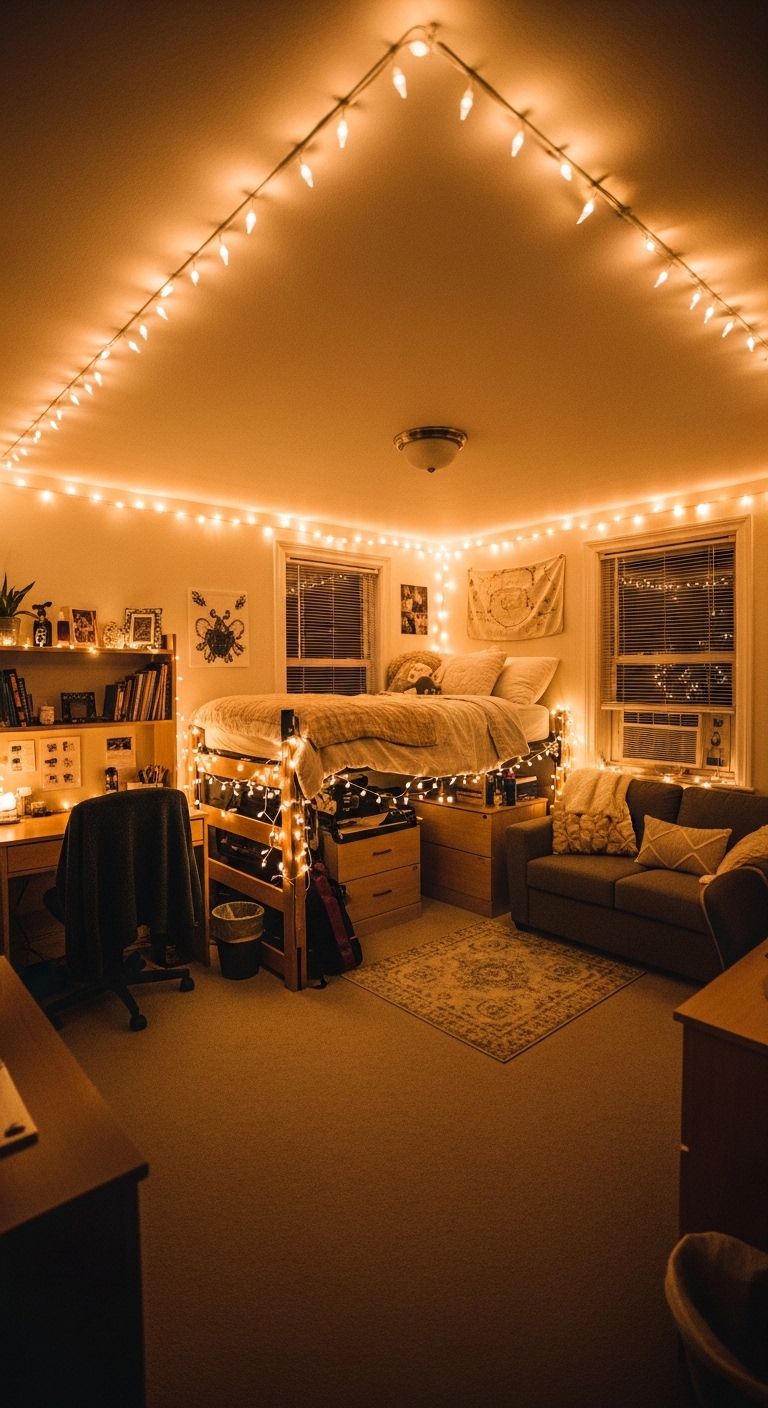
Outline your territory: You line string lights around your bed frame, along shelving, or across the ceiling perimeter to create warm ambient lighting that makes studying or relaxing actually pleasant. The soft glow replaces harsh overhead fluorescents and instantly makes any room feel cozier. You choose from classic white, color-changing options, or shaped bulbs that match your aesthetic. Create light curtains: You hang multiple strands of lights vertically from command hooks to build a glowing room divider or window treatment. This adds magical ambiance while serving a practical purpose – separating spaces or adding privacy. You unplug them during the day if you want natural light or leave them up for continuous atmosphere.
15. Rolling Carts Provide Mobile Storage
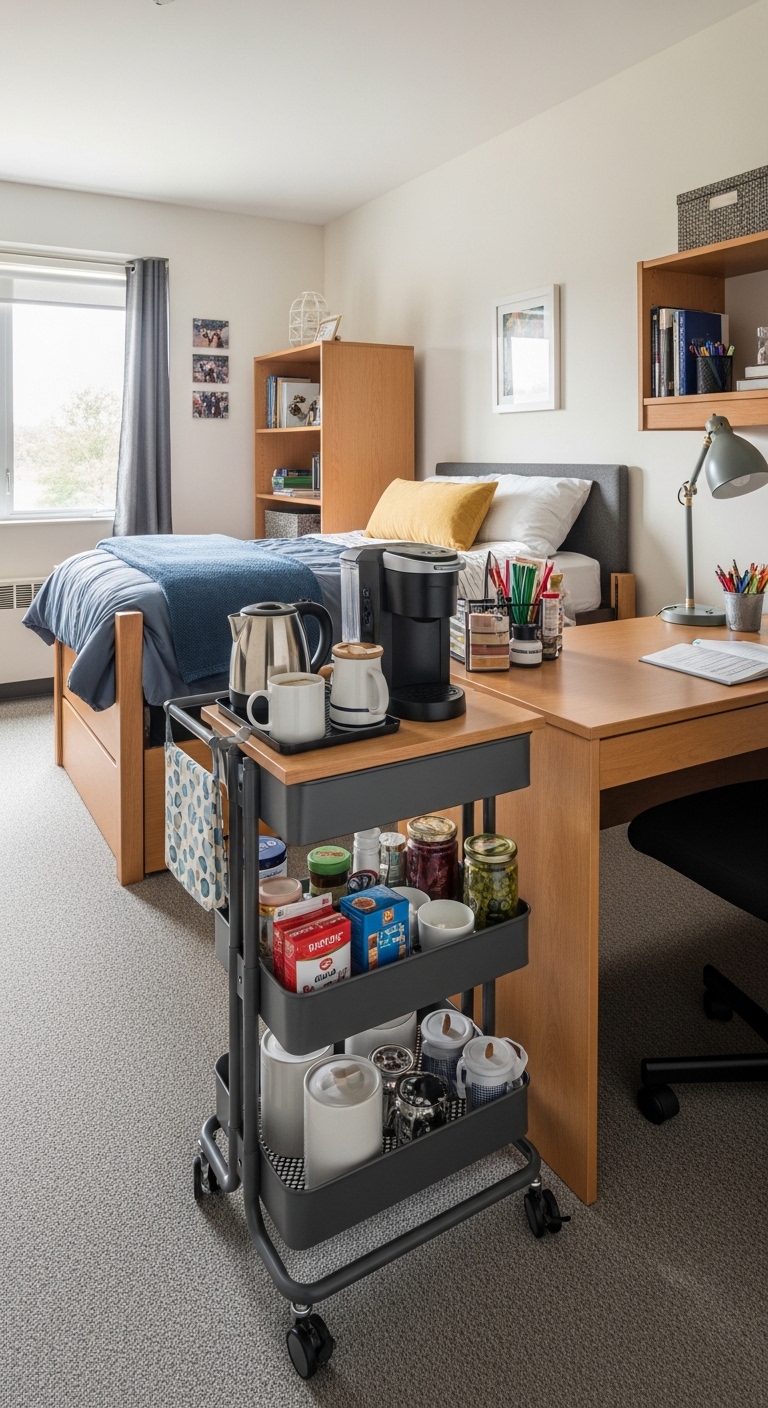
Move your supplies anywhere: You invest in a small rolling cart that holds toiletries, art supplies, snacks, or cleaning products that you wheel to wherever you need them. You avoid carrying armfuls of items down the hall to the bathroom or across the room to your desk. The cart tucks beside your dresser or under your raised bed when not actively mobile. Multiple tiers maximize vertical storage in a tiny footprint. Create a beverage station: You dedicate your cart to coffee, tea, and drink-making supplies that you roll to your desk for morning caffeine or late-night study fuel. Everything stays together and accessible instead of scattered across various shelves. You become the friend with the impressive drink setup, which has social benefits beyond organization.
16. Fabric Bins Hide Ugly but Necessary Items
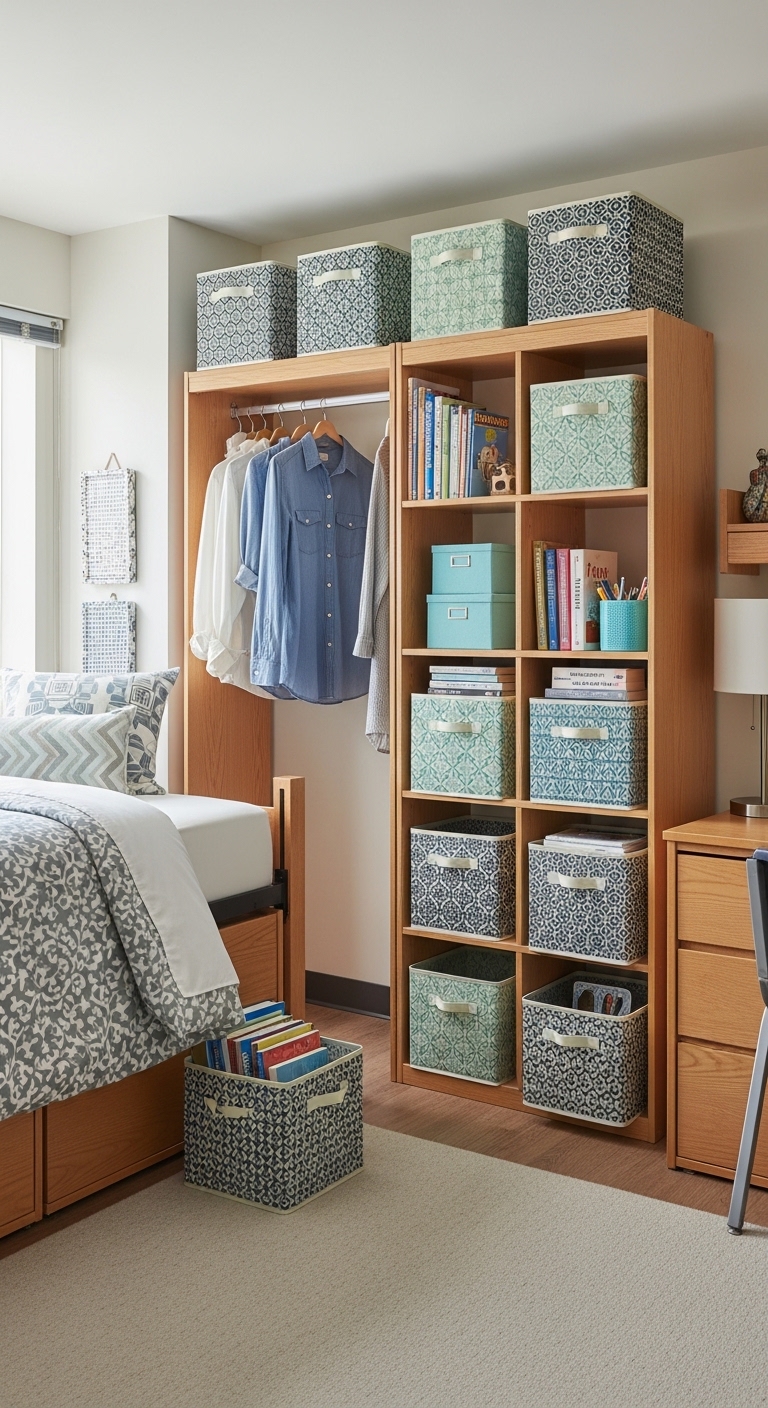
Conceal the eyesores: You fill cube shelves or line your closet floor with fabric bins that hide textbooks, cleaning supplies, electronics, or anything else that functions fine but looks terrible. These soft-sided containers come in every color and pattern, turning necessary storage into intentional design. You label them if you’re organized or just remember what’s where if you’re not. They stack, collapse when empty, and cost almost nothing. Unify mismatched storage: You use matching fabric bins across different furniture pieces to create visual cohesion even when your desk, dresser, and shelving came from three different decades. The coordinated containers trick the eye into seeing intentional design rather than random furniture collection. You achieve a pulled-together look without replacing any actual furniture.
17. Mirror Placement Expands Tiny Spaces
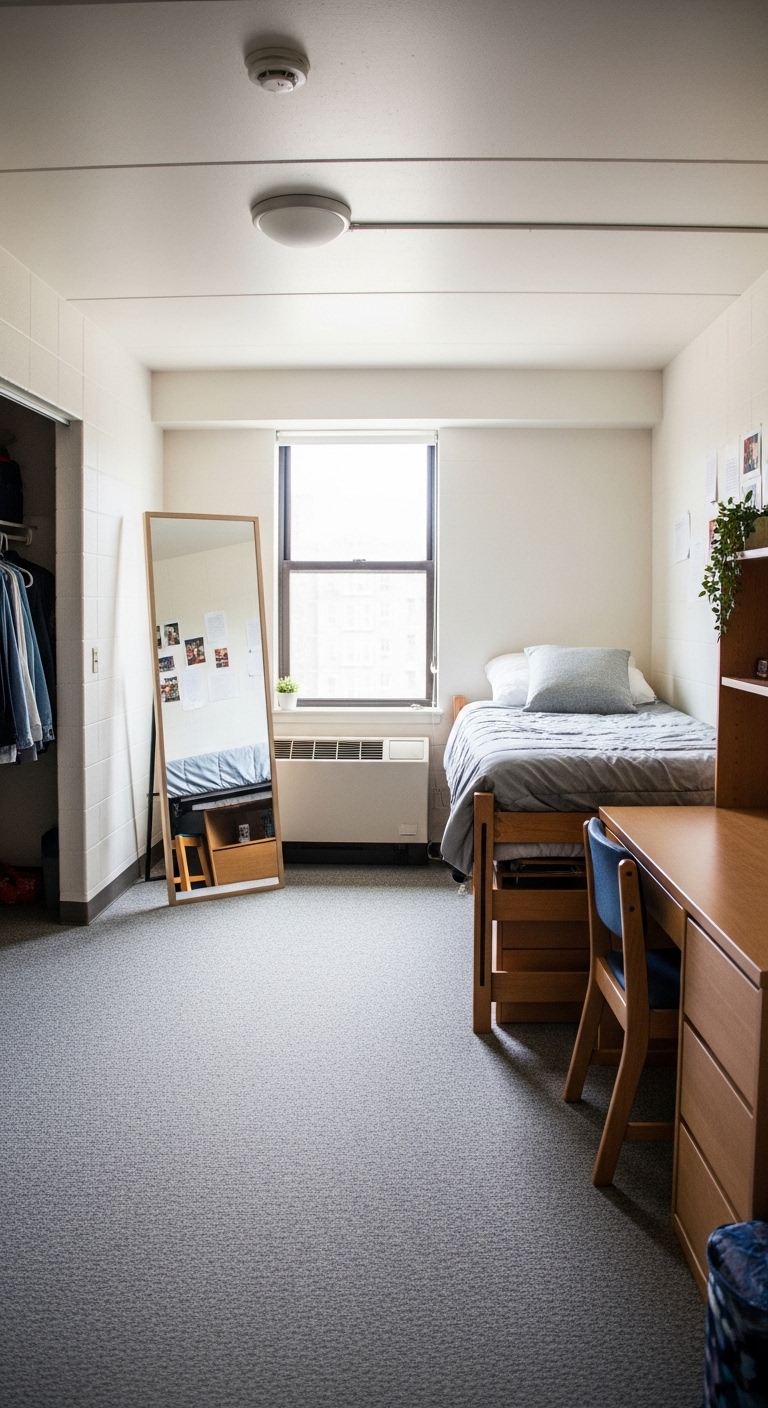
Double your visual square footage: You lean or hang a large mirror opposite your window to reflect natural light and make your room feel significantly bigger. The mirror tricks your brain into perceiving more space than physically exists – crucial in a room the size of a walk-in closet. You position it strategically to reflect the prettiest part of your room rather than your unmade bed or pile of laundry. Create a getting-ready station: You mount or prop a full-length mirror near your closet with a hook beside it for testing outfits. You see your entire outfit before leaving and avoid the weird crouch-and-guess situation with a tiny mirror. The nearby hook holds tomorrow’s clothes or the rejected options that almost made the cut.
18. Desk Accessories Deserve Aesthetic Consideration
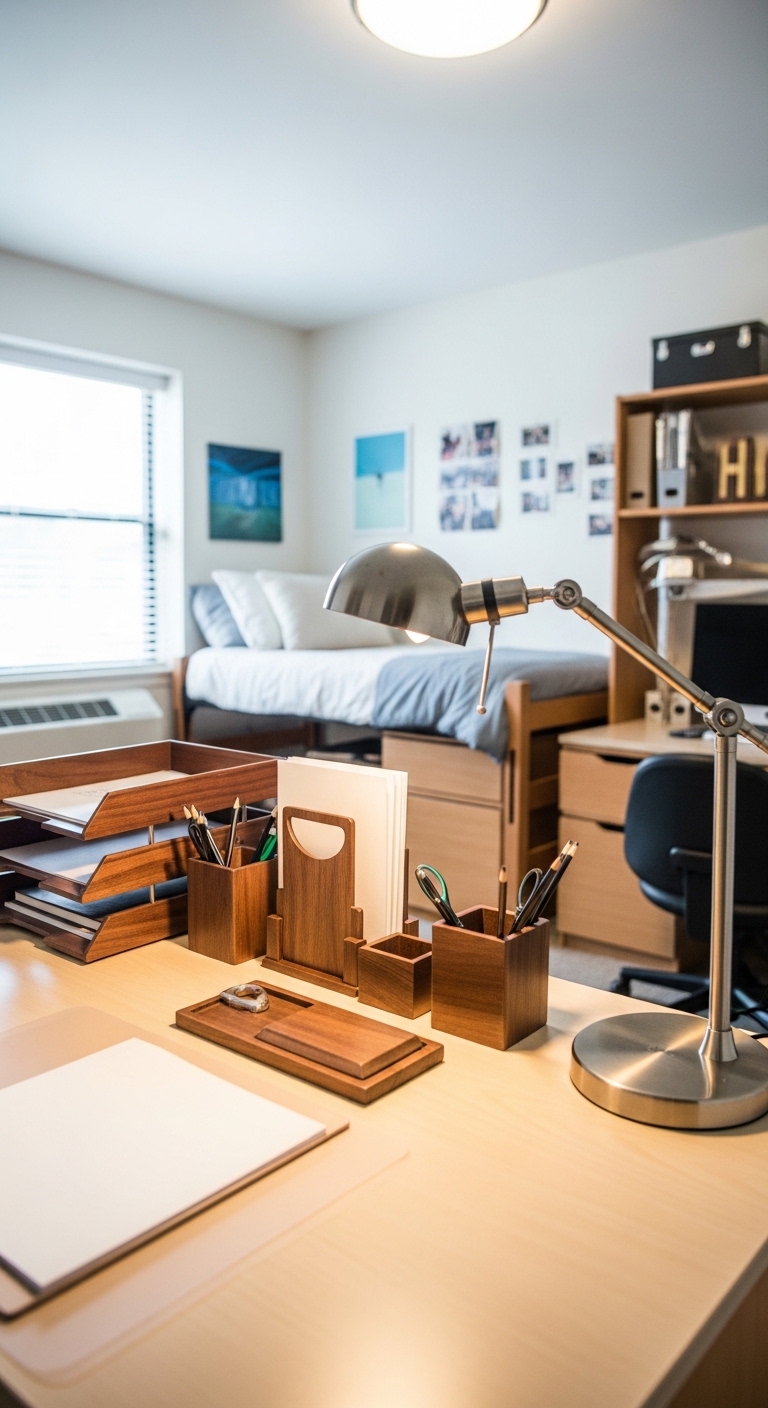
Upgrade the basics: You replace standard plastic desk organizers with options in wood, metal, or colored acrylic that look intentional. Your pencil cup, paper tray, and charging station become part of your room’s design instead of random office supply castoffs. You choose pieces that match or complement your overall color scheme. These items sit in your direct sight line constantly, so they should make you happy rather than just functional. Combine beauty and function: You pick accessories that work hard – a desk lamp that charges your phone, a clock that doubles as a speaker, organizers with built-in planters. Each item justifies its real estate by serving multiple purposes while looking good. You avoid cluttering your limited desk space with single-use items.
19. Window Treatments Block Weird Hall Light
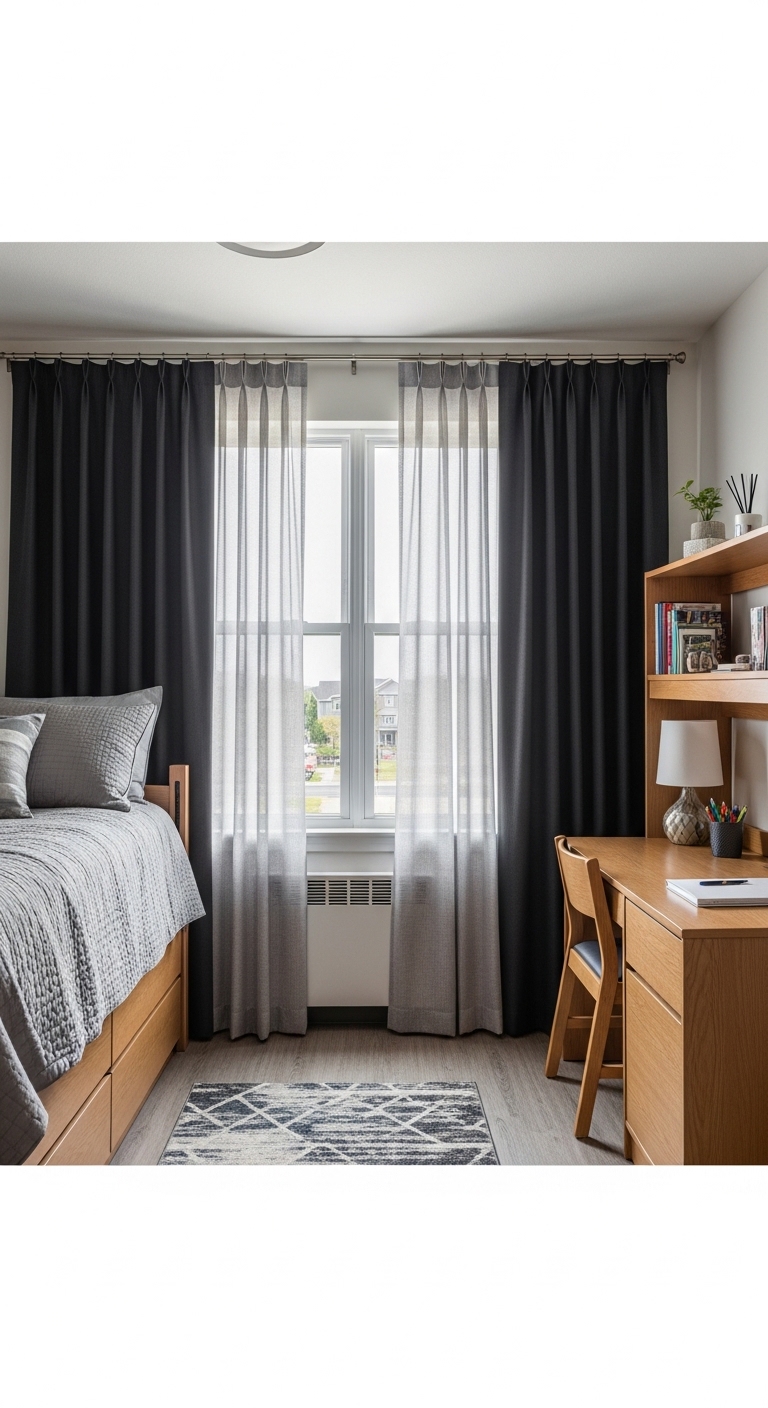
Install privacy and darkness: You hang blackout curtains or a tension-rod curtain system that blocks the hallway light bleeding under your door and the streetlights blasting through your window at night. You actually sleep in darkness instead of that perpetual twilight situation that makes rest impossible. The curtains add color, texture, and sound absorption – dorm walls are thin, and fabric helps. You choose patterns or solids that anchor your room’s color palette. Layer for flexibility: You combine sheer curtains for daytime privacy with heavier panels for nighttime darkness. You control exactly how much light enters at any hour instead of accepting whatever the sun and administration lighting decisions provide. The layered look adds visual depth and sophistication to the sad standard-issue window.
20. Personal Touches Trump Perfect Matching
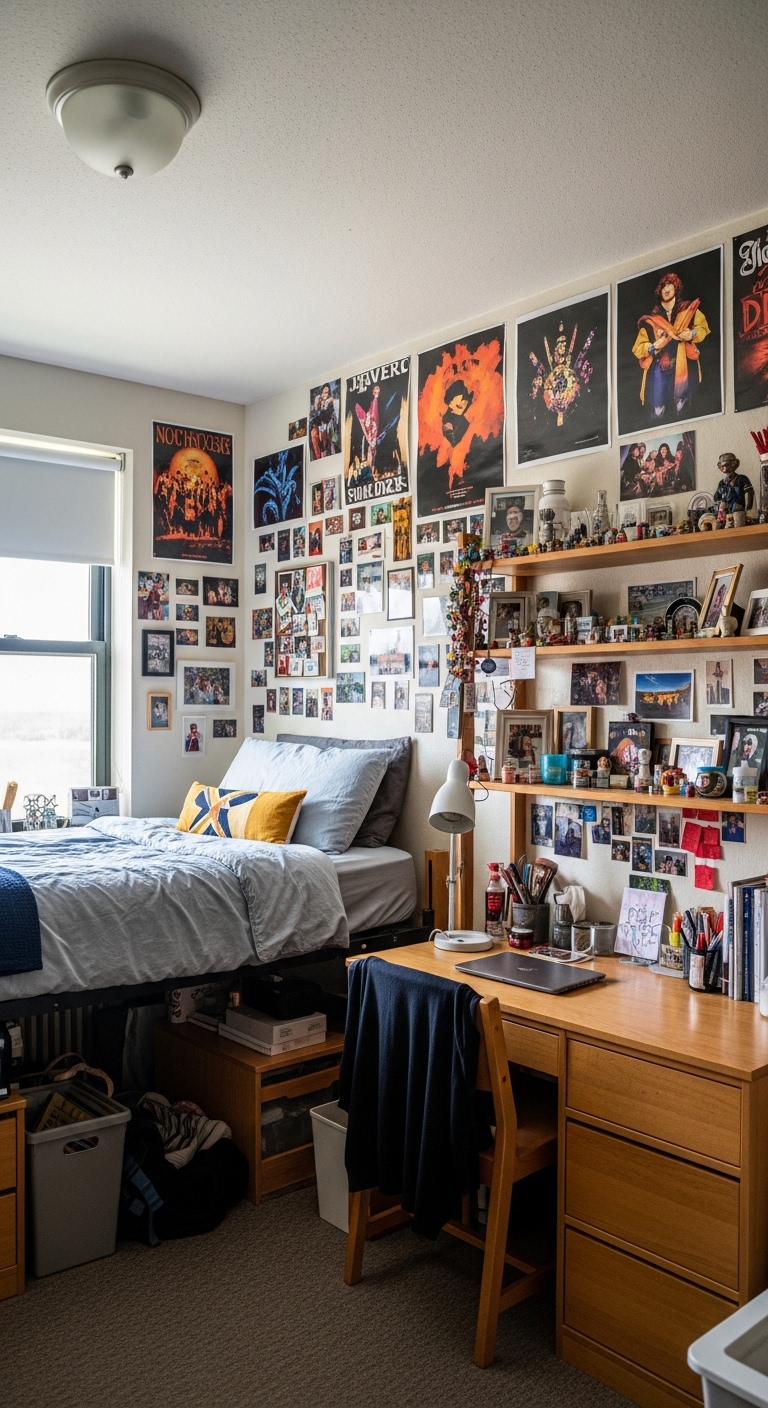
Display what matters: You dedicate wall and shelf space to photos, art, concert posters, or collections that represent your actual life and interests. Your room should tell your story, not look like a catalog spread. You mix frames, sizes, and subjects rather than creating matchy-matchy perfection. The intentional imperfection feels authentic and lived-in. Rotate seasonally: You swap out decorative elements every few months to keep your space feeling fresh without starting over. You bring different photos forward, change your throw pillows, or rotate which plants get prime display real estate. This prevents the stale feeling that comes from looking at identical surroundings for months while keeping your investment minimal.
Make Your Dorm Actually Livable
You deserve a space that feels like home, even if it’s technically a cinder-block rectangle with mystery stains. These ideas work because they respect your reality – limited budget, no power tools, and housing rules written by people who apparently hate joy. Start with one or two changes that excite you most rather than trying to transform everything overnight. Your room evolves as you figure out what you actually need versus what looks good on Pinterest. You’ll spend significant time in this space, so make it somewhere that energizes rather than depresses you. Small changes create big differences when you’re living in a shoebox.
FAQs About Dorm Rooms
-
What does a dorm room mean?
A dorm room is a small living space provided by a school or college for students. It usually includes basic furniture like a bed, desk, and storage, and students often share the room or common facilities with others in the same building.
-
What is in a dorm room?
A typical dorm room comes with essential furniture such as a bed, mattress, desk, chair, wardrobe or drawers, and basic lighting. Some dorms also include shelves or notice boards, while decor items, bedding, and personal touches are usually brought by the student.
-
What is the difference between a dorm and a hostel?
A dorm is usually connected to an educational institution and reserved for students, often located on or near campus. A hostel can be for students, travelers, or working professionals and may operate independently, offering shared or private rooms with fewer institutional rules.
-
Why is it called a dorm?
The word dorm comes from the Latin term dormitorium, which means a place for sleeping. It later became the common name for student living spaces in schools and colleges.
Pingback: 12 Home Gym Ideas That Make Working Out Easy & Fun (2026) - Simple Cozy Homes
Pingback: 15 Black and White Kitchen Ideas for Modern Homes - Simple Cozy Homes