
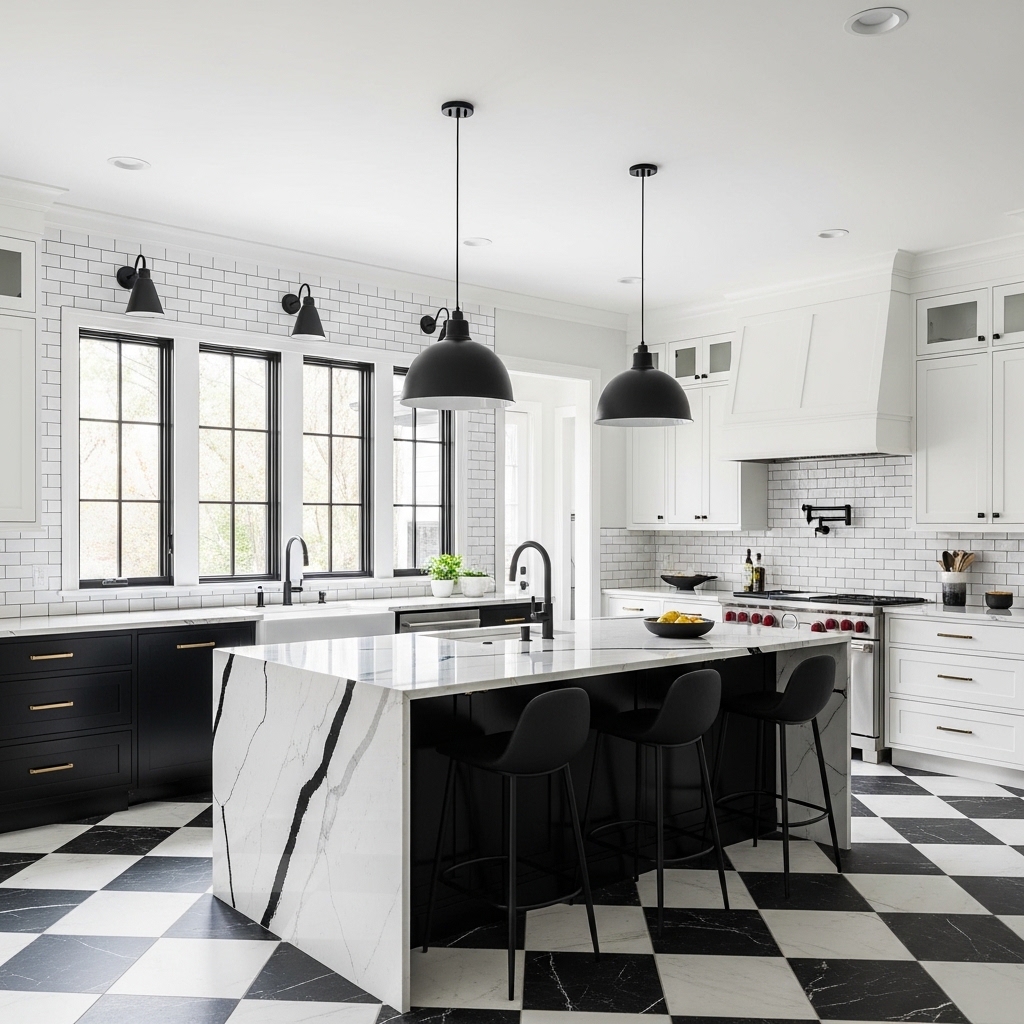
You’ve probably scrolled past a thousand beige kitchens on Pinterest, and honestly? Your eyes deserve better. Black and white kitchens pack serious punch without shouting for attention – they’re the design equivalent of a perfectly tailored blazer. You get timeless elegance mixed with modern edge, and the combo works whether you’re flipping a fixer-upper or just tired of looking at builder-grade oak cabinets. This palette gives you room to play with patterns, textures, and finishes without things getting chaotic. You can go sleek and minimal or layer in vintage charm – the possibilities stretch further than you’d think. Ready to see how this classic duo transforms your cooking space into something Pinterest-worthy?
READ MORE: 12 Home Gym Ideas That Make Working Out Easy & Fun (2026)
1. The High-Contrast Drama of Black Cabinets Against White Walls
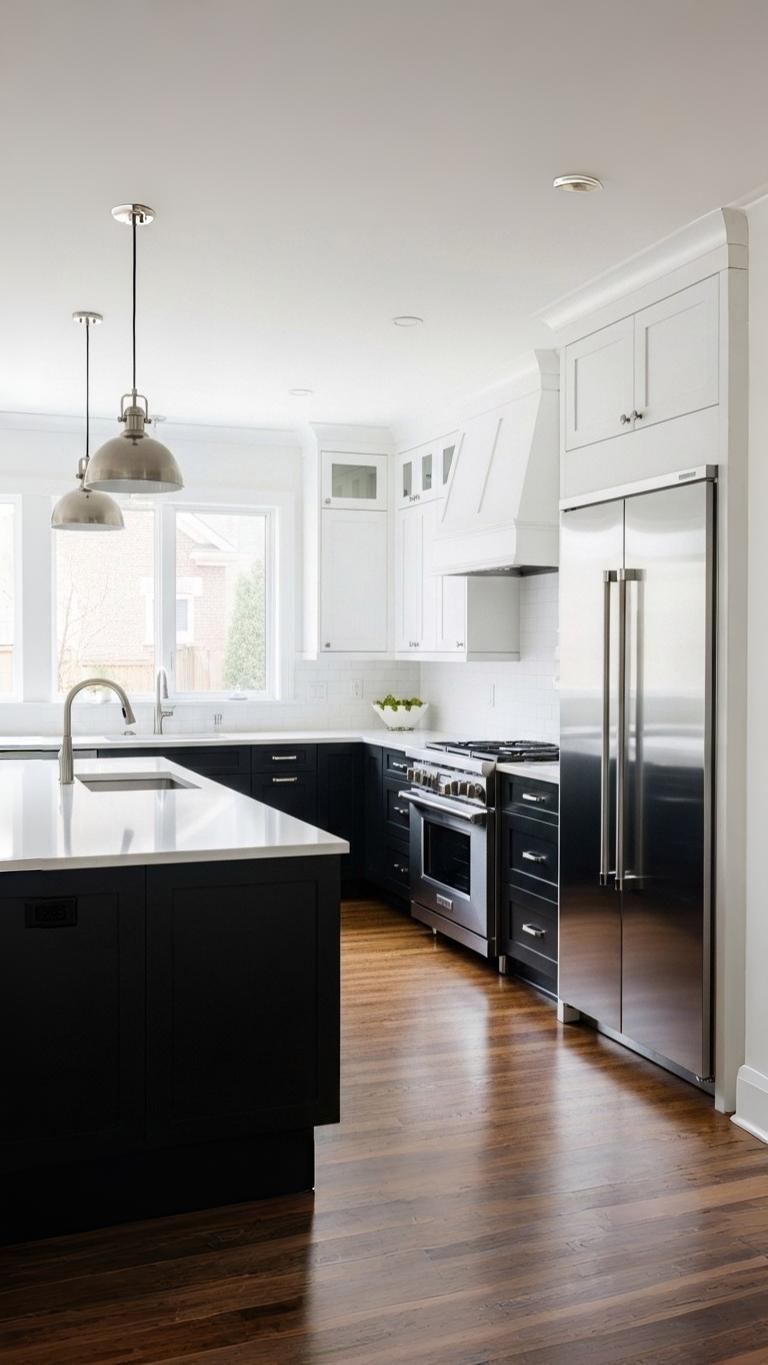
You walk into a kitchen with matte black cabinets set against crisp white walls, and the visual impact hits immediately. Bold cabinetry choices transform ordinary storage into architectural features – those dark lowers ground the space while white uppers keep things from feeling like a cave. The contrast creates natural focal points without requiring fancy tile work or expensive countertops. You save money on decorative elements because the color blocking does the heavy lifting. Your eye travels around the room following these defined zones, which makes even small kitchens feel intentionally designed rather than accidentally assembled.
Strategic wall treatment: White walls reflect light back into the space, counterbalancing the darkness of lower cabinets so you don’t need to install a stadium’s worth of lighting fixtures. You gain visual height when white extends to the ceiling, making standard eight-foot ceilings feel less oppressive. The brightness also shows off your cabinet hardware and makes it easier to spot that rogue splatter before it becomes a permanent fixture. You create a backdrop that lets art, plants, or colorful dish collections pop without competing for attention.
READ MORE: 20 Dorm Room Ideas That Instantly Feel Cozy 2026
2. White Shaker Cabinets With Black Hardware for Timeless Appeal
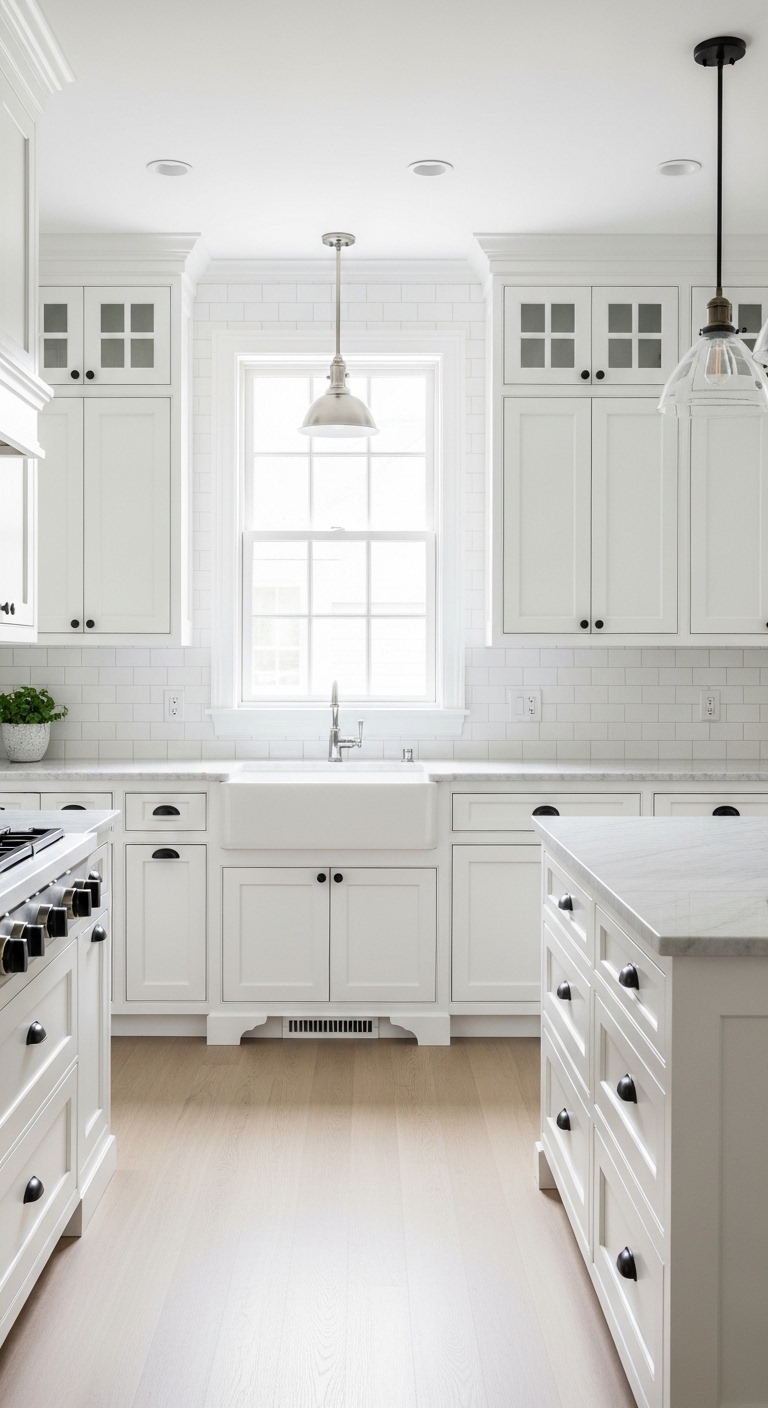
Classic shaker styling never goes out of fashion because clean lines and simple recessed panels work with literally any design era you throw at them. You choose white shaker cabinets and instantly gain that fresh, airy foundation everyone wants. The simplicity means you won’t cringe at photos ten years from now – unlike that trendy two-toned turquoise situation your neighbor installed. Black knobs and pulls add definition to all those cabinet doors, creating subtle visual interest without pattern overload. You spend less on the cabinets themselves because shaker construction costs less than ornate raised-panel designs.
Hardware as jewelry: Black pulls and knobs function like accessories on a little black dress – they complete the look without demanding attention. You can choose modern bar pulls for contemporary vibes or vintage bin pulls for farmhouse charm, and both work perfectly against white. The dark hardware also hides fingerprints better than shiny chrome, which matters when you’ve got kids or a spouse who thinks drawer handles are hand towels. You create cohesion by matching these finishes to your faucet and light fixtures, tying the whole room together with minimal effort.
READ MORE: 12 Fun Sleepover Ideas for Teenagers They’ll Actually Love 2026
3. Checkerboard Floor Tiles That Channel Old-School Diner Charm
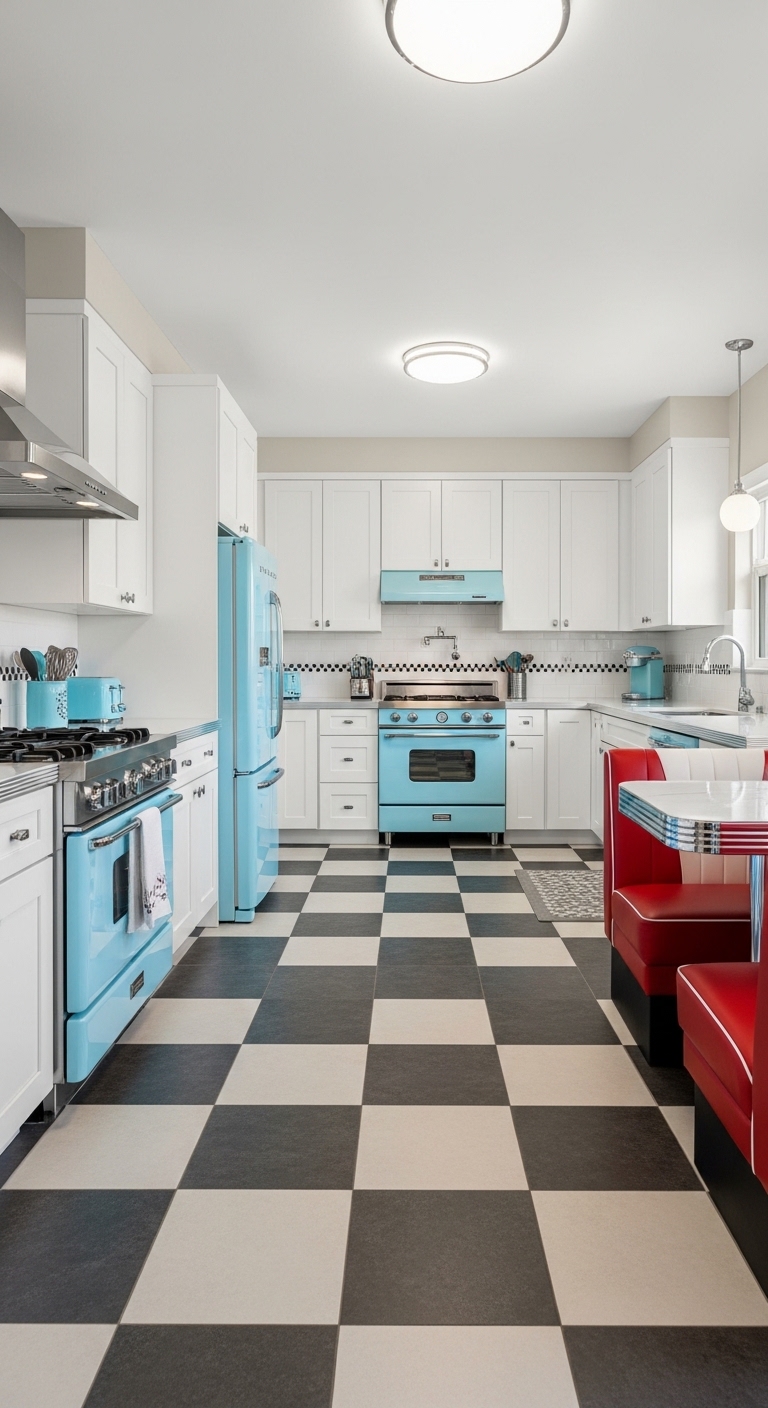
Retro pattern with staying power: You lay down black and white checkerboard tiles and instantly transport your kitchen to a 1950s soda fountain – minus the cigarette smoke and questionable Jell-O salads. This pattern works in modern spaces because geometric designs never truly die, they just hibernate between trend cycles. The tiles guide foot traffic visually and make your floor area feel larger through the repeating pattern. You hide dirt better than with solid white flooring, because let’s be honest, nobody wants to mop three times daily.
Scale considerations matter: Large-format checkerboard squares suit spacious kitchens where the pattern has room to breathe and establish rhythm. You choose smaller tiles for compact spaces so the pattern doesn’t overwhelm – think two-inch squares instead of twelve-inch ones. The installation runs diagonally to make narrow galley kitchens appear wider, or straight-set to emphasize length. You pair this busy floor with simpler upper elements because checkerboard already brings plenty of visual energy to the party.
READ MORE: 12 Galentine’s Party Decor Ideas to Make Your Girls Feel Like Queens
4. Subway Tile Backsplash in Crisp White With Black Grout
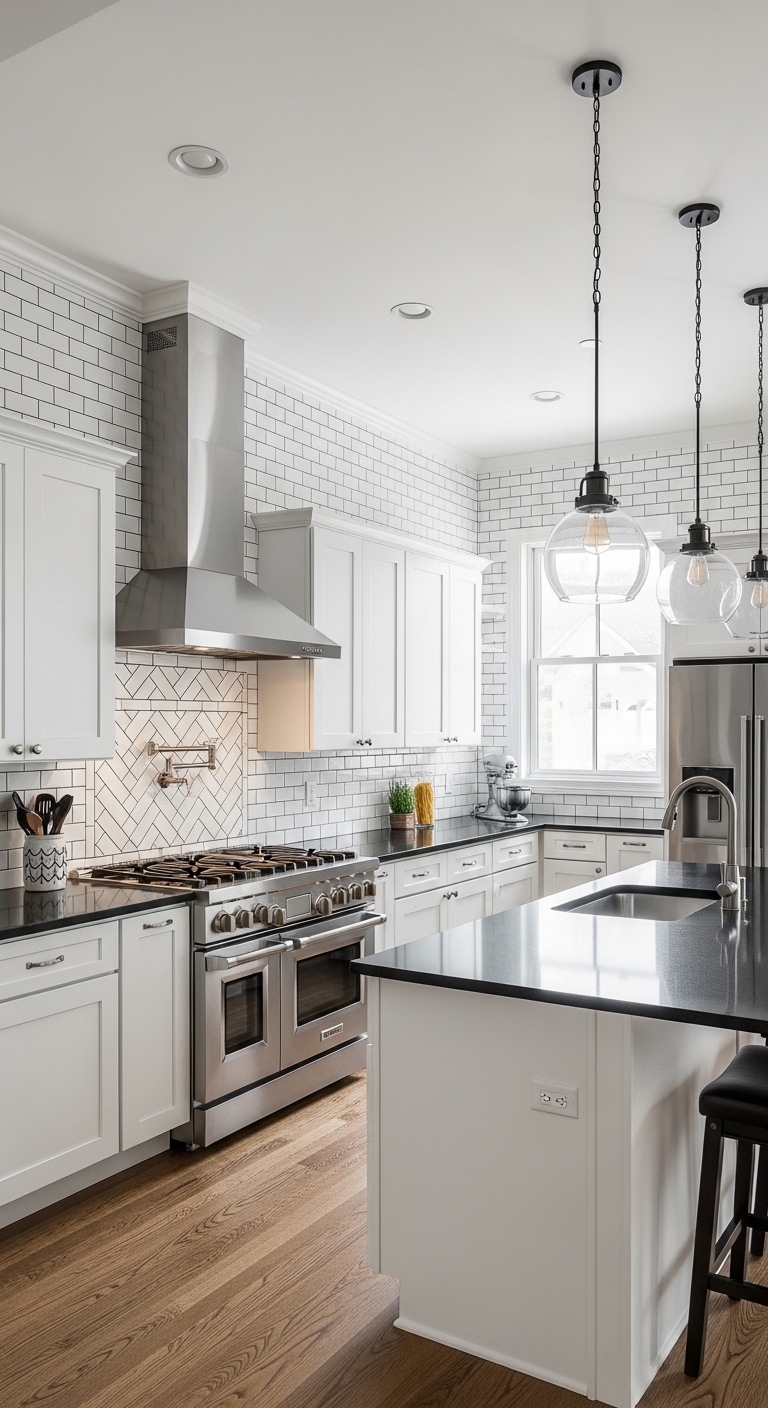
You install classic white subway tiles but swap boring white grout for black, and suddenly that basic backsplash develops backbone. Grid-defining grout turns simple tiles into graphic art, emphasizing the grid pattern and adding architectural detail your contractor didn’t charge extra for. The dark grout lines hide stains from tomato sauce explosions and coffee splashes – you wipe down the tiles and move on with your life instead of scrubbing grout with a toothbrush. This combo works behind ranges, sinks, or covering entire walls depending on how much visual texture you crave.
Pattern play opportunities: You arrange subway tiles in classic running bond, herringbone, vertical stack, or basket-weave patterns – the black grout makes each layout pop differently. Traditional horizontal installation feels safe and expected, while herringbone adds movement and sophistication for basically the same material cost. You create a focal point behind your cooktop with one pattern, then switch to simple horizontal elsewhere for variety without chaos. The contrasting grout turns what could be boring builder-basic into something worthy of those kitchen tours you keep pinning.
READ MORE: 21 Blanket Storage Ideas That’ll Save Your Sanity
5. Black Countertops That Hide Every Coffee Ring and Crumb
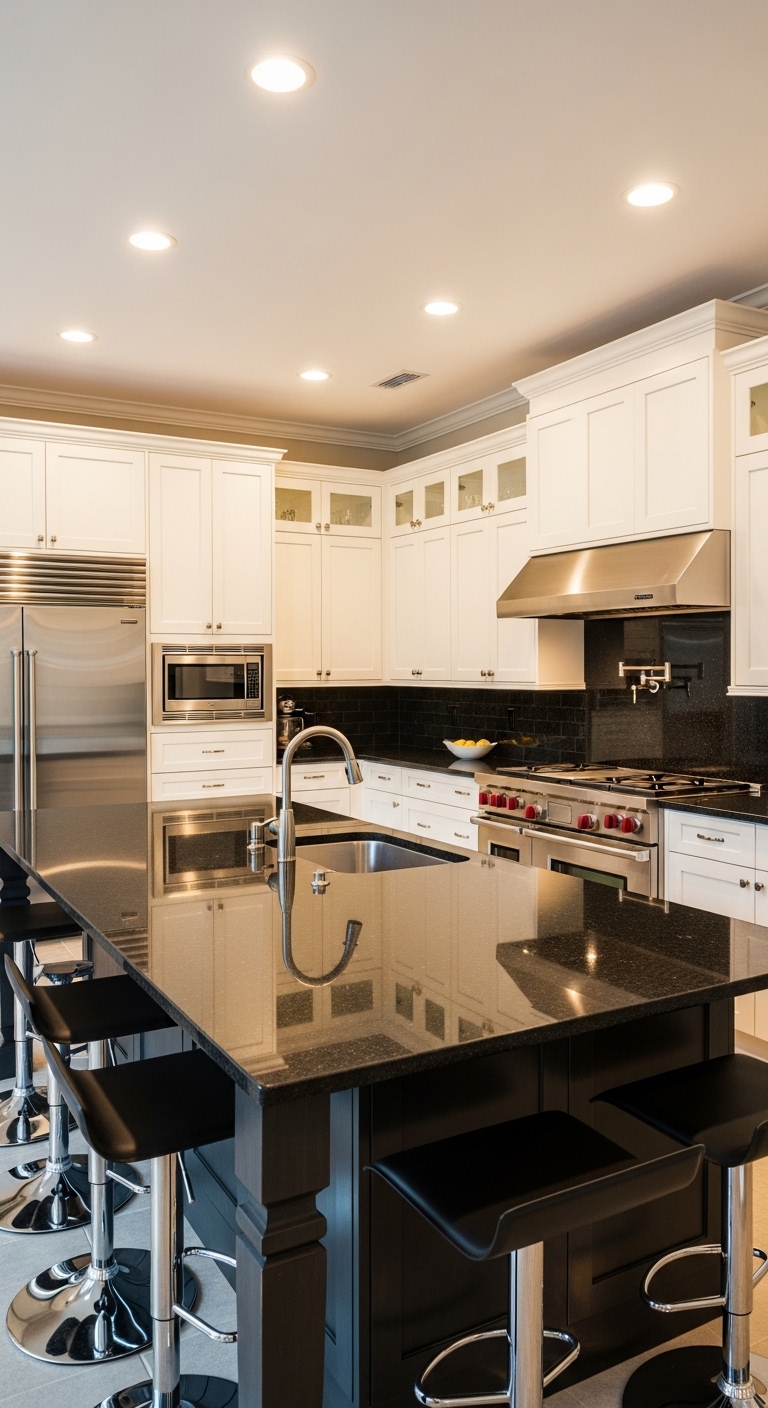
Practical darkness: You choose black granite, soapstone, or quartz counters and watch daily messes disappear into the dark surface like magic. White countertops show every single thing – bread crumbs, water spots, that mysterious sticky thing you can’t identify – but black hides your crimes until you’re ready to deal with them. The dark surface makes white cabinets above and below pop dramatically, creating that high-contrast look designers charge thousands to achieve. You save hours of neurotic wiping because imperfections simply don’t broadcast themselves across black stone.
Material matters differently: Honed black granite or matte quartz forgives fingerprints better than polished versions, which show every handprint like a crime scene. You choose materials based on maintenance tolerance – soapstone develops a patina that adds character, while engineered quartz maintains consistent color without sealing rituals. The depth in natural black stone creates visual interest through subtle veining and mineral deposits, adding texture without patterns. You coordinate your countertop finish with cabinet hardware – matte counters with matte black pulls, or polished stone with shiny fixtures for intentional cohesion.
READ MORE: 21 Genius Shoe Storage Ideas for Every Home
6. White Marble With Black Veining for Natural Drama
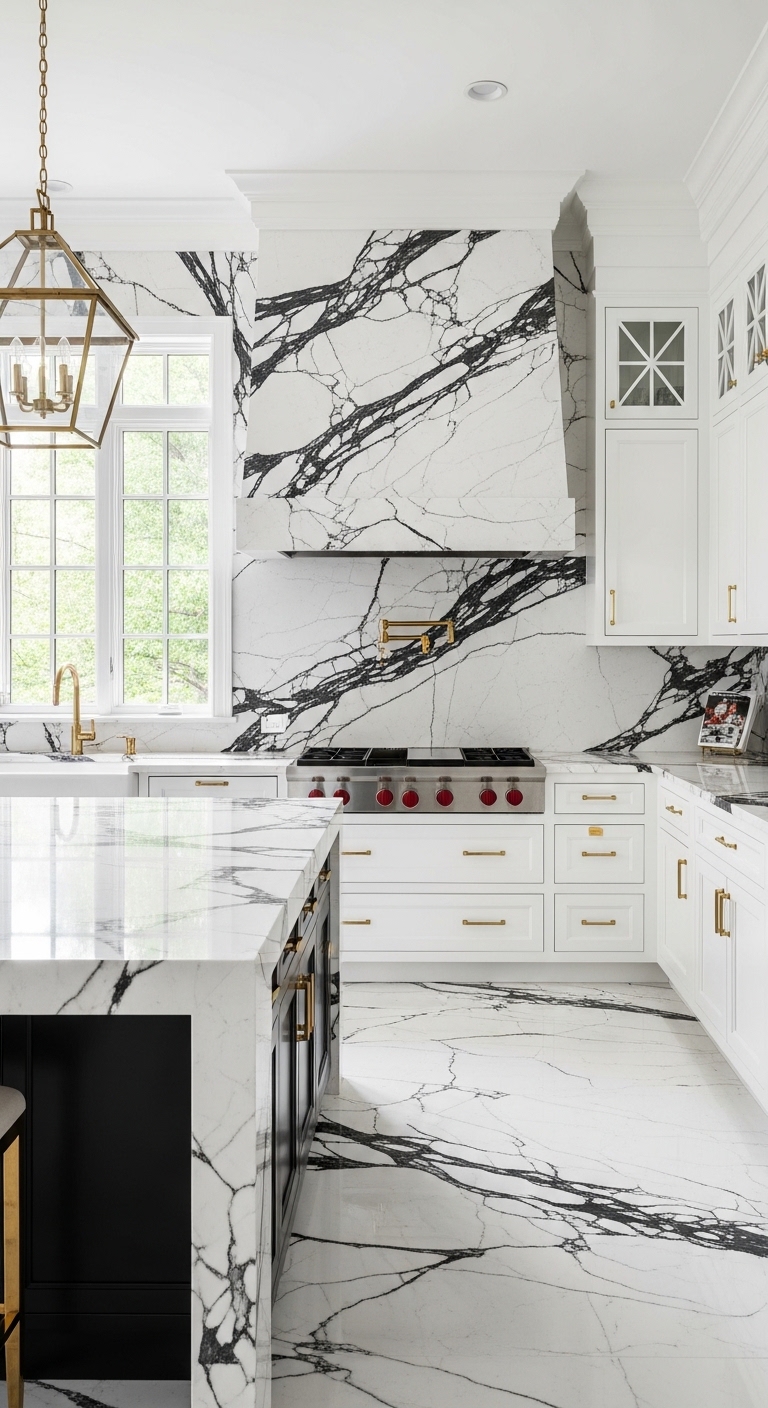
You install white marble scattered with bold black veins, and nature does the decorating work for you. Organic artistry means each slab brings unique patterns – no two kitchens end up identical, unlike those cookie-cutter subway tile situations. The veining creates movement across countertops and backsplashes, drawing eyes around the space in ways solid colors can’t match. You gain instant luxury without ornate details because marble carries inherent elegance from centuries of fancy European palaces. The material works as counters, islands, backsplashes, or full wall treatments depending on your budget and commitment to the look.
Maintenance realities check: Marble requires sealing and etches from acidic foods, so you need to be realistic about your lifestyle before installation. Wine spills and lemon juice leave marks on marble – you either embrace the patina as character or choose engineered alternatives with marble looks but quartz durability. The ongoing maintenance trades convenience for beauty, which works if you’re the type who hand-washes delicates but fails if you’re more of a “throw everything in the dishwasher” person. You protect surfaces with cutting boards and trivets, treating marble like the high-maintenance friend who’s absolutely worth the extra effort.
7. Black Window Frames That Frame Your View Like Gallery Art
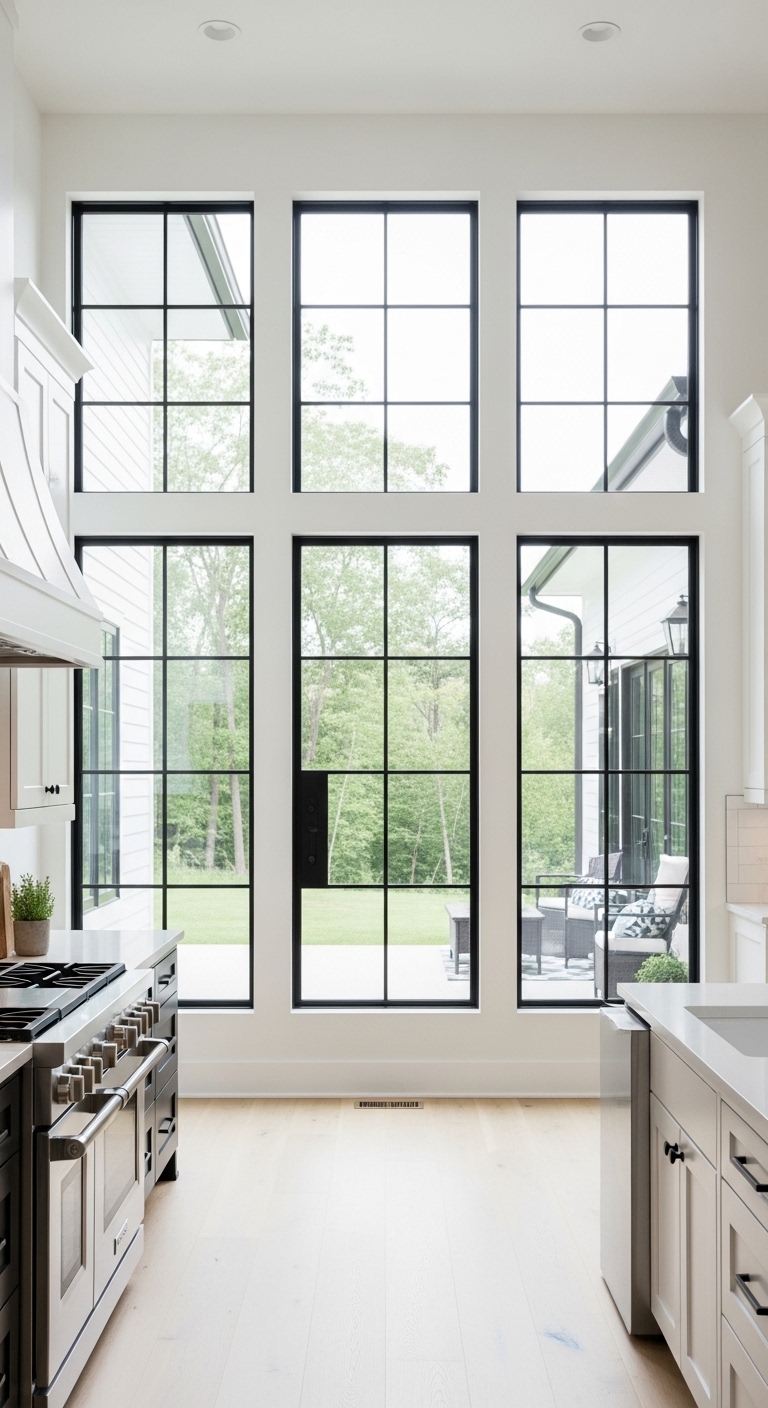
Architectural statements: You swap basic white window frames for black, and suddenly your kitchen windows become intentional design features instead of invisible necessities. The dark frames create borders around outdoor views, turning your backyard into living artwork displayed throughout the day. This treatment works especially well with white walls, where the contrast defines window shapes and adds graphic interest to plain surfaces. You make small windows appear more substantial and large ones more dramatic without changing actual glass dimensions or spending money on window replacements.
Period-appropriate styling: Black metal-framed windows suit industrial lofts, modern farmhouses, and contemporary spaces – the frame style determines which vibe you achieve. Steel factory windows bring urban edge while aluminum frames feel clean and current. You coordinate window frames with door hardware and light fixtures to establish consistent metal finishes throughout the space. The frames also hide dirt better than white, which matters if you’re not climbing ladders to clean window tracks every weekend.
8. White Walls With Black Accent Features for Controlled Contrast
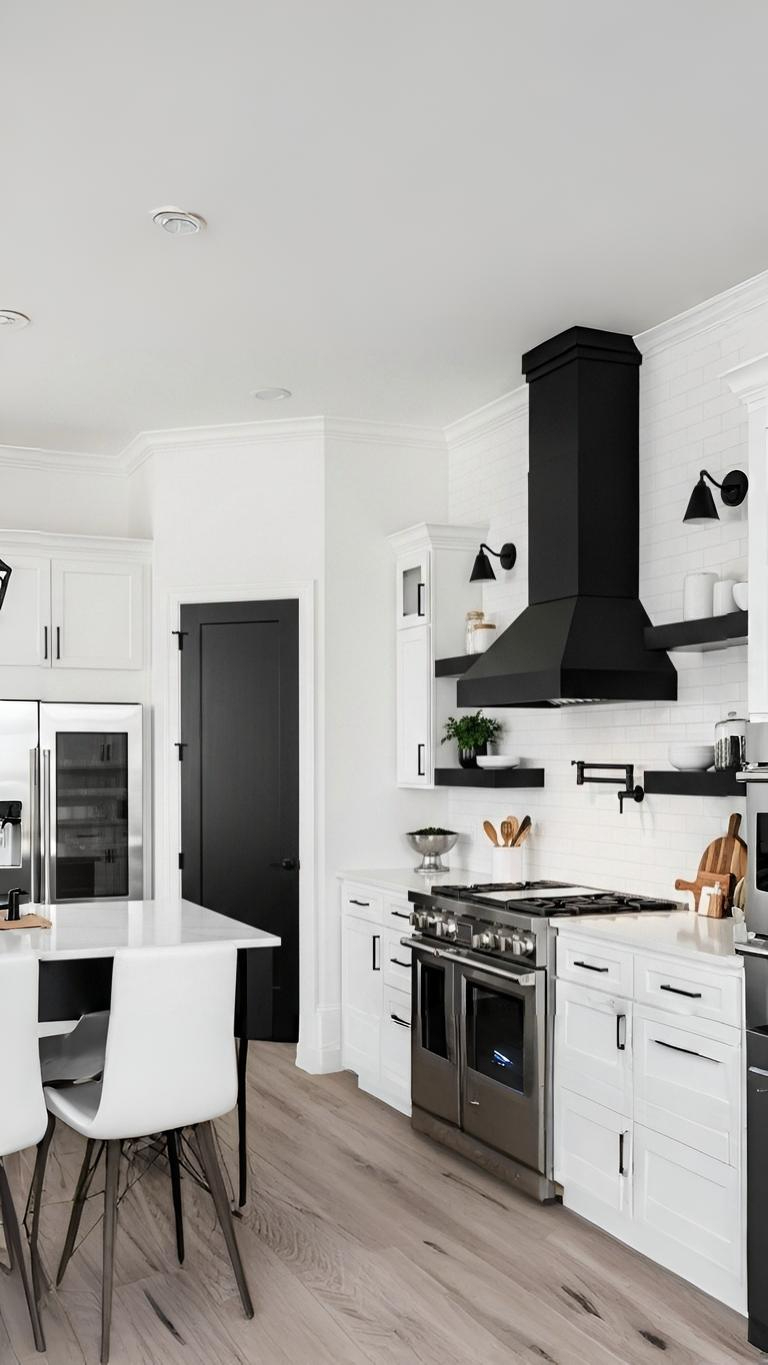
You paint walls bright white but add black through specific architectural elements – a range hood, floating shelves, or a pantry door – to create controlled visual interest. Strategic accent placement lets you test black elements without committing entire walls or cabinet runs to dark colors. The selective approach costs less than full-scale black cabinetry but delivers similar high-contrast impact. You draw attention to features worth noticing, like a beautiful range or open shelving display, by framing them in black. This method works for renters or commitment-phobes who want drama but not permanence.
Flexibility over time: Black accent features change easily when you tire of the look – you repaint a hood or swap shelving brackets without demolishing cabinets. You experiment with different black elements until you find the right balance for your space and style preferences. The approach also lets you incorporate trends like black ceiling beams or door frames without betting the whole kitchen on one look. You maintain design control and budget flexibility while still achieving that coveted black and white aesthetic everyone’s pinning.
9. Two-Toned Cabinets With Strategic Color Blocking
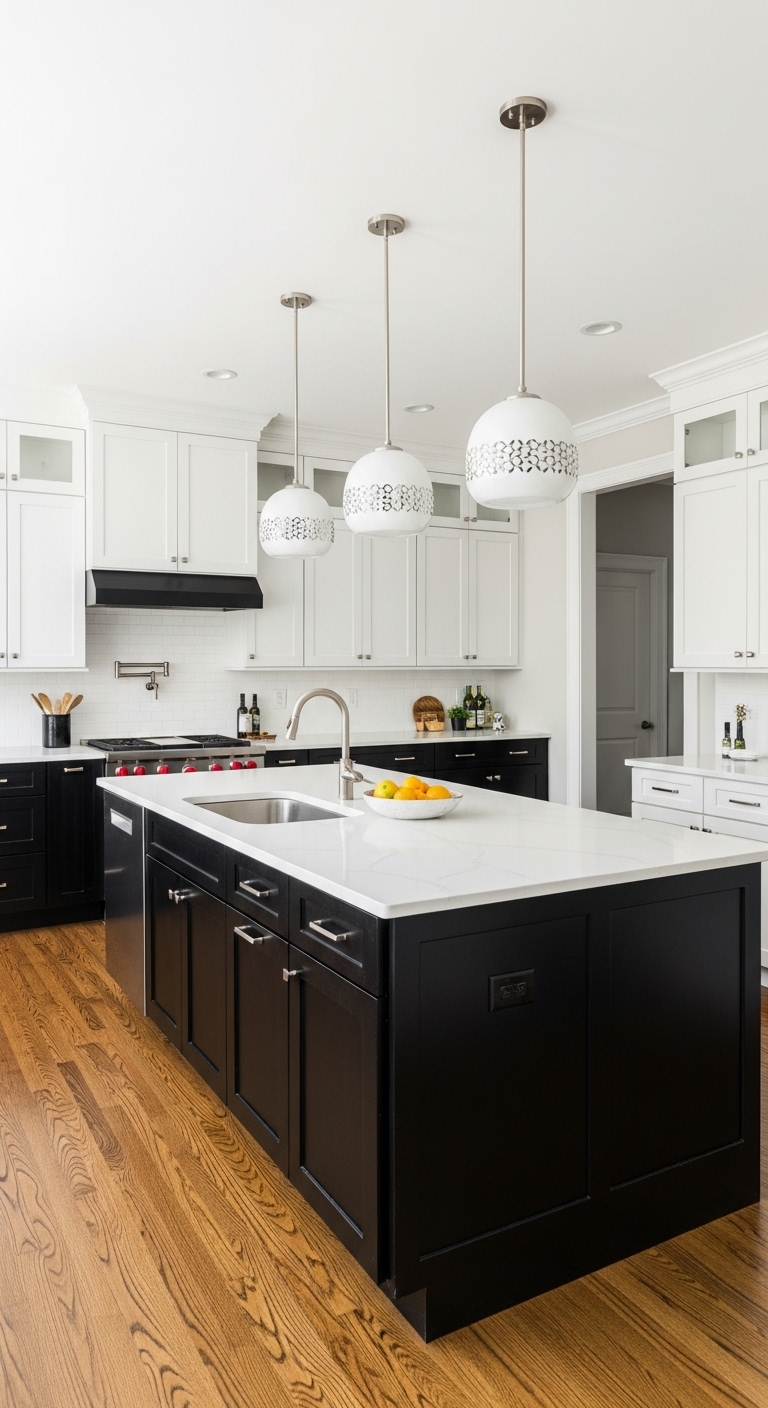
Upper-lower division: You paint lower cabinets black and uppers white, creating natural color zones that make ceilings appear higher and rooms more dynamic. The dark lowers hide scuffs from shoes and bags better than white, which matters near kitchen entrances and high-traffic zones. White uppers reflect light around the space and showcase your dish collection or glassware without dark shadows. You achieve custom-kitchen vibes for the cost of paint and patience, transforming builder-grade boxes into designer-looking storage.
Island as focal point: You paint the island black while keeping perimeter cabinets white, establishing the island as the room’s visual anchor and social hub. The contrasting island draws people toward it for meal prep, homework sessions, and wine-fueled conversations. You create definition in open-concept spaces where the kitchen bleeds into living areas – the black island marks territory without walls. This approach costs less than installing a completely different cabinet style and offers more visual impact than changing just the countertop.
10. Black Pendant Lights Hanging Over White Islands
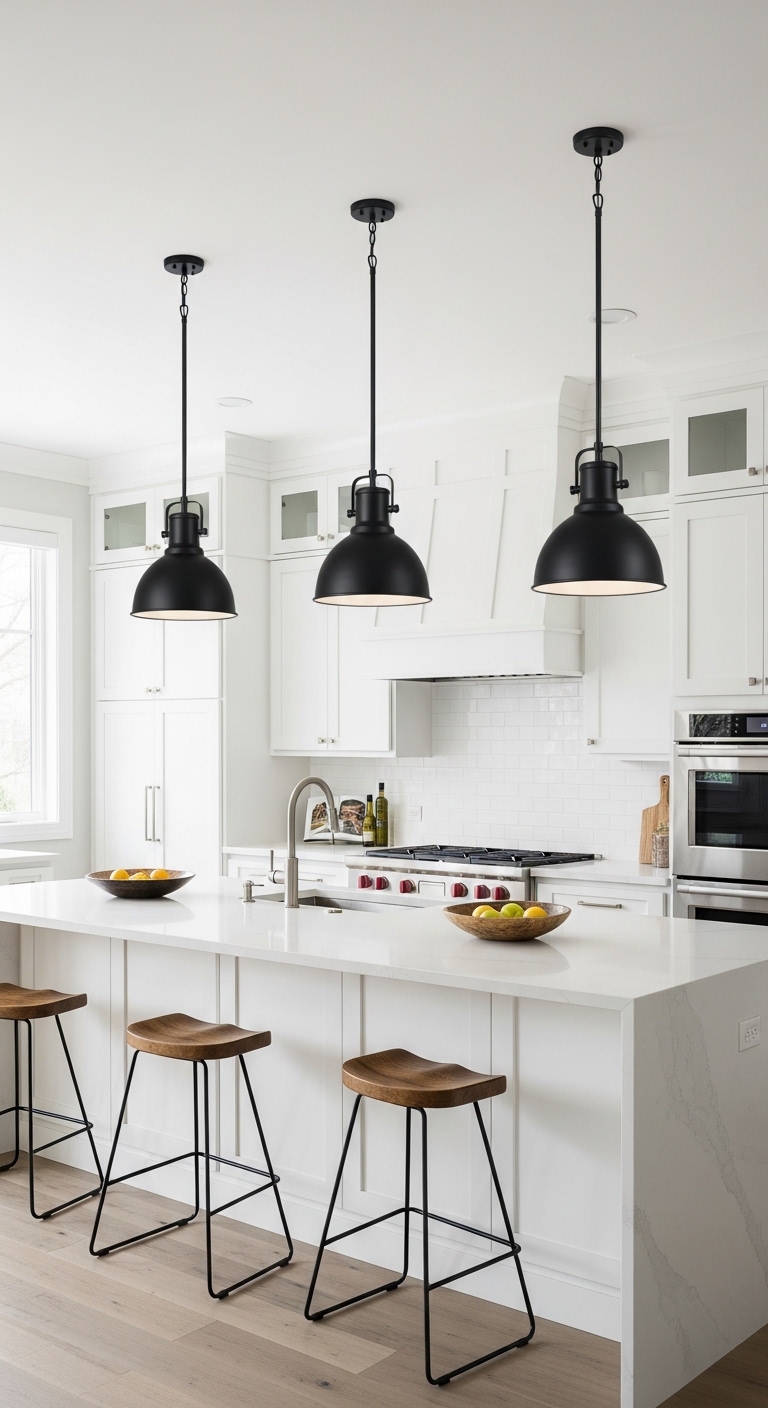
You suspend black pendant lights above a white island, and those fixtures become functional sculpture rather than afterthought lighting. Vertical visual interest draws eyes upward, making rooms feel taller and more complete. The dark fixtures stand out against white ceilings, adding personality without requiring extensive electrical work or major renovations. You choose shapes that match your style – industrial cages for modern farmhouse, globe pendants for mid-century vibes, or geometric designs for contemporary edge. The lights provide task illumination exactly where you need it while reinforcing your black and white color scheme.
Scale and spacing: You hang pendants low enough to light work surfaces but high enough that tall family members don’t perform accidental headbutt-fixture combos. Three pendants work for islands over six feet long, while two suit shorter spans – odd numbers create better visual rhythm. You space them evenly across the island length, maintaining consistent distances from edges and each other. The pendant size should relate to island proportions – massive fixtures overwhelm small islands while tiny lights disappear over expansive ones.
11. Open Shelving in Black Metal With White Dish Displays
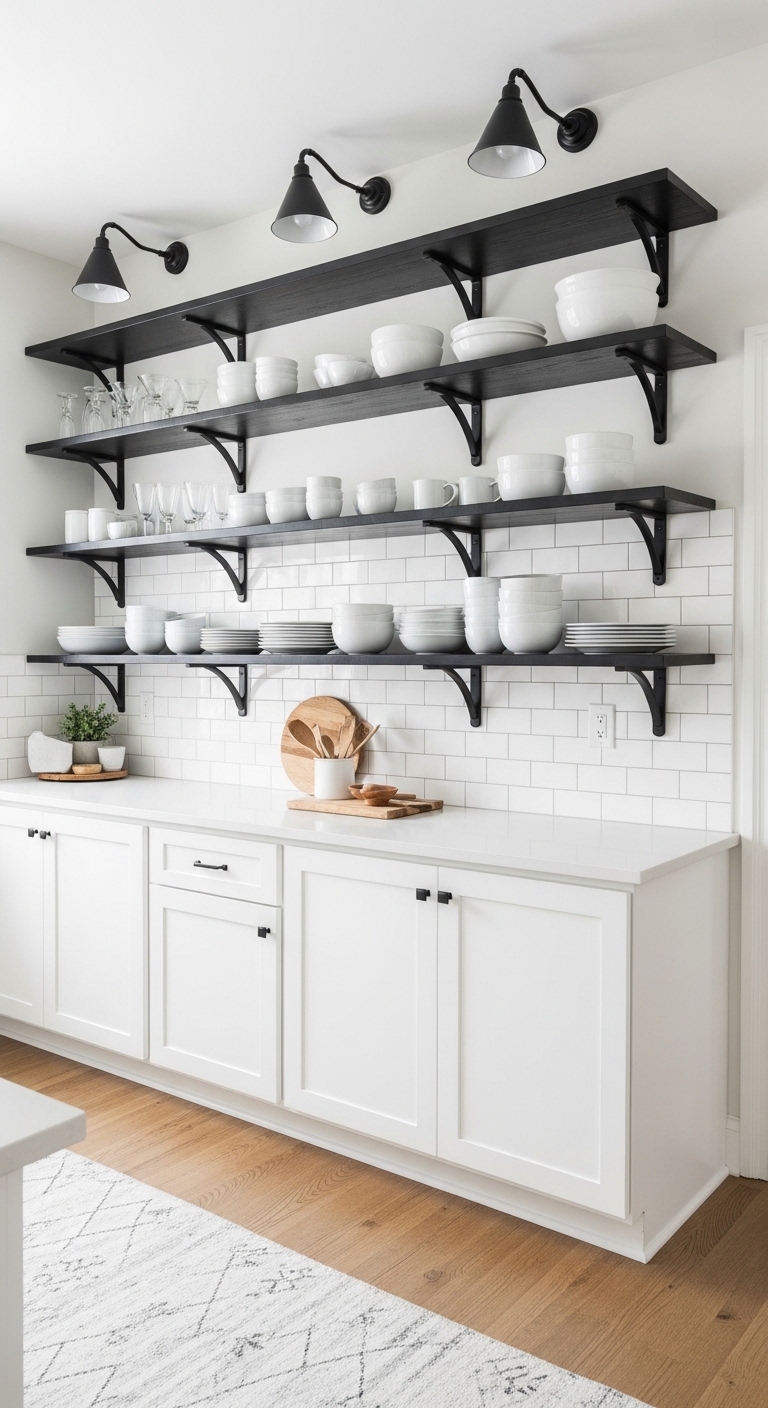
Industrial meets practical: You install black metal brackets and shelves, creating storage that functions as display space for white dishes, bowls, and serving pieces. The dark shelving frames lighter items like a gallery wall, making ordinary dinnerware look intentional and curated. You save money compared to upper cabinets while adding airiness to the kitchen – no solid doors blocking sight lines or making spaces feel closed-in. The shelves force organization since everything shows, which either motivates better habits or creates constant anxiety depending on your personality.
Styling considerations: You arrange items by color and shape, grouping white pieces for cohesive visual impact rather than chaotic randomness. The black shelves work with everyday dishes or heirloom china – anything white or cream-colored gains prominence against the dark background. You rotate seasonal items or special pieces onto shelves for easy access and decoration in one efficient move. The open storage requires dusting and rearranging discipline, so you need honest self-assessment before committing to this look.
12. Black Bar Stools Against White Waterfall Islands
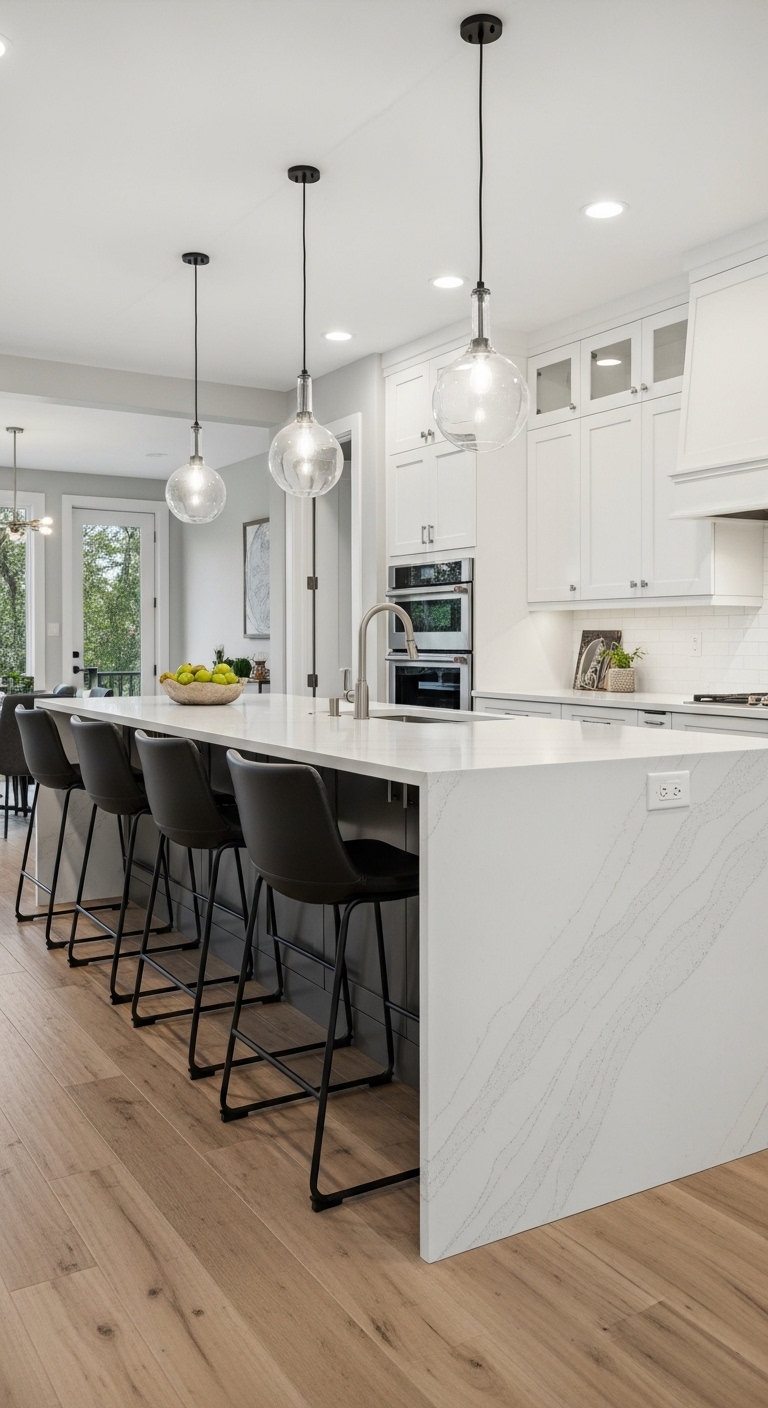
You line up black bar stools along a white waterfall island edge, and the contrast creates instant sophistication. Waterfall countertops extend vertically down island sides, showcasing material beauty while protecting cabinet edges from dings and scuffs. The continuous white surface acts as a backdrop for black seating, making chairs pop visually without patterns or colors. You establish a casual dining zone that works for quick breakfasts, homework sessions, or wine nights with friends. The height difference between seated guests and standing cooks creates natural interaction zones for better kitchen socializing.
Stool selection strategy: You choose backless stools for tight spaces where chairs need to tuck completely under counters, or backs for comfort during longer sitting sessions. Metal stools with black finishes tie to other black elements like hardware and light fixtures for cohesive design. You select seat heights that allow comfortable leg positioning – too high and feet dangle awkwardly, too low and knees hit countertops. The stool style should match your overall kitchen vibe – industrial metal for modern looks, wooden seats with black legs for warmer farmhouse feels.
13. White Appliances Making an Unexpected Comeback
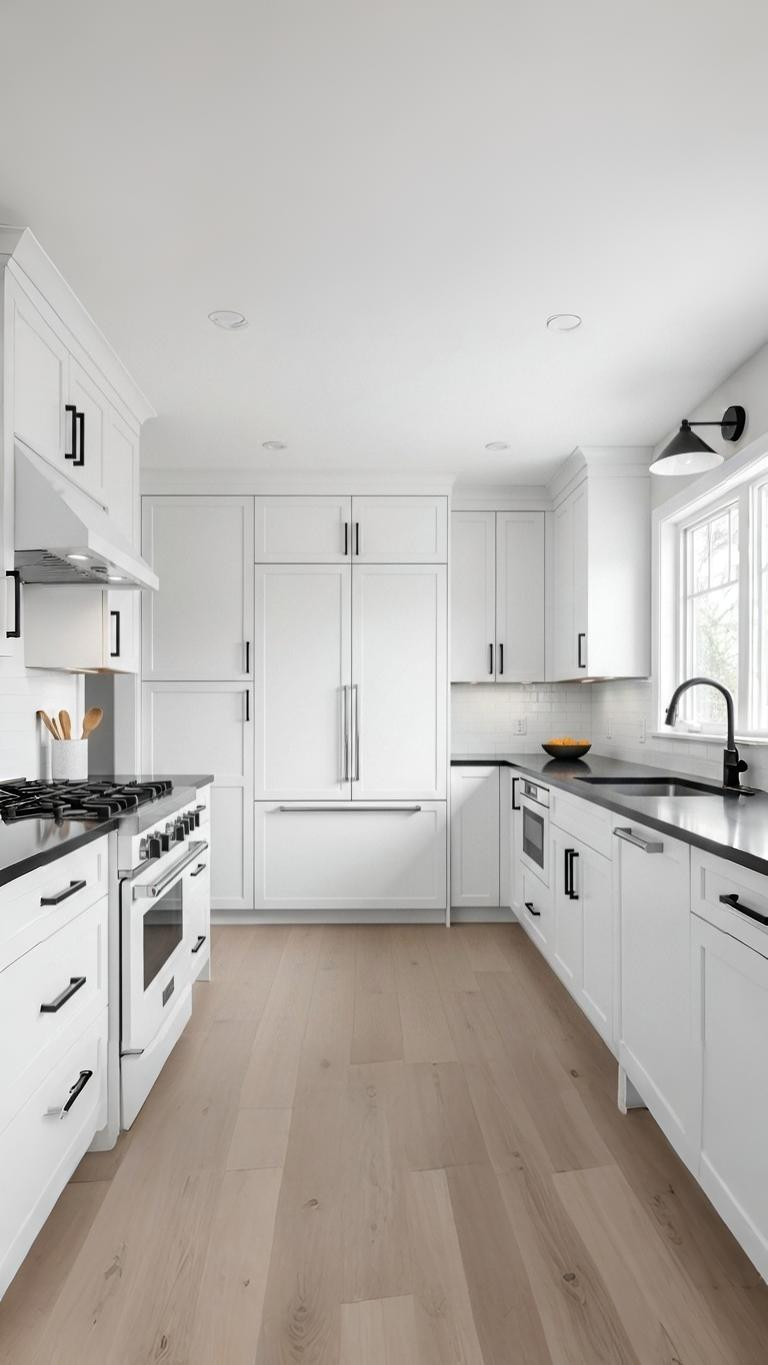
Retro revival: You ditch stainless steel for white appliances and watch your kitchen brighten considerably while saving hundreds of dollars per appliance. White refrigerators, ranges, and dishwashers blend into white cabinetry instead of demanding attention like shiny metal boxes screaming for fingerprint-free perfection. The monochromatic approach creates a seamless, sophisticated look that feels fresh rather than dated like the white appliances your parents probably hated. You clean white surfaces easily without special stainless cleaners or constant buffing to remove streaks.
Strategic integration: You balance white appliances with black counters, hardware, or tile to prevent the all-white look from feeling sterile or institutional. The appliances disappear into white cabinets while black accents provide necessary contrast and visual anchors. You choose white for a cottage or farmhouse aesthetic, or pair it with sleek black details for modern sophistication. This approach costs significantly less than panel-ready integrated appliances but achieves similar seamless results when color-matched to cabinets.
14. Black Faucets and Fixtures for Cohesive Metal Finishes
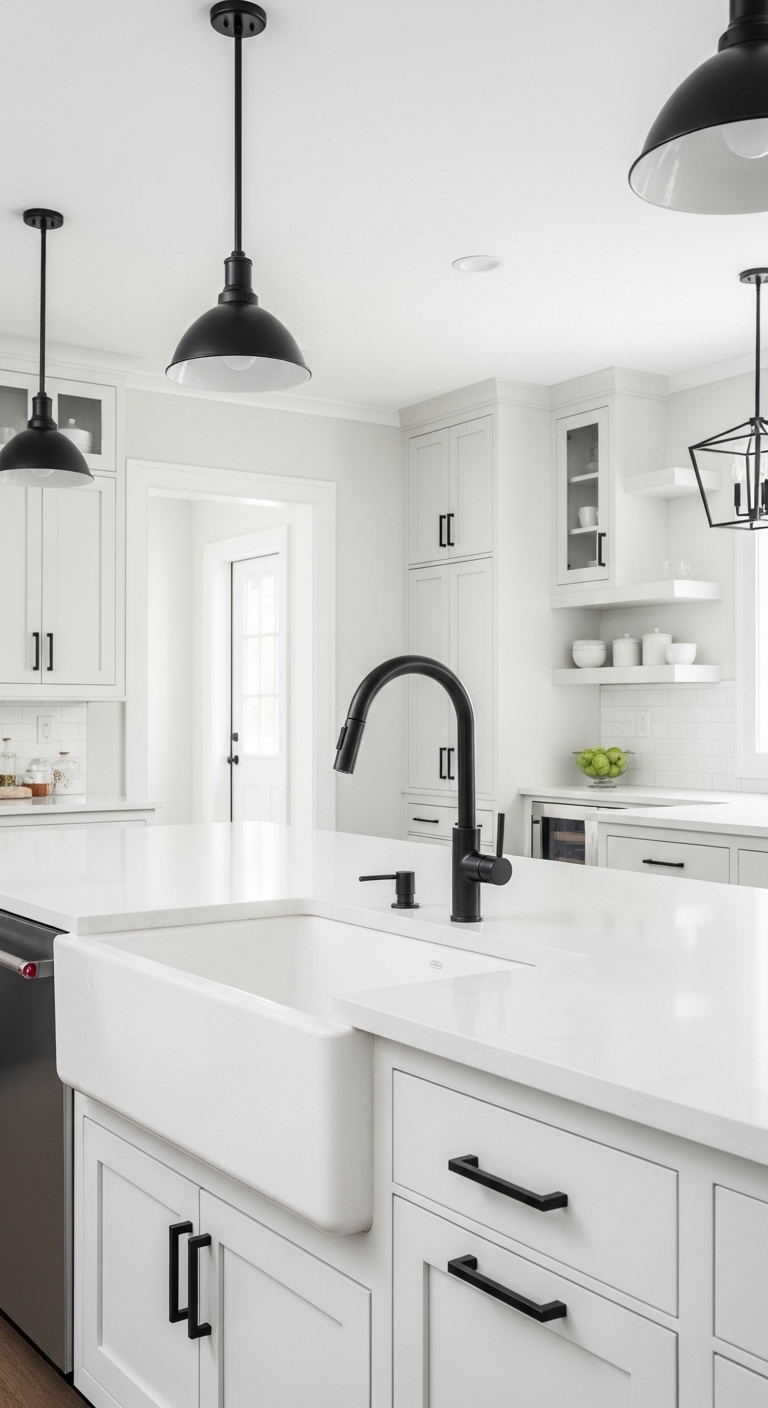
You swap chrome faucets for matte black, and suddenly all those other black elements throughout the kitchen connect into a unified design story. Fixture consistency matters more than most people realize – mixed metals create visual chaos while matched finishes bring sophisticated cohesion. Black faucets hide water spots and fingerprints better than shiny chrome or stainless, meaning less compulsive wiping between uses. The dark fixtures stand out beautifully against white sinks, creating focal points at work zones where you spend the most time washing, prepping, and cleaning.
Coordinated hardware: You extend black finishes to drawer pulls, cabinet knobs, light fixtures, and window hardware for complete design harmony. The repeated black elements create rhythm throughout the space, guiding eyes around the room in intentional patterns. You choose between matte, satin, or glossy black based on maintenance preferences and design goals – matte shows the fewest smudges while glossy brings more shine and drama. This coordinated approach costs the same as random mixed metals but delivers significantly more polished results.
15. Patterned Black and White Tile for Personality Without Color
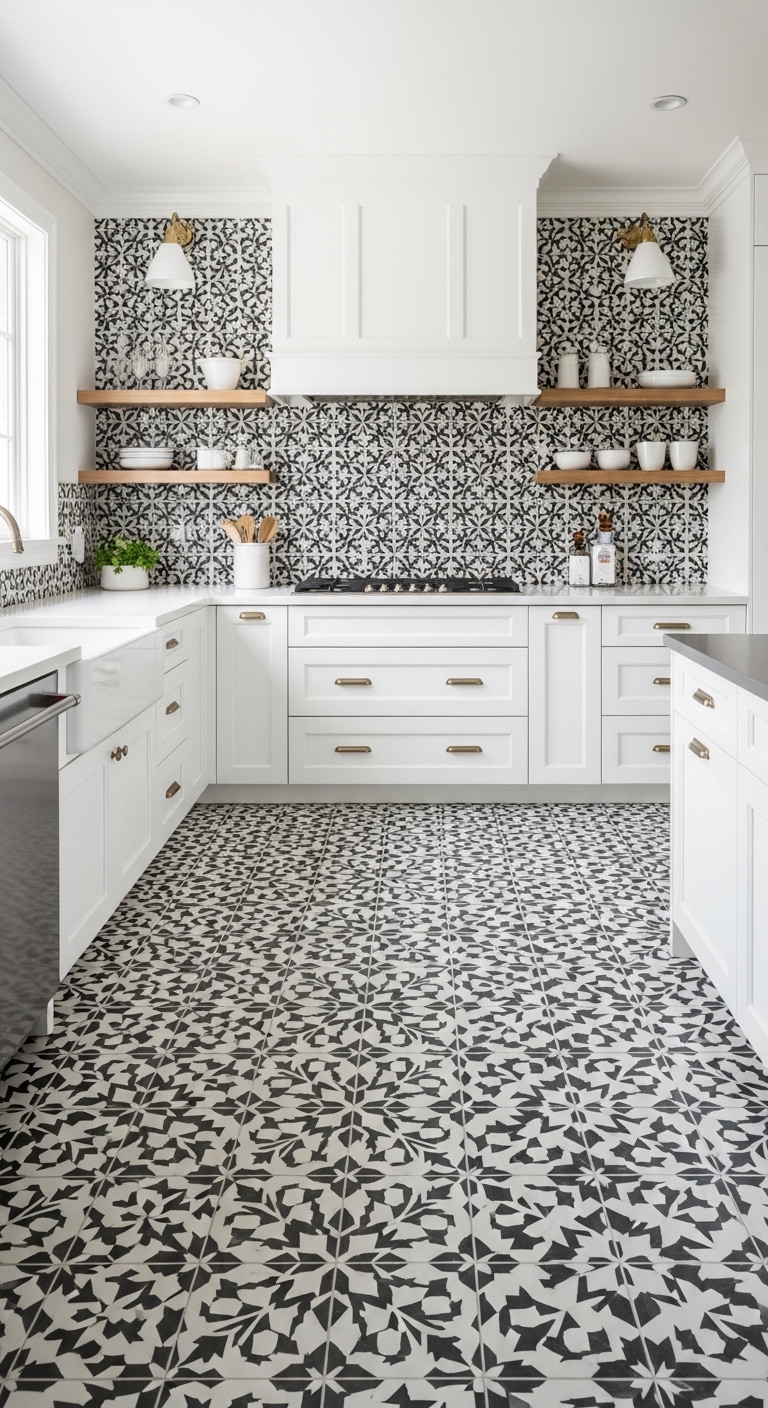
Graphic tile impact: You install patterned cement or ceramic tiles in geometric black and white designs, adding personality without introducing color complications. Moroccan-inspired patterns bring global flair, hexagons feel modern, and Spanish-style designs create Mediterranean warmth – all while maintaining your monochrome palette. The patterns work as backsplashes, floor accents, or statement walls depending on your tolerance for visual energy. You create interest through shape and contrast rather than competing colors, which makes the kitchen feel designed rather than decorated.
Pattern placement strategy: You use bold patterns in small doses – a backsplash section, floor runner, or powder room accent – so the design energizes rather than overwhelms. The patterned tiles work best with simple solid cabinets and minimal countertop veining, giving each element room to shine individually. You balance busy tile with plain walls and floors elsewhere, creating breathing room for eyes to rest between pattern hits. This approach lets you embrace trends through tile choices while keeping major elements neutral and long-lasting.
Your Kitchen, Your Black and White Masterpiece
You’ve got fifteen solid ideas for transforming your kitchen into a black and white stunner that’ll make your Pinterest boards jealous. Start small if the commitment feels scary – swap hardware, add black pendant lights, or paint an accent wall before overhauling everything. Mix high and low investments, splurging on elements you touch daily while saving on pieces that simply fill space. Your kitchen should work for your actual life, not some impossible magazine standard where nobody cooks or spills things. Grab what speaks to you from this list and make it work in your space, your budget, and your style. Black and white gives you the foundation – now go make it yours.
FAQ
Are black and white kitchens still in style?
Yes, black and white kitchens are timeless and continue to stay in style. Their classic contrast works well with modern, minimalist, and even traditional designs, making them a long-term choice rather than a trend.
Is a black and white kitchen good for small spaces?
Yes. A black and white kitchen can work beautifully in small spaces when balanced correctly. Using more white elements helps reflect light, while black accents add depth without making the kitchen feel cramped.
How do I make a black and white kitchen look warm?
You can make a black and white kitchen feel warm by adding natural materials like wood, warm lighting, textured tiles, plants, or brass and gold hardware. These elements soften the contrast and add coziness.
Are black cabinets hard to maintain?
Black cabinets can show dust, fingerprints, and water marks more easily than lighter colors. However, matte finishes and regular cleaning make maintenance manageable and keep them looking stylish.
What countertops work best with black and white kitchens?
Popular countertop choices include white quartz, marble, granite, and light stone finishes. These materials complement both black and white cabinets and enhance the overall elegance of the kitchen.
Do black and white kitchens affect resale value?
Yes, positively. Black and white kitchens are considered neutral, modern, and widely appealing, which can help improve resale value and attract more buyers.
Pingback: 20 Easy Cottage Living Room Ideas 2026 - Simple Cozy Home