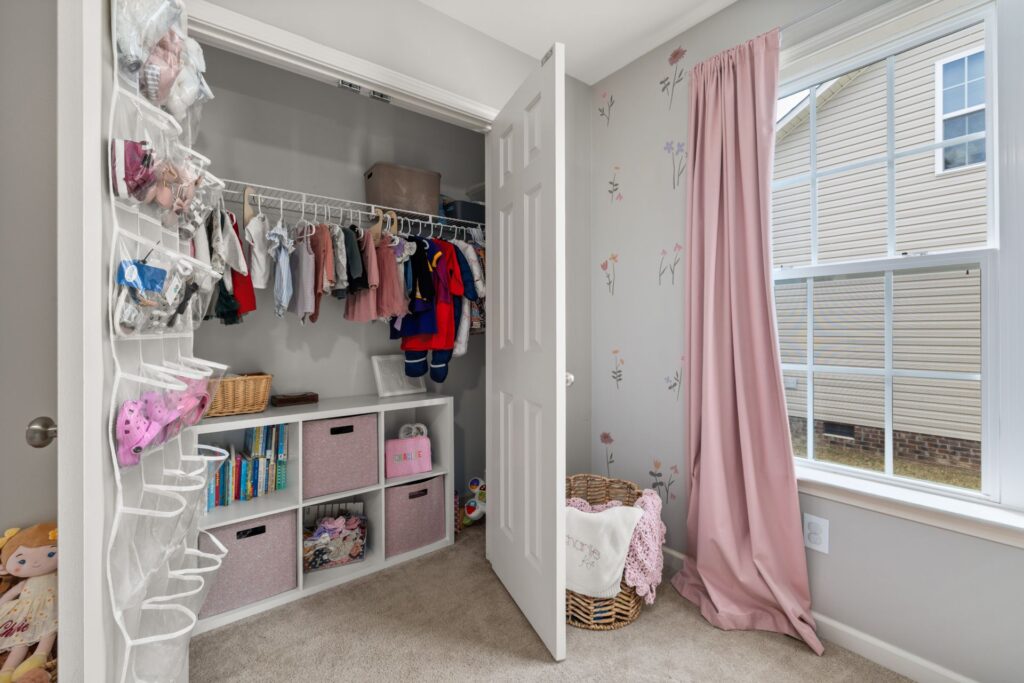
Closet Organization Ideas: Your closet doesn’t need a magic wand – it needs a plan. Messy shelves and tangled hangers happen to everyone, and no, you’re not secretly a hoarder. Sunday afternoons disappear into “organizing” that just shifts the chaos six inches to the left. But small, smart changes fix that fast. And you don’t need a contractor or a trust fund to pull it off. This list from Simple Cozy Homes walks through fifteen real, doable ideas for turning your closet into a space that actually works for you, not against you.
1. Maximize Vertical Space with Stacked Shelving
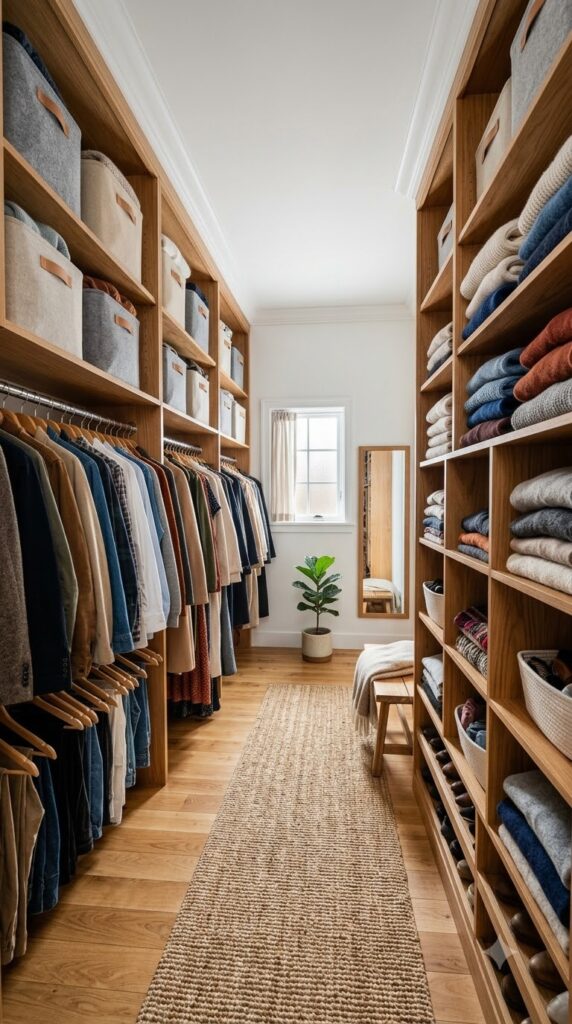
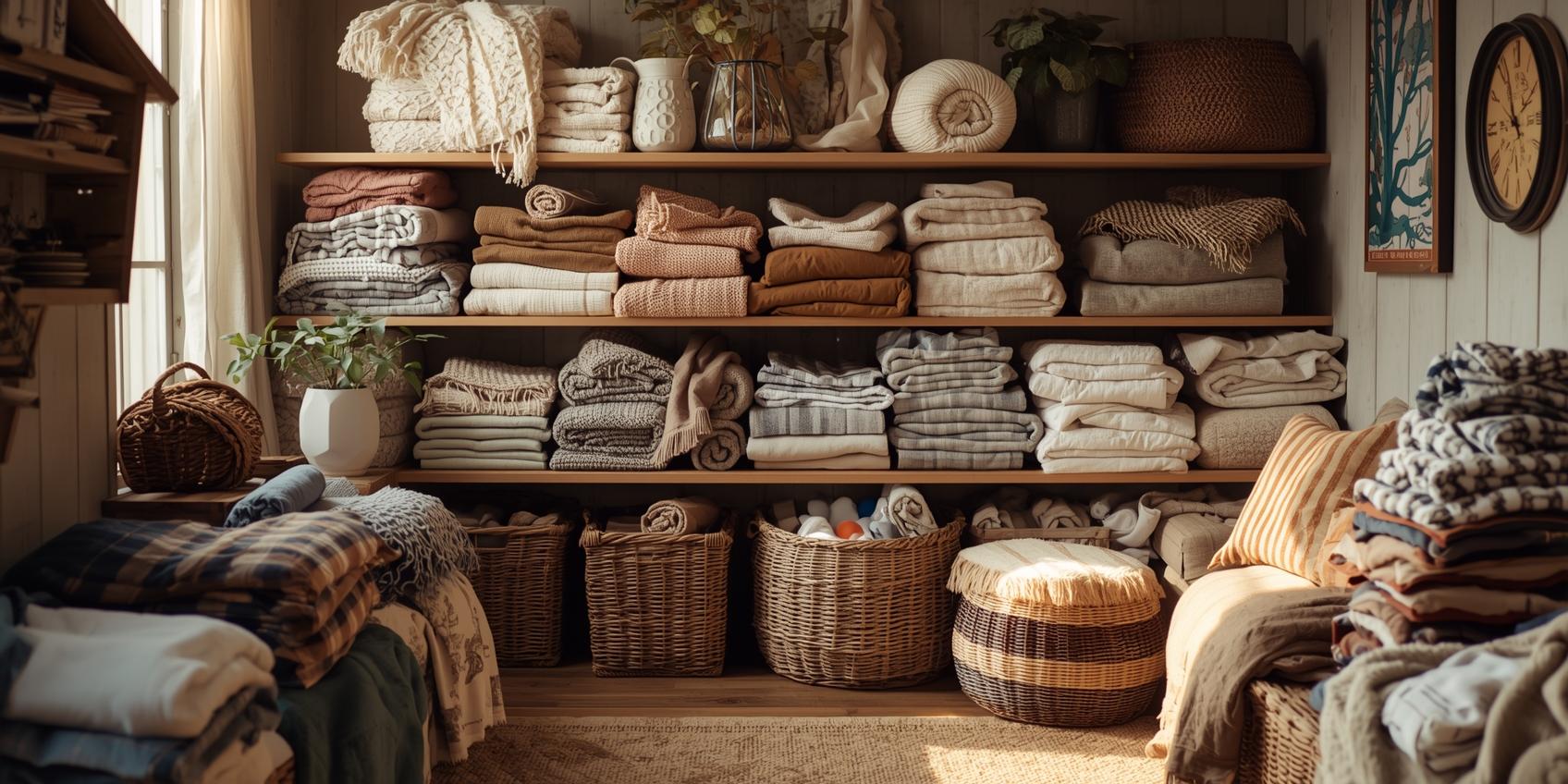
Closets waste space by ignoring the ceiling entirely. You add shelving up top for items you grab once a season, like holiday sweaters or spare blankets. This single move can double your usable storage without touching the square footage. Cheap wire shelves work fine, but wood ones hide clutter better. Check out more layout tricks over at Simple Cozy Homes.
Go vertical first: measure your closet height before buying anything, since most people underestimate the dead air above the rod. Pick sturdy brackets: flimsy hardware sags under sweater weight fast, so spend a little extra on steel ones.
2. Color-Code Your Wardrobe by Category
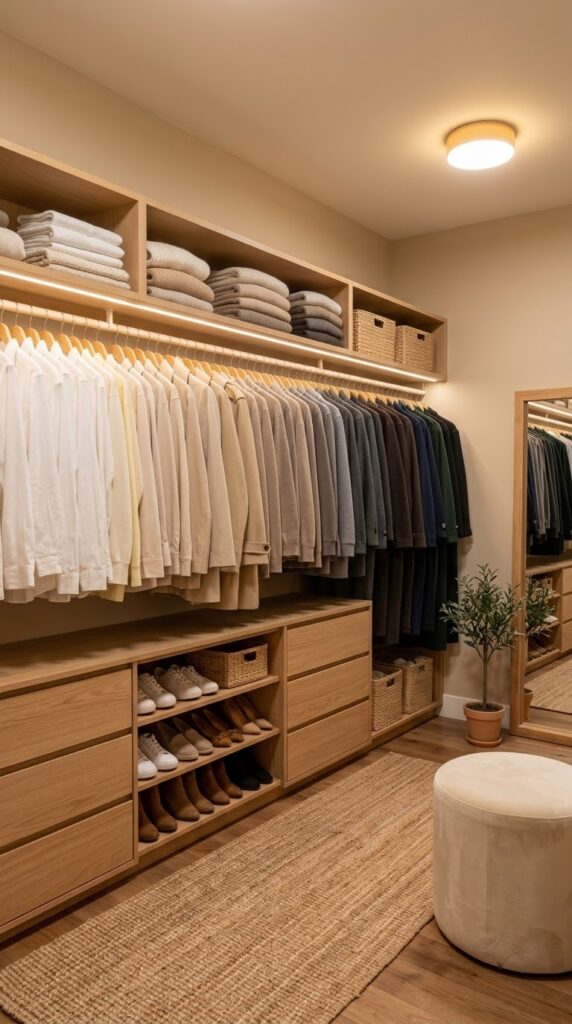
Digging through a jumbled rack every morning wastes actual minutes of your life. You sort clothes by color within each category, and everything gets easier to find. This isn’t about Instagram aesthetics, though it looks satisfying. A rainbow-organized closet also helps you spot gaps in your wardrobe fast. Missing a navy blazer? You’ll notice immediately, instead of hunting through six shirts that look nothing alike.
Group by type, then color: shirts with shirts, pants with pants, each sorted light to dark for a clean visual flow. Start with basics: neutrals like black, white, and gray anchor the system, so place those first and build outward from there.
3. Add a Slim Closet Island
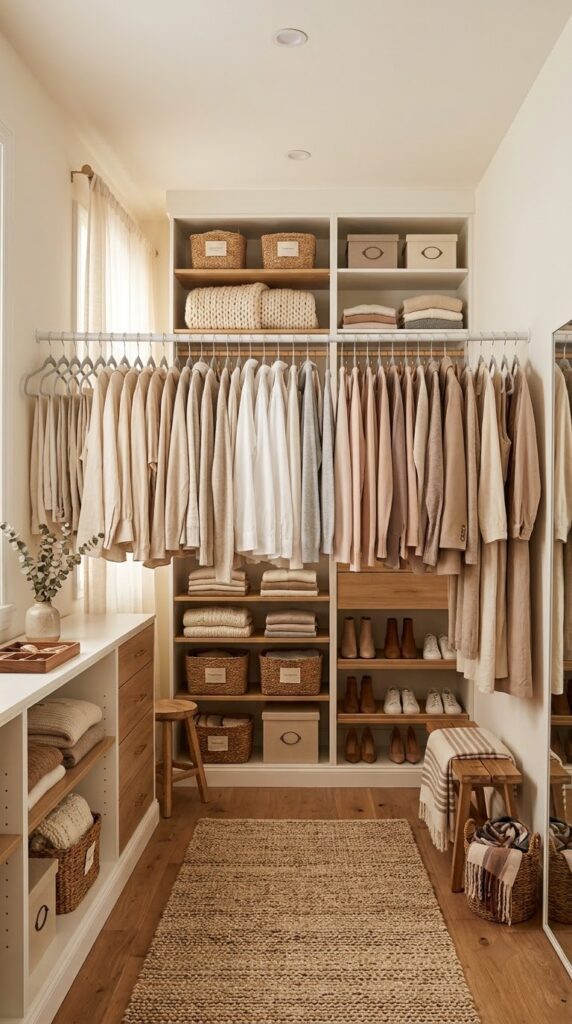
A narrow island in the center of a walk-in closet sounds fancy, but it’s genuinely functional. You get a flat surface for folding, plus drawers underneath for socks, belts, or jewelry. This works best in bigger closets, obviously – nobody’s squeezing a cabinet into a reach-in. But a slim rolling cart does the trick in tighter spaces. It gives you somewhere to set your coffee down while picking an outfit.
Measure twice: leave at least two feet of walking space on every side before committing to a size. Choose drawer depth wisely: shallow drawers suit jewelry, while deeper ones handle folded sweaters without crushing them.
4. Use Velvet Hangers to Save Space
Bulky plastic hangers eat closet space like nobody’s business. You switch to thin velvet hangers, and your rod suddenly holds twice as many clothes without looking crammed. The velvet texture also grips fabric, so shirts and blouses stop sliding onto the floor. It’s a small swap with a genuinely big visual payoff, and matching hangers give the whole closet a cleaner, put-together look.
Buy in bulk: a full matching set costs less per piece and stops old wire hangers from sneaking back in. Color-match to décor: black velvet suits a moody closet, while cream tones pair better with lighter, airy spaces.
5. Install a Pull-Out Shoe Rack
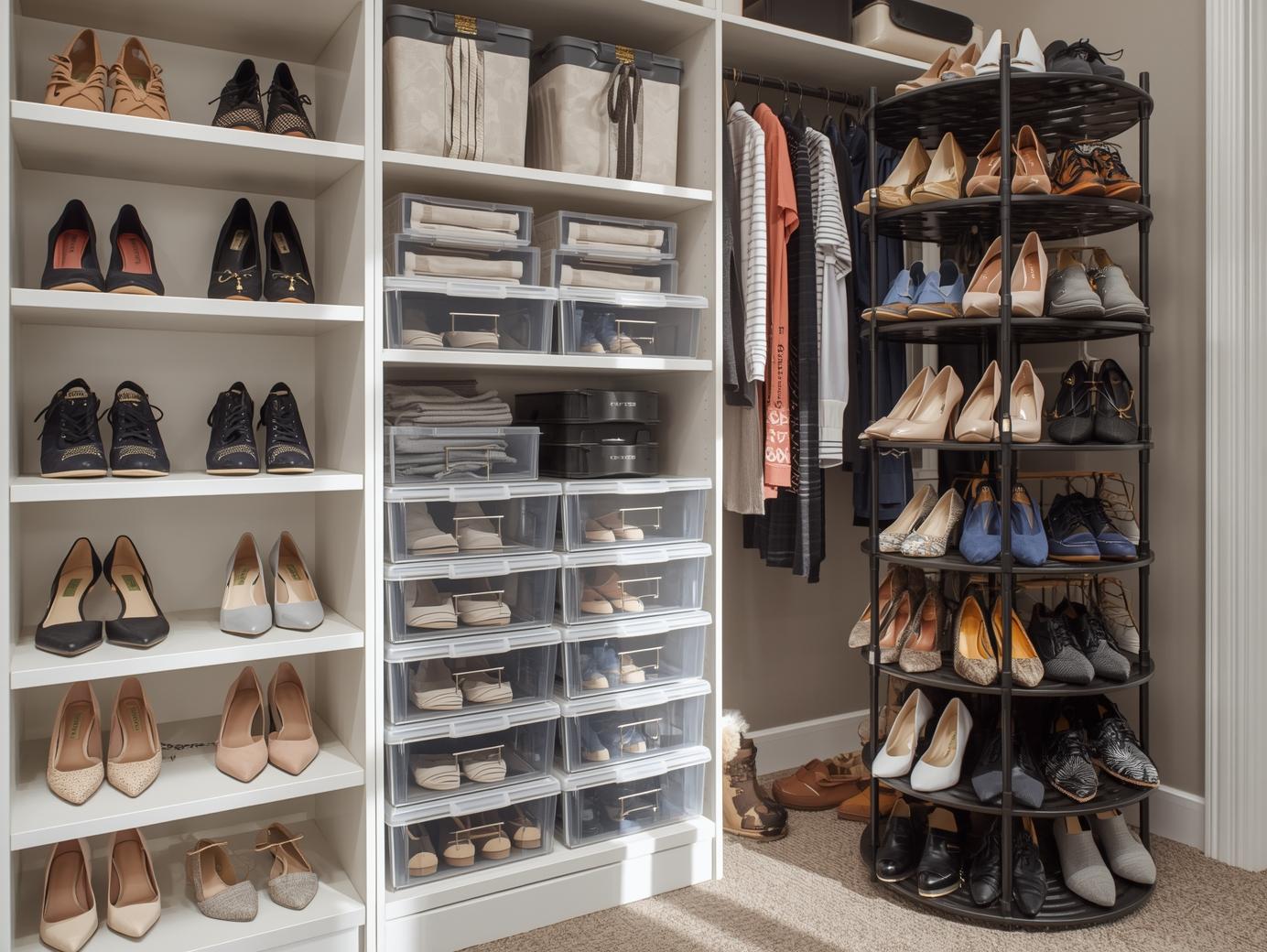
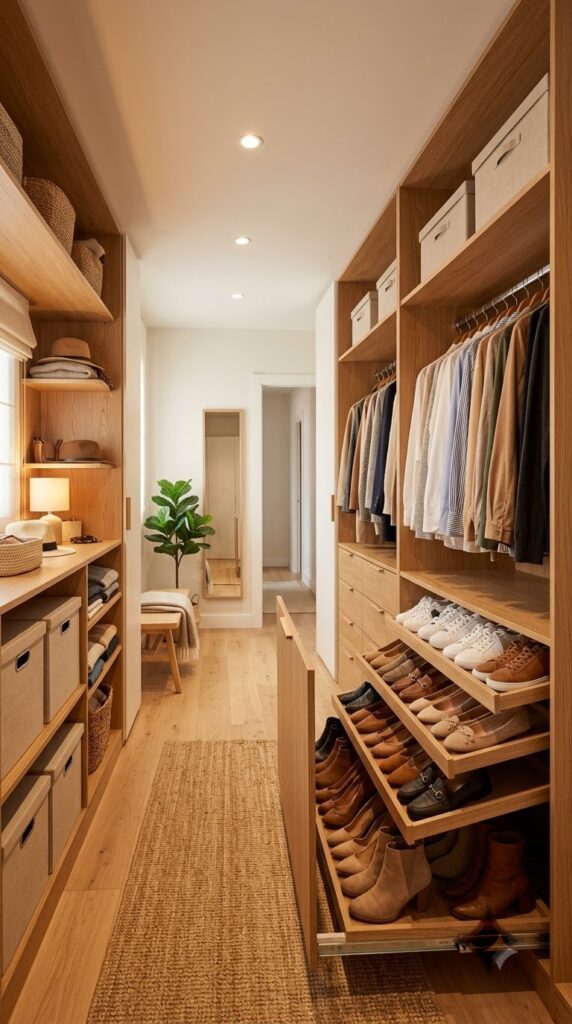
Shoes pile up in corners like they’re multiplying overnight. You install a pull-out rack, and every pair gets its own slot instead of a chaotic heap. This works in both reach-in and walk-in closets, and most versions mount right onto existing shelving without major renovation. Angled shelves let you see each shoe clearly, which beats digging through a bin for a matching sneaker.
Angle beats flat storage: tilted shelves show the whole shoe, not just a toe peeking out at you. Measure your tallest pair: boots need deeper slots than flats, so plan shelf spacing around your bulkiest shoes first.
6. Create a Dedicated Accessory Drawer
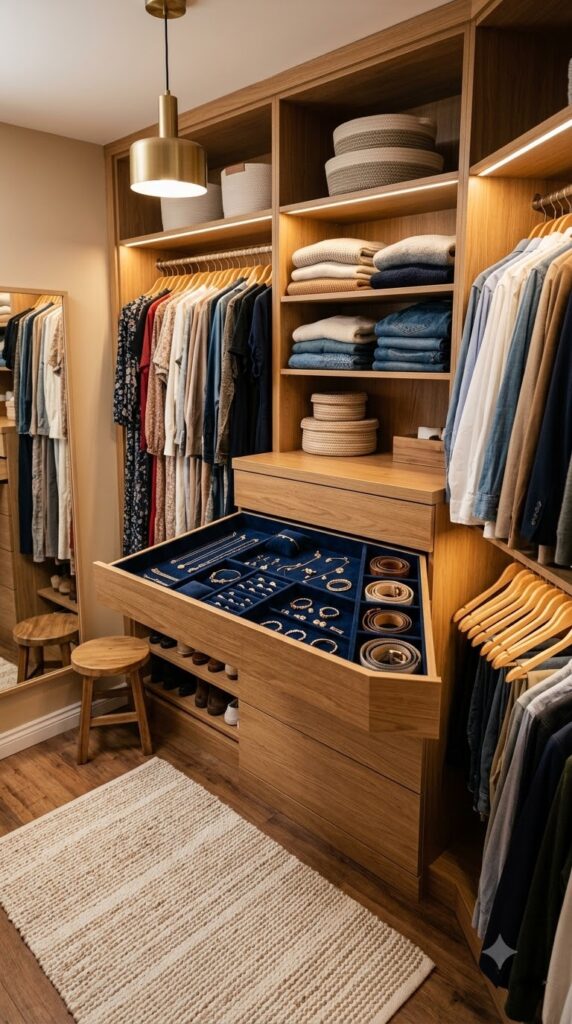
Scarves, belts, and jewelry turn into a tangled mess without a real home. You dedicate one drawer entirely to accessories, using small dividers to keep everything separated. This stops the daily hunt for matching earrings or that one belt you swear existed yesterday. Velvet-lined trays work great for jewelry since pieces won’t slide around every time the drawer opens.
Divide by type: necklaces, rings, and bracelets each need their own compartment to avoid a tangled knot situation. Use drawer liners: soft liners protect delicate jewelry from scratches while keeping smaller pieces from rolling into the corners.
7. Hang a Full-Length Mirror Inside the Door
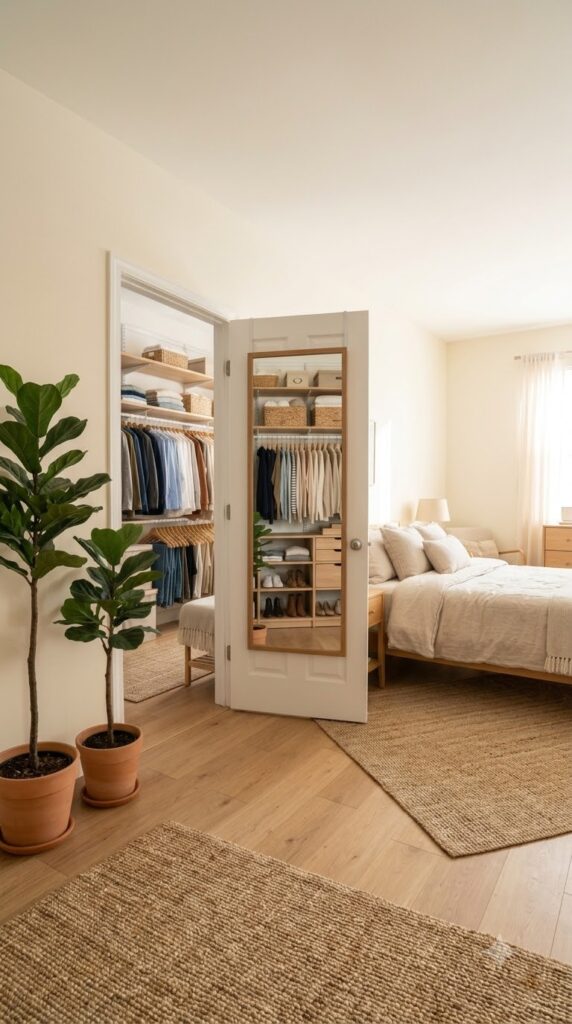
A closet without a mirror means squinting at a tiny bathroom reflection every single morning. You mount a full-length mirror on the inside of the closet door, and outfit-checking finally becomes simple. This trick saves floor space too, since the mirror doesn’t need its own standing frame. Natural light bouncing off it also makes the whole closet feel bigger and brighter.
Door weight matters: check your hinges can handle the extra load before hanging anything heavy on them. Choose adhesive-mounted options: these skip drilling entirely, which matters if you’re renting and can’t damage the door.
8. Use Clear Bins for Off-Season Storage
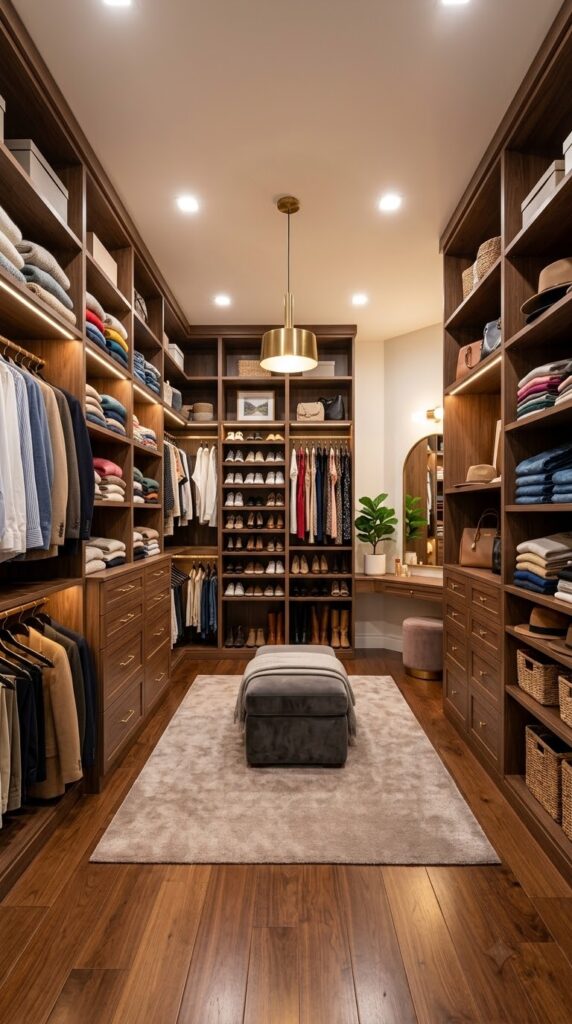
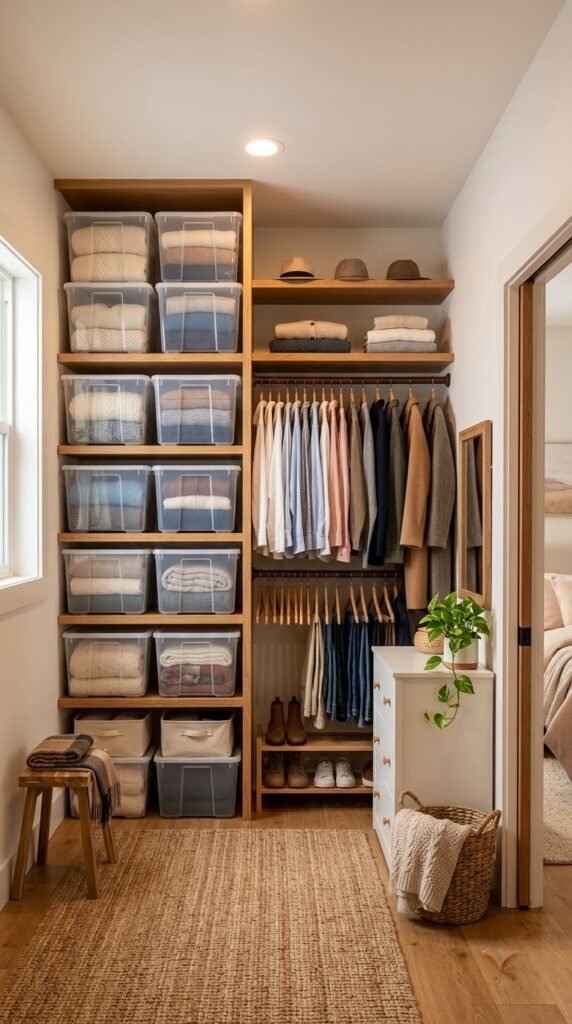
Cardboard boxes hide their contents and fall apart within a year or two. You switch to clear plastic bins, and suddenly you can see exactly what’s inside without opening a single lid. This matters most for off-season items like winter coats or swimsuits you only need part of the year. Stackable bins also protect clothes from dust and moisture far better than open shelving.
Choose matching sizes: uniform bins stack safely and use shelf space efficiently, unlike mismatched containers that wobble dangerously. Add silica packets: these little packs fight moisture buildup, keeping stored fabric fresh instead of musty.
9. Build a Custom Closet System
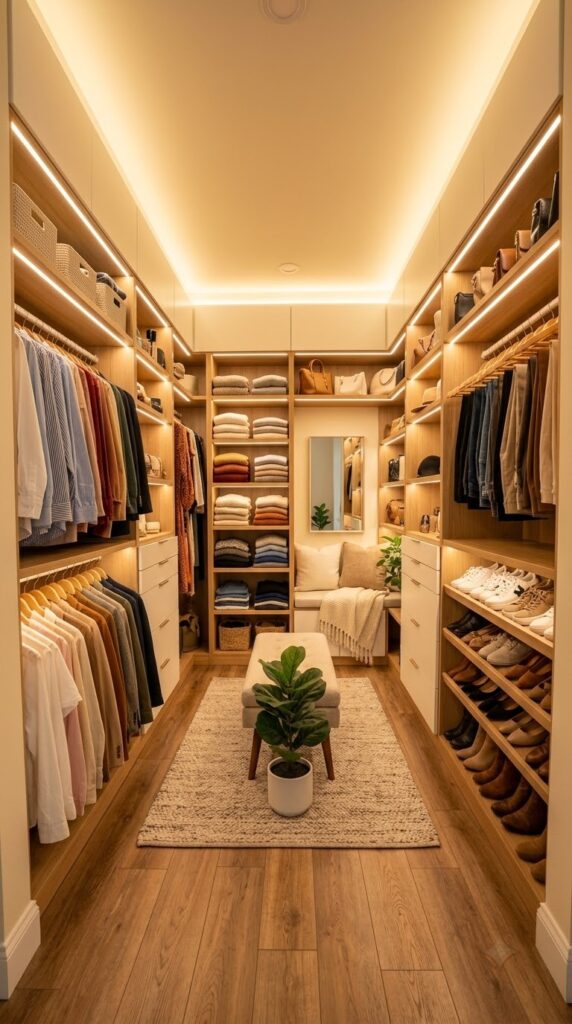
Wire shelving from a big-box store works, but it never quite fits your actual stuff. You invest in a custom closet system, built around your real wardrobe instead of a generic template. This costs more upfront, sure, but it eliminates wasted space and awkward gaps. Adjustable shelves and rods let you reconfigure things as your wardrobe changes over the years.
Custom doesn’t mean expensive: modular kits from hardware stores mimic built-in looks for a fraction of the cost. Plan around your habits: more shoes than sweaters? Build accordingly instead of following a generic showroom layout.
10. Add LED Lighting for Visibility
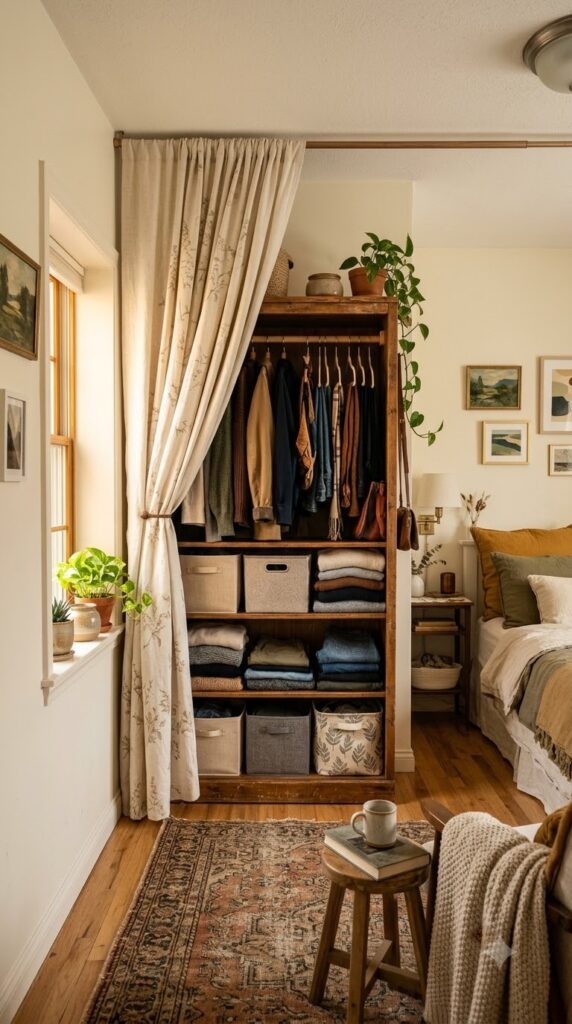
Digging through a dim closet turns picking an outfit into a guessing game every morning. You install battery-powered LED strips or puck lights, and every shelf and corner gets visible instantly. Motion-sensor versions switch on automatically when the door opens, which feels fancy but genuinely helps. No more mismatched socks because you couldn’t tell navy from black in the dark.
Place lights strategically: aim strips along shelf edges rather than the ceiling for even, shadow-free coverage everywhere. Choose warm white bulbs: harsh blue-white light makes clothes look off, so warmer tones show true color.
11. Repurpose a Bookshelf as an Open Closet
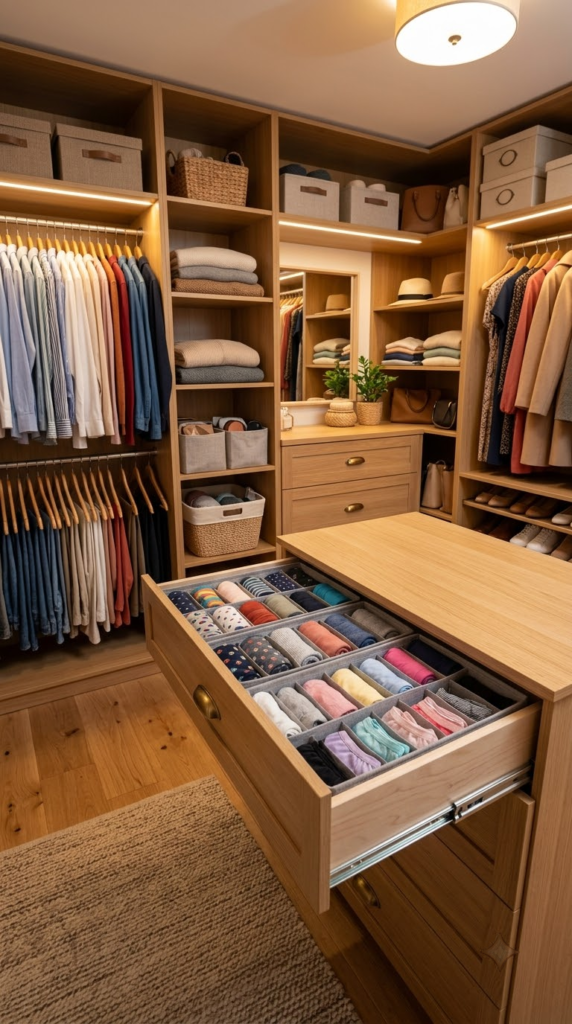
No closet in the room? A bookshelf solves that problem faster than any renovation could. You lay it on its side or use it upright with bins, turning flat shelves into functional storage for folded clothes. This works especially well in studio apartments or kids’ rooms where built-in closets don’t exist. Add a curtain across the front, and it instantly looks intentional instead of improvised.
Fold, don’t hang: open shelving works best with folded stacks rather than hanging clothes that’ll gather dust fast. Add a fabric curtain: a simple tension rod hides the mess on lazy weeks without any real effort.
12. Use Drawer Dividers for Small Items
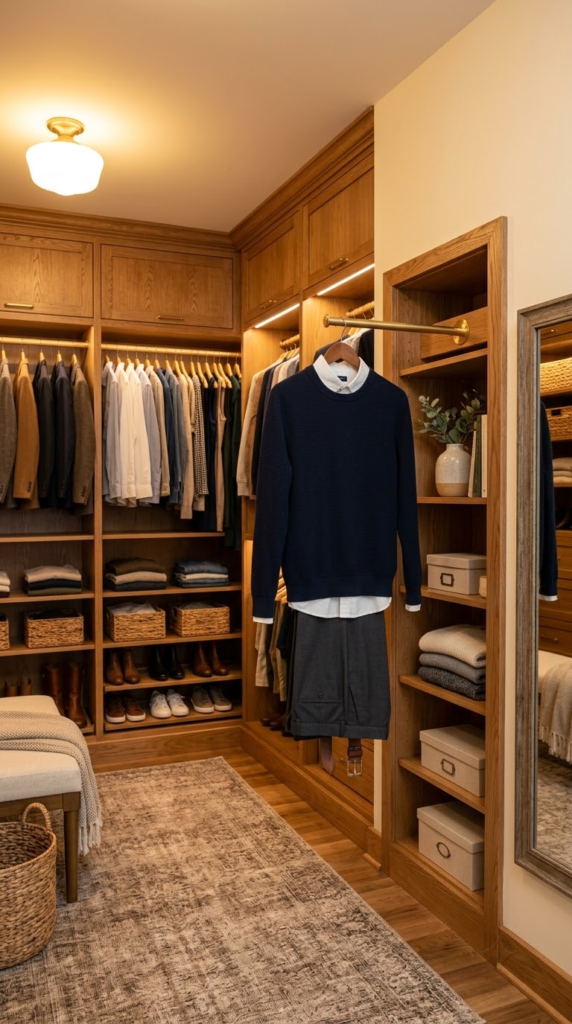
Socks and underwear turn any drawer into a chaotic tangle within days of putting them away. You add adjustable dividers, and each item type gets its own defined little space. This trick works in dressers too, not just closet built-ins, so it’s worth doing everywhere. Bamboo or fabric dividers both work fine, though bamboo holds its shape longer.
Measure your drawer first: adjustable dividers need accurate measurements, or they’ll shift around and undo your work within a week. Roll, don’t ball: rolled socks and underwear fit more pieces per row than lumpy balled ones ever could.
13. Hang a Valet Rod for Outfit Prep
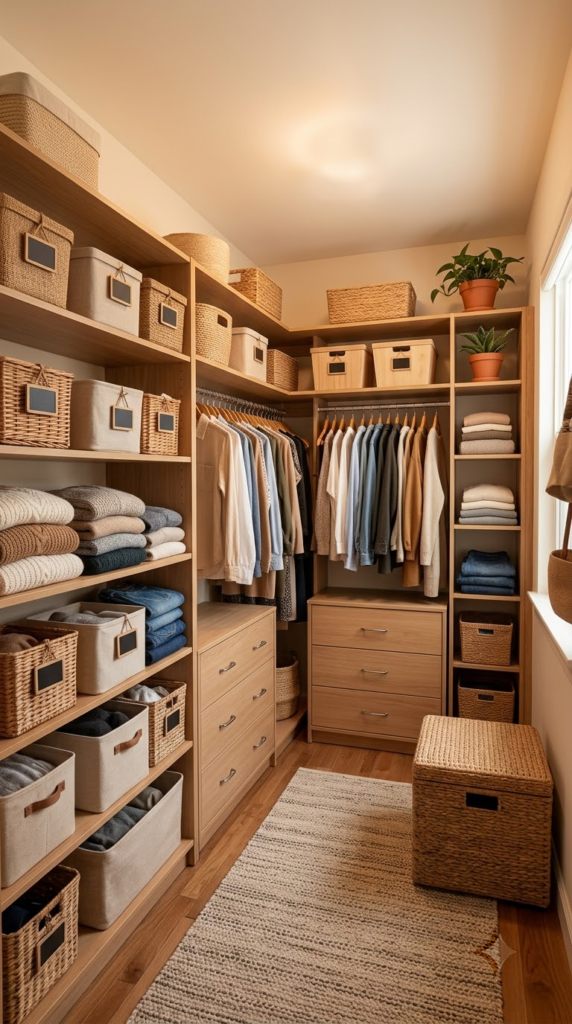
Choosing an outfit the night before saves genuine chaos come morning. You install a small valet rod, a short bar that pulls out from the closet wall, and hang tomorrow’s outfit there overnight. This keeps prepped clothes visible and wrinkle-free instead of draped over a chair. It also stops the frantic last-minute scramble through your whole closet at 7 a.m.
Mount at eye level: placing it too high or low defeats the purpose of a quick visual grab in the morning. Use it nightly: the habit matters more than the hardware, so actually plan outfits instead of leaving it empty.
14. Label Everything for Easy Access
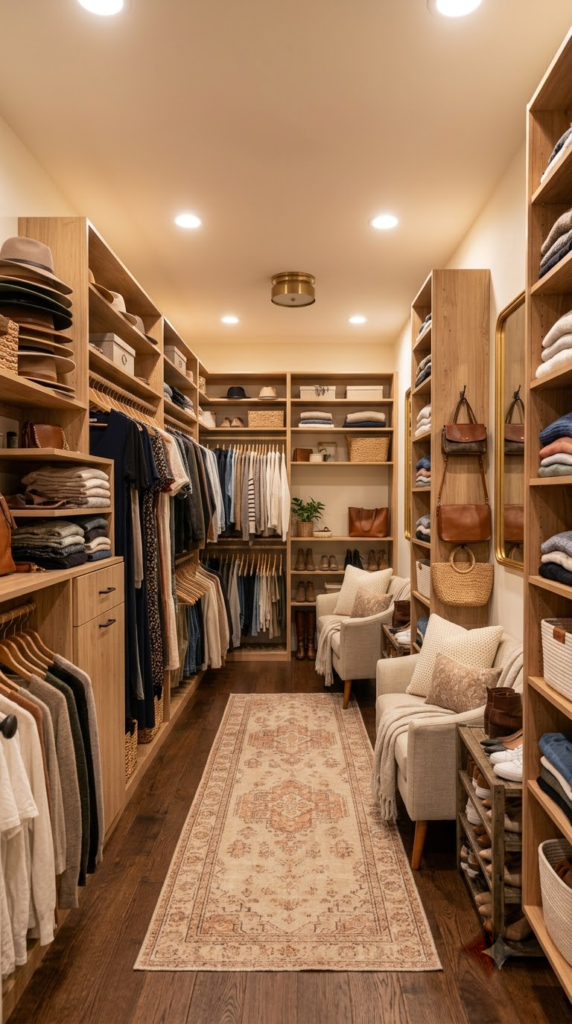
Bins and baskets without labels turn into mystery boxes within a month, guaranteed. You add simple labels, whether handwritten tags or a label maker, and every container becomes instantly identifiable. This matters even more if other people share the closet, since guessing games waste everyone’s time equally. Clear labels also make seasonal swaps faster, since you’re not opening five bins to find winter scarves.
Keep fonts simple: fancy script looks nice but reads slower at a glance than clean block lettering. Update as needed: contents change, so swap labels instead of letting old ones lie about what’s inside.
15. Add a Cozy Bench or Seating Nook
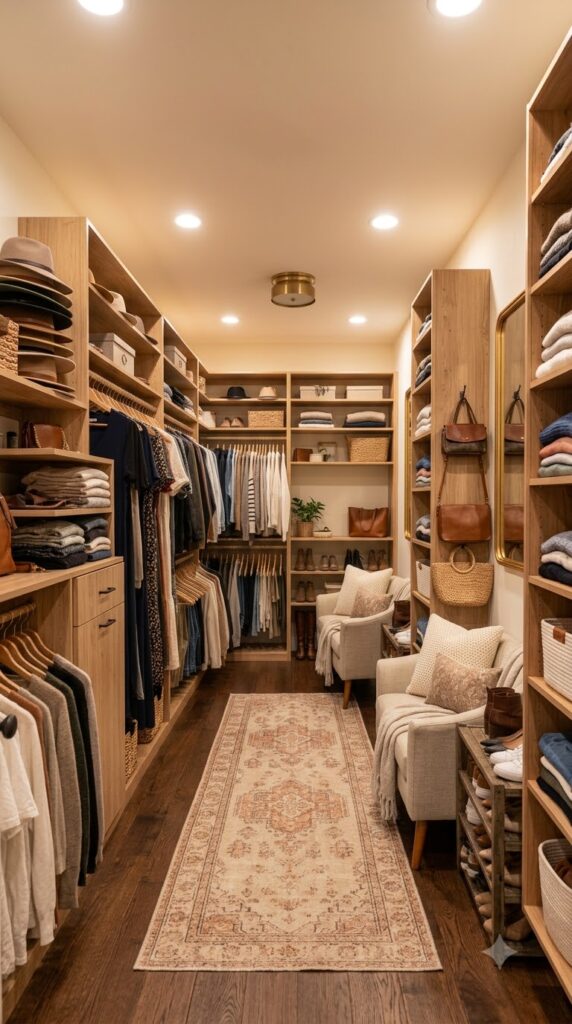
A closet isn’t just storage – it’s real estate, and a small bench makes it feel like a proper room. You tuck a narrow bench or ottoman into an empty corner, giving yourself somewhere to sit while pulling on shoes. This works especially well in larger walk-ins with room to spare near the shoe rack. A cushioned top also doubles as extra storage with a lift-up lid.
Pick a durable fabric: closets see foot traffic and dropped shoes, so choose upholstery that wipes clean easily. Keep it narrow: a slim bench fits tight spaces without blocking drawers or hanging clothes nearby.
Ready to Get Started?
None of these ideas need a full renovation or a weekend of stress. Pick one, maybe the velvet hangers or a few clear bins, and build from there as time allows. Small changes stack up fast, and your future self will thank you every single morning. Your closet doesn’t have to look like a magazine spread to function well – it just needs a little intention. So grab a bin, sort one shelf, and see how it feels. For more room-by-room inspiration, browse Simple Cozy Homes and find the next project worth tackling this weekend.