
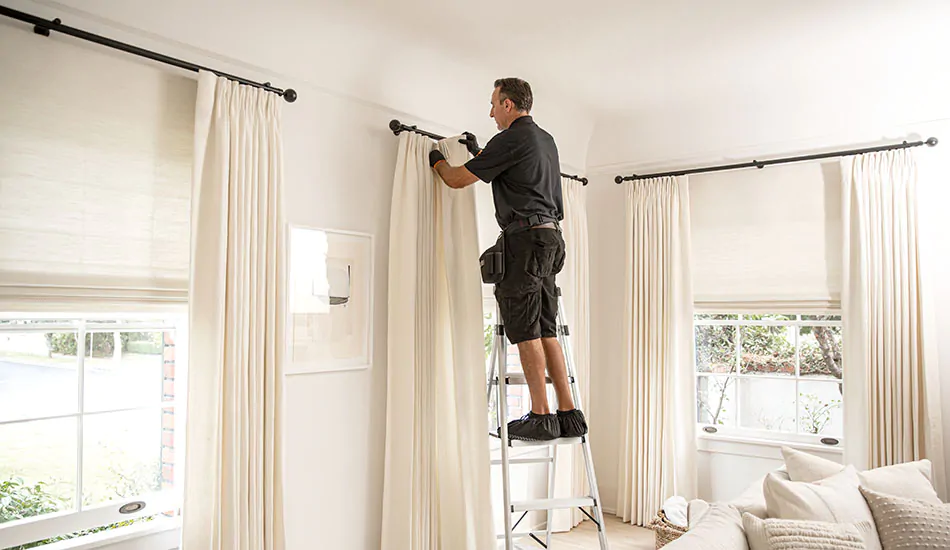
Introduction to Measuring Curtains
Learning how to measure curtains is one of the most important steps in home decor. Curtains don’t just block light—they add personality, style, and warmth to your space. But even the most beautiful fabric can look awkward if the measurements are off.
Why Accurate Curtain Measurement Matters
Getting your measurements right ensures:
- A polished, professional look
- Proper light control and privacy
- Better insulation and energy efficiency
- No wasted money on ill-fitting curtains
Even a small measuring error can lead to curtains that look too short, too narrow, or simply out of place.
Read More: 12 Home Gym Ideas That Make Working Out Easy & Fun (2026)
Common Mistakes to Avoid
Before diving in, avoid these pitfalls:
- Measuring only the window instead of the curtain rod
- Forgetting to account for curtain fullness
- Ignoring curtain style differences
- Hanging rods too low
Tools You Need Before Measuring
Essential Measuring Tools Checklist
To measure accurately, gather:
- Metal measuring tape
- Pencil and notebook
- Step ladder
- Level (optional but helpful)
Optional Tools for Precision
- Laser measuring device
- Curtain rod brackets (for planning placement)
Understanding Curtain Types
Different curtain styles affect how you measure.
Rod Pocket Curtains
These slide directly onto the rod and require exact width measurement.
Eyelet and Grommet Curtains
These hang in uniform folds and need extra width for fullness.
Pencil Pleat Curtains
These offer adjustable gathering, making them flexible in width.
Tab Top Curtains
These hang from fabric loops and typically sit higher on the rod.
How to Measure Curtain Width
Getting the width right ensures your curtains look full and elegant—not flat and stretched.
Measuring Window Width
- Measure the full width of the curtain rod, not just the window
- Extend the rod 6–12 inches beyond the window frame on each side
Fullness Ratio Explained
Curtains need extra fabric to create folds.
Standard Fullness Guidelines
- Light fabrics: 2x width
- Medium fabrics: 1.5x–2x width
- Heavy fabrics: 1.5x width
Example:
If your rod width is 100 inches:
- Ideal curtain width = 150–200 inches total
How to Measure Curtain Length
Length plays a huge role in the overall style of your curtains.
Measuring from Rod to Floor
Start from:
- Top of curtain rod
- Measure down to desired endpoint
Types of Curtain Length Styles
Floor-Length Curtains
- End just above the floor (½ inch gap)
- Most common and modern
Sill-Length Curtains
- End at the window sill
- Best for kitchens and bathrooms
Puddle Curtains
- Extend 2–6 inches onto the floor
- Create a luxurious, dramatic look
Measuring for Curtain Rod Placement
Ideal Height Placement
Hang rods:
- 4–6 inches above the window frame
- Or closer to the ceiling for a taller look
Extending Rod Width
Extend beyond the window:
- Makes windows appear larger
- Allows more light when curtains are open
Measuring Different Window Types
Bay Windows
- Measure each section separately
- Use flexible or multiple rods
Sliding Doors
- Measure full width of the door
- Add extra width for stacking space
Small Windows
- Use wider rods to create the illusion of bigger windows
How to Measure for Curtains with Linings
Blackout Curtains
- Require precise measurements for full coverage
- Add extra width to block light leaks
Thermal Curtains
- Slightly heavier, so allow extra width for proper draping
Curtain Measurement for Layered Styles
Layering adds depth and functionality.
Sheer + Blackout Combinations
- Measure both layers separately
- Sheers usually wider for a soft look
Double Rod Measurements
- Ensure rods are spaced properly
- Measure front and back layers independently
Tips for Measuring Curtains Like a Pro
Double-Check Measurements
Always measure twice—mistakes can be costly.
Consider Fabric Shrinkage
Natural fabrics like cotton may shrink after washing.
Allow for Hardware
Account for:
- Rings
- Hooks
- Curtain headers
Curtain Size Chart (Quick Reference)
| Window Width | Curtain Width (Total) | Curtain Length |
|---|---|---|
| 36 inches | 54–72 inches | 63–84 inches |
| 48 inches | 72–96 inches | 84–96 inches |
| 60 inches | 90–120 inches | 96–108 inches |
How to Measure for Curtains in Different Rooms
Living Room
- Go for floor-length or puddle styles
- Use wider panels for a luxurious feel
Bedroom
- Choose blackout curtains
- Ensure full coverage for privacy
Kitchen
- Use sill-length curtains
- Keep measurements practical and neat
Conclusion
Mastering how to measure for curtains is simpler than it seems—but it makes a huge difference in your home’s appearance. With the right tools, careful measurements, and a clear understanding of curtain styles, you can achieve a professional, stylish finish every time.
Whether you’re decorating a cozy bedroom or a grand living room, accurate curtain measurements ensure your space looks balanced, elegant, and complete.
For more detailed home decor tips, you can explore this helpful guide:
Conclusion
Should I measure the window or the rod?
Always measure the curtain rod, not just the window.
How much wider should curtains be than the window?
Typically 1.5 to 2 times the rod width for proper fullness.
Where should curtain rods be placed?
4–6 inches above the window frame or near the ceiling.
What is the best curtain length?
Floor-length curtains are the most popular and versatile.
Do curtains need to touch the floor?
Not necessarily, but they should be close for a polished look.
How do I measure for sheer curtains?
Use extra width (2x or more) for a soft, flowing appearance.