Spring shows up every year like that one friend who insists on redecorating your entire personality – and honestly, you should let it. Easter floral arrangements give you the perfect excuse to fill every corner of your home with color, texture, and life. Whether you’re a seasoned DIY decorator or someone who just bought their first pair of garden shears, flowers transform ordinary spaces into something worth photographing. This guide walks you through 20 genuinely useful ideas for Easter arrangements that feel fresh, intentional, and – dare we say – Pinterest-worthy without requiring a florist’s degree.
1. Build Your Base With a Classic Tulip Centerpiece
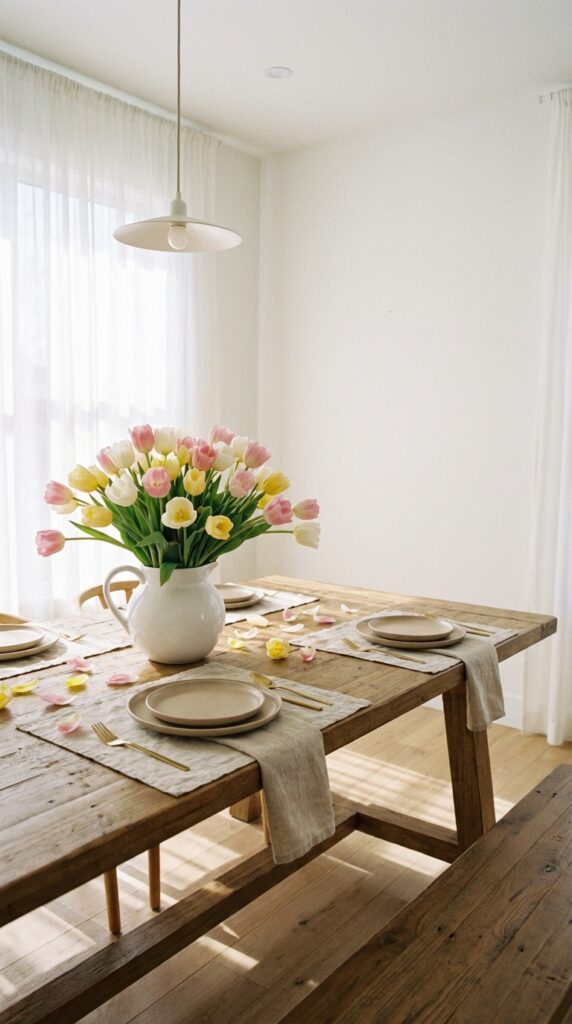
Easter Floral Arrangement: Tulips do the heavy lifting so you don’t have to. A tight cluster of mixed-color tulips in a simple white ceramic pitcher creates instant spring energy on any dining table. You don’t need thirty stems – ten to fifteen does the job beautifully.
Choosing your colors: Soft pinks, creamy whites, and butter yellows feel the most Easter-appropriate, but don’t sleep on deep purples paired with white for a more dramatic look.
Keeping them fresh: Trim the stems at a diagonal, add a penny to the water (yes, really – copper slows bacterial growth), and change the water every two days to extend their life significantly.
2. Tuck Flowers Into Vintage Teacups for Instant Charm
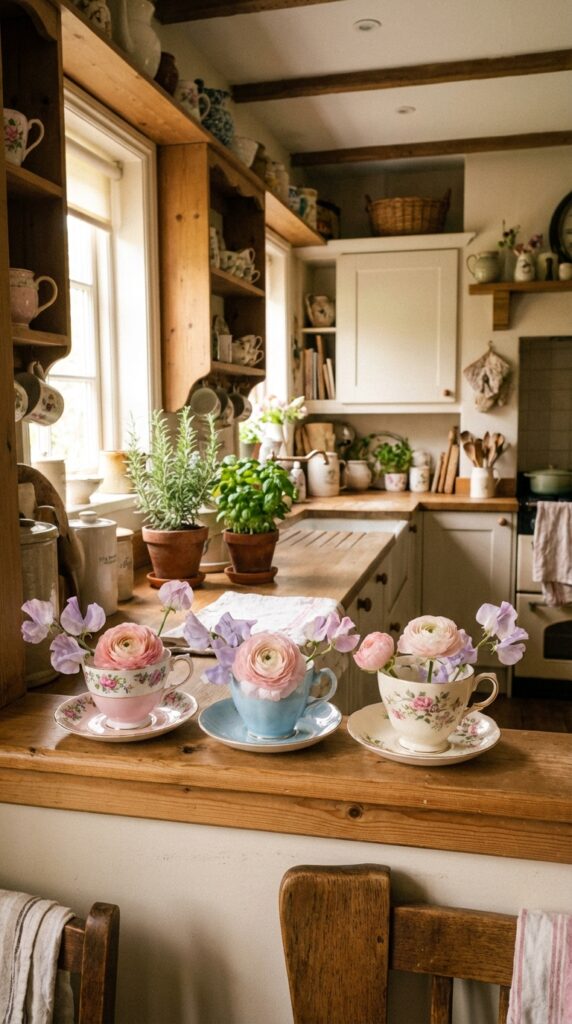
Teacups make the most underrated vases on the planet. A mismatched set of three vintage teacups, each holding two or three small blooms like ranunculus or sweet peas, creates a whimsical centerpiece that costs almost nothing.
Finding your teacups: Thrift stores carry them for under a dollar each – grab ones with floral prints or pastel glazes to match your Easter palette.
Arranging the blooms: You want the flowers to sit just above the cup’s rim, not spill dramatically over the sides. Short stems work best here, so don’t throw away those “too small” trimmings from bigger arrangements.
3. Hang a Floral Wreath on Your Front Door
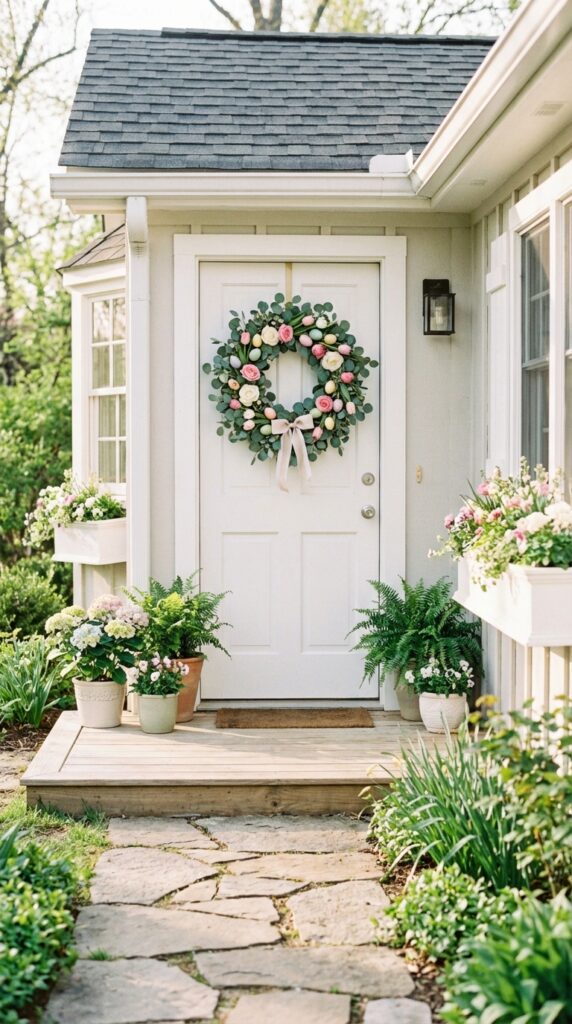
Your front door sets the tone for everything inside, so treat it accordingly. An Easter wreath built around fresh or faux flowers signals warmth before guests even knock.
Choosing fresh versus faux: Fresh wreaths last about a week and smell incredible – faux ones last forever but require better construction to avoid looking cheap. Spend more on realistic faux flowers; the dollar-store versions fool nobody.
Building the base: A grapevine or moss wreath base gives you something to tuck stems into without wire or glue guns. Add in Easter eggs, ribbon, and eucalyptus sprigs to fill gaps and give it that lush, layered look everyone saves on Pinterest.
4. Create a Low-Centerpiece With Moss and Eggs
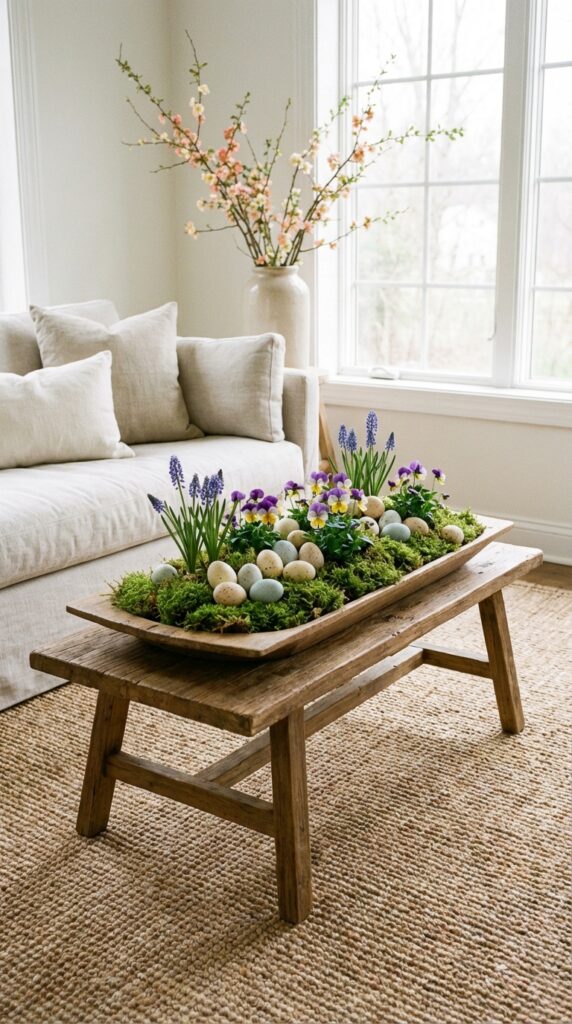
Not every arrangement needs to reach for the ceiling. A shallow wooden tray or a wide ceramic bowl filled with fresh moss, speckled Easter eggs, and small blooms sits perfectly on a coffee table without blocking anyone’s view.
Sourcing the moss: Garden centers sell live sheet moss inexpensively – dampen it slightly before arranging so it stays green and alive longer.
Adding the florals: Push small stems of muscari (grape hyacinth) or violas directly into the moss. They look like they just sprouted there naturally, which is exactly the relaxed, organic vibe that dominates spring home decor right now.
5. Style a Mantel With Cascading Greenery and Blooms
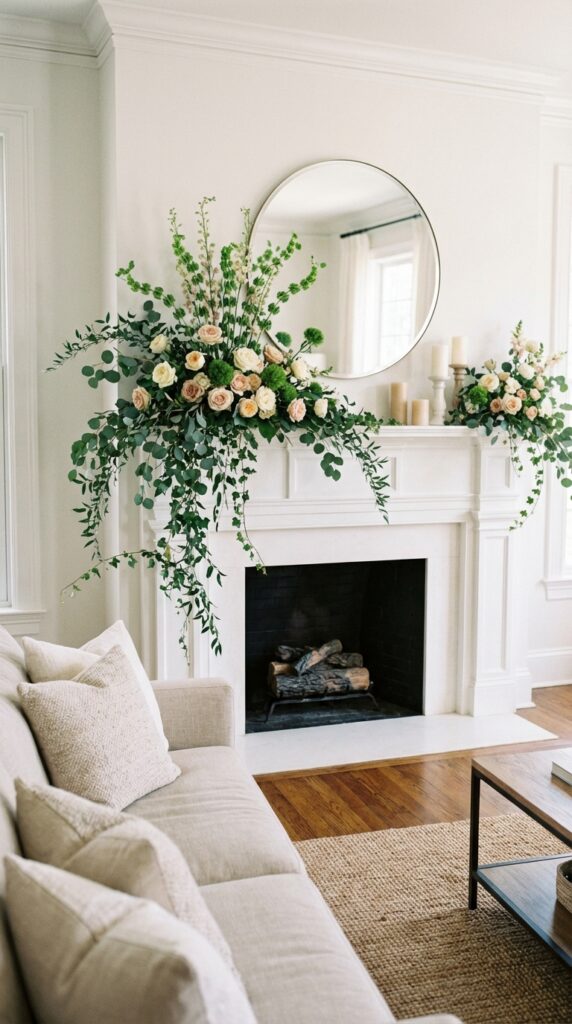
A mantel arrangement rewards bold thinking. You have horizontal space, vertical space, and a natural focal point – use all three.
Layering your elements: Start with long trailing eucalyptus or ivy to establish the cascade, then add blooms at different heights – tall stems in the center, shorter clusters toward the edges.
Mixing textures: Pair something soft and billowy like garden roses with something structural like green trick dianthus or thistle. The contrast keeps the eye moving across the arrangement instead of landing in one spot and stopping. And yes, this absolutely justifies buying that oversized mirror you’ve been eyeing for the wall above.
6. Arrange Flowers in Pastel-Painted Mason Jars
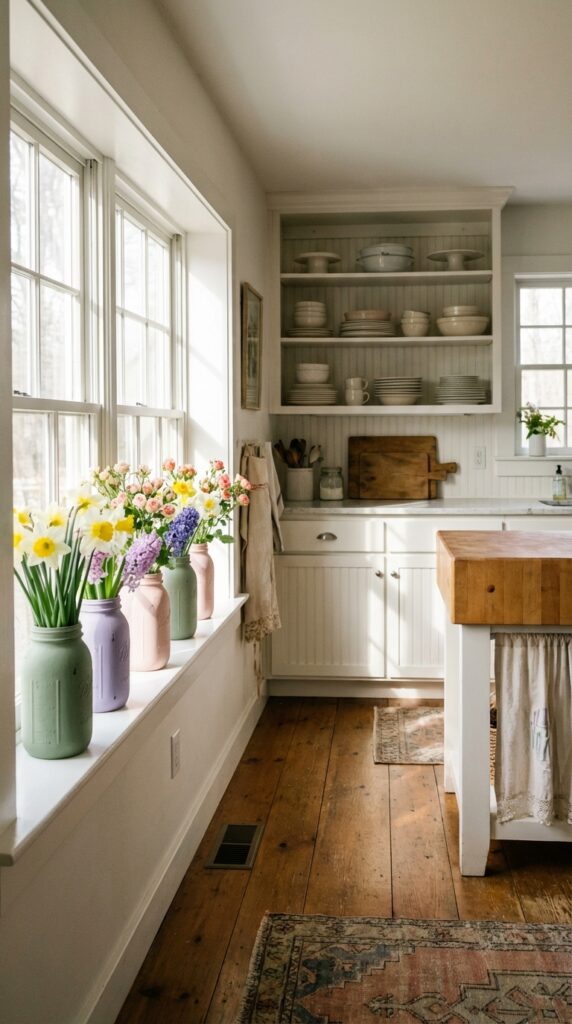
Mason jars earn their reputation as the workhorses of DIY decor – but plain glass gets boring fast. A quick coat of chalk paint in sage green, lavender, or blush pink transforms them into something genuinely lovely.
Painting the jars: Use chalk paint for a matte, vintage finish and seal it with a clear wax once dry so the paint doesn’t chip when wet.
Grouping them together: Line three to five jars of varying heights along a windowsill or shelf, each holding a different bloom. Daffodils in one, hyacinths in another, small spray roses in a third – the variety creates rhythm without looking chaotic.
7. Float Flowers in a Glass Bowl for a Minimal Look
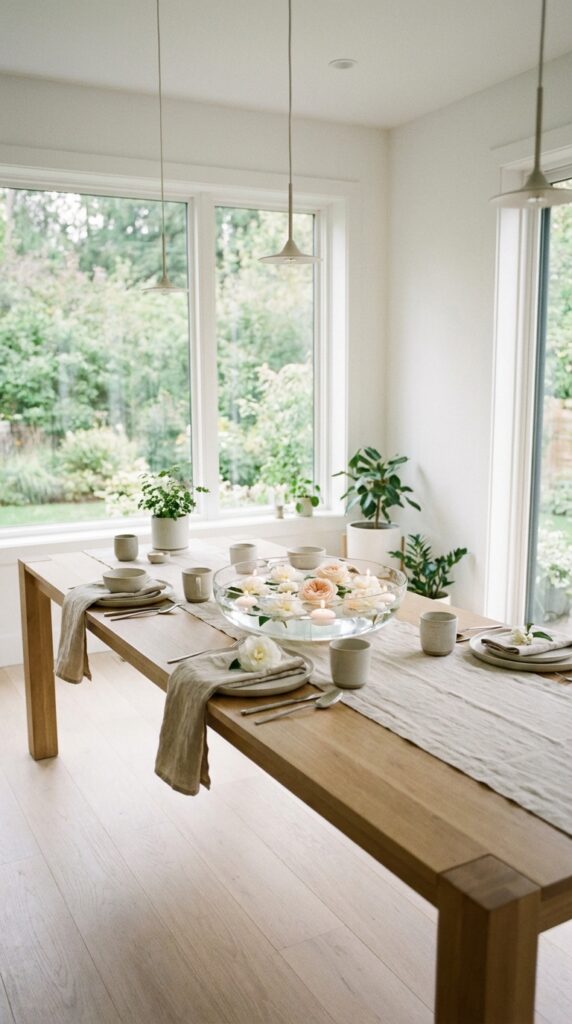
Sometimes less really does hit differently. A wide glass bowl filled with water and floating flower heads – think camellias, gardenias, or open garden roses – creates a centerpiece that feels elegant without requiring any real arranging skill.
Picking the right blooms: You want flowers with wide, flat heads that sit naturally on the water’s surface. Avoid anything with heavy petals that sinks immediately – peonies, while gorgeous, tend to bob awkwardly unless you prop them.
Adding the finishing touch: Drop in a few floating candles around the blooms for an evening table setting that photographs beautifully and takes about four minutes to assemble.
8. Build a Spring Flower Crown for a Styled Flat Lay
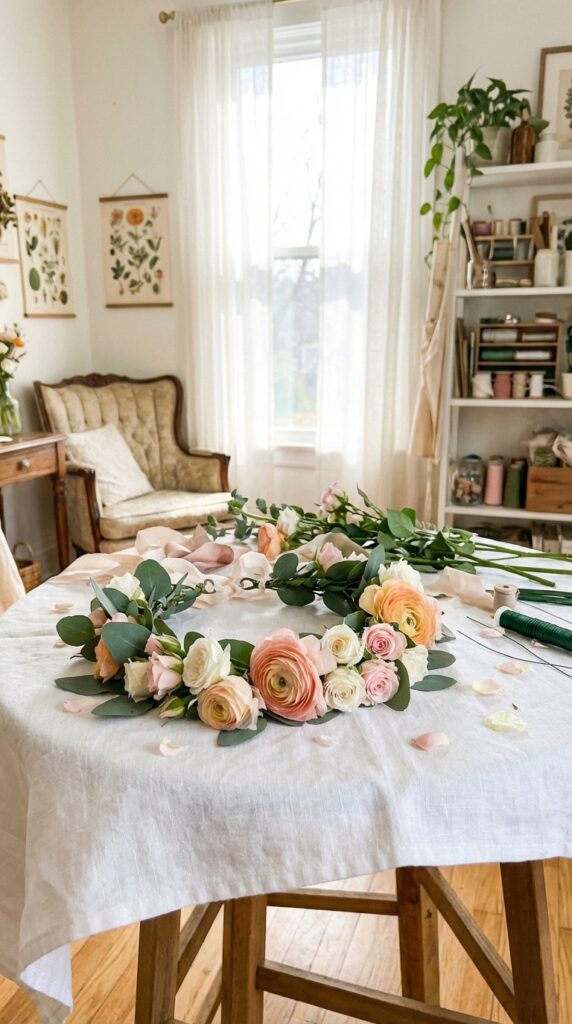
Easter flat lays on Pinterest get serious engagement, and a handmade flower crown makes an incredible prop. But here’s the thing – you can also wear it, display it on a wall hook, or drape it over a basket for decor. Constructing the base: Use floral wire twisted into a circle sized to your head or the object you’re styling. Wrap it in floral tape before attaching anything. Attaching the blooms: Work in sections, attaching small clusters with more floral tape. Use eucalyptus, tiny ranunculus, and spray roses for the best texture mix. Keep the blooms varied in size so it reads as intentional, not accidental.
9. Place a Floral Arrangement Inside a Bird’s Nest Basket
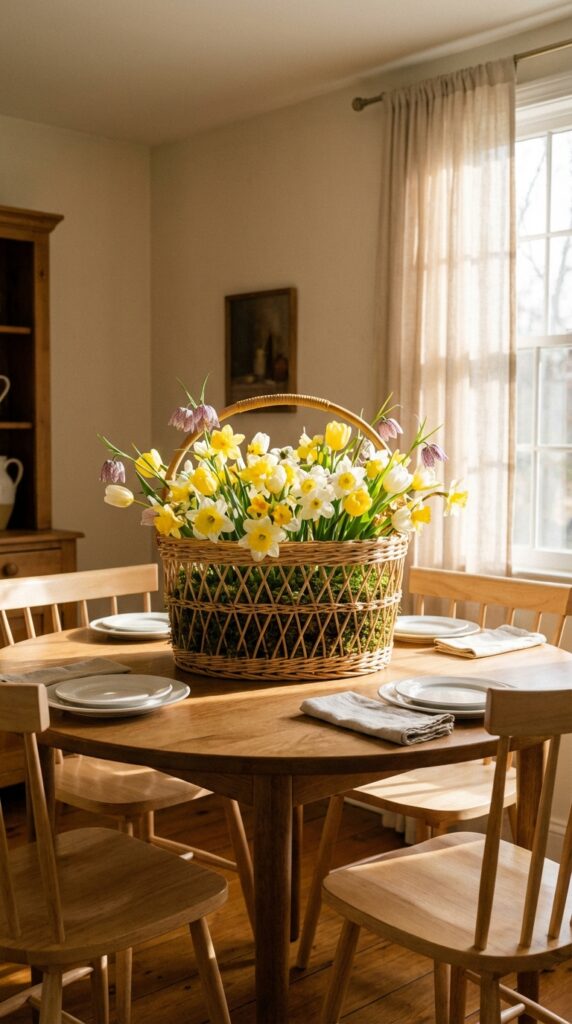
This one leans into Easter symbolism without going full kindergarten-craft territory. A natural wicker basket lined with moss and filled with a loose arrangement of spring blooms creates a centerpiece that feels seasonal without screaming “holiday.”
Choosing the basket: Woven wicker or rattan with an open, airy weave looks most organic. Avoid baskets with stiff, plastic-coated handles – they cheapen the whole look immediately.
Styling the arrangement: Lay a sheet of plastic wrap inside before adding water or a floral foam block, then build your arrangement loosely. Daffodils, tulips, and fritillaria work beautifully together and reinforce the spring-nesting theme subtly.
10. Use Forced Branches as a Dramatic Focal Point
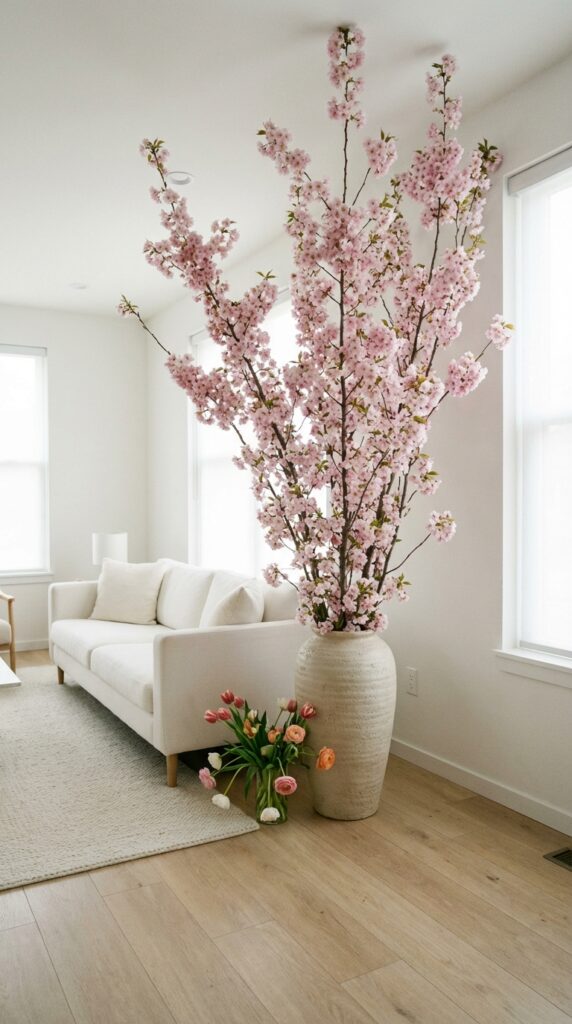
Flowering branches – think cherry blossom, forsythia, or quince – give you drama, height, and movement that cut flowers simply cannot match. And you cut them yourself from the backyard, which makes this arrangement essentially free.
Forcing the branches: Cut branches in early spring while buds are still tight. Place them in warm water indoors, and within one to two weeks, the buds open into full bloom.
Arranging them well: Use a tall, heavy vase – something ceramic or stone – to anchor the branches, because a lightweight vessel tips immediately. Add a few cut blooms at the base to fill in the lower section and tie the arrangement to the room’s color palette.
11. Nestle Small Bud Vases Inside an Egg Carton
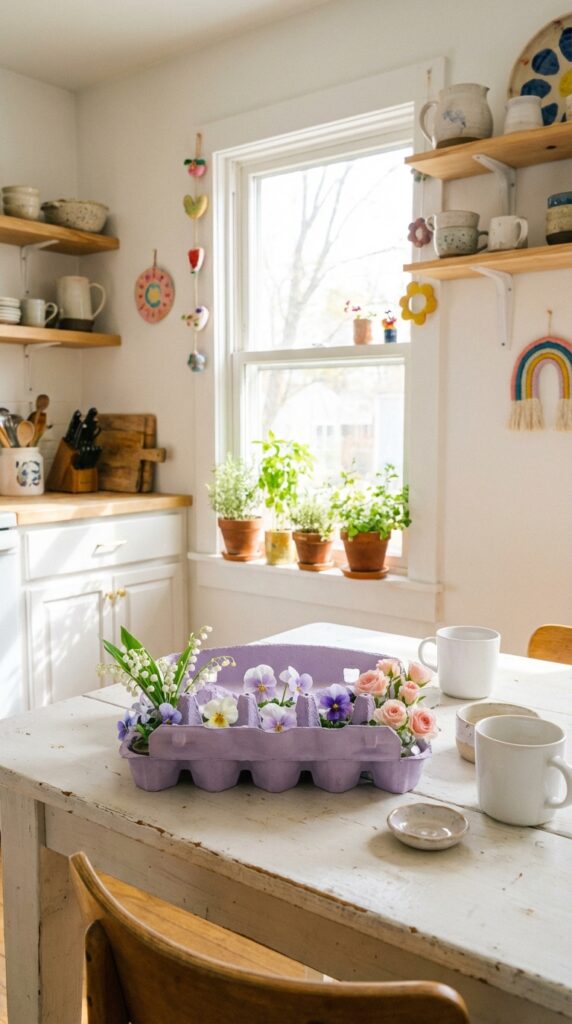
This idea sounds strange until you see it, and then you immediately want to make one. A cardboard egg carton holds twelve small bud vases or even just the eggs themselves filled with water and single stems.
Preparing the carton: Paint the exterior in a matte pastel or leave it natural for a more rustic, craft-paper look. Either way, line each cup with a small amount of waterproof tape before adding water to prevent leaking.
Selecting the blooms: Single stems of lily of the valley, small violas, or tiny spray roses fit perfectly in each cup without overcrowding. The result reads as deliberate and creative rather than accidental.
12. Create a Floral Tablescape With Individual Stem Vases
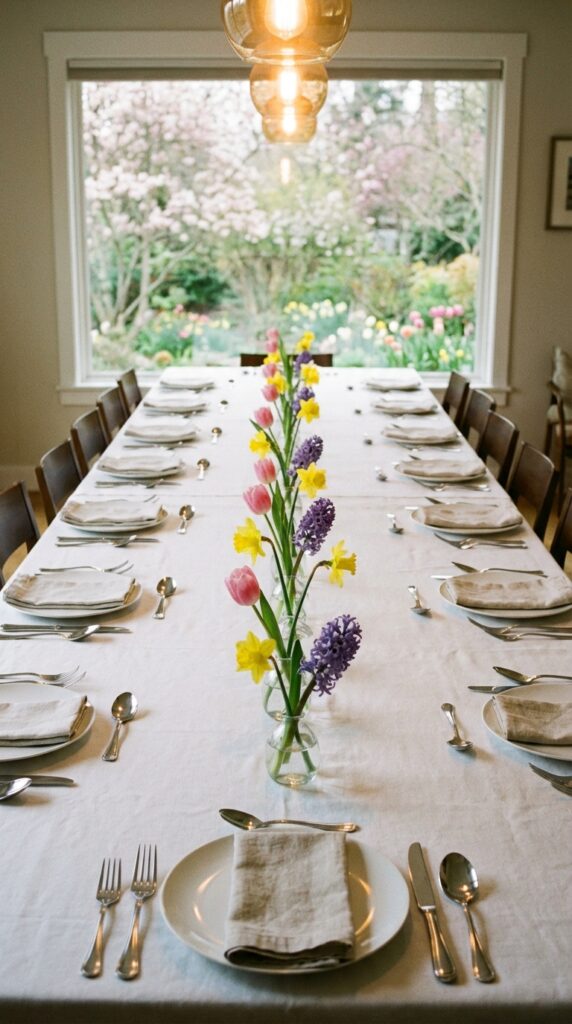
Instead of one big centerpiece that hogs all the visual attention, scatter small individual bud vases down the center of your dining table. Each guest essentially gets their own mini arrangement.
Spacing the vases: Aim for one vase roughly every twelve inches down the table’s length. Vary the heights slightly by choosing vases with different neck lengths.
Mixing the stems: Put one type of flower in each vase rather than arranging each one individually. Alternate between tulips, daffodils, and hyacinths down the line – the repetition creates pattern without monotony. And honestly, this approach saves you significant time compared to building one complex centerpiece.
13. Pair Lavender With White Blooms for a Calm Palette
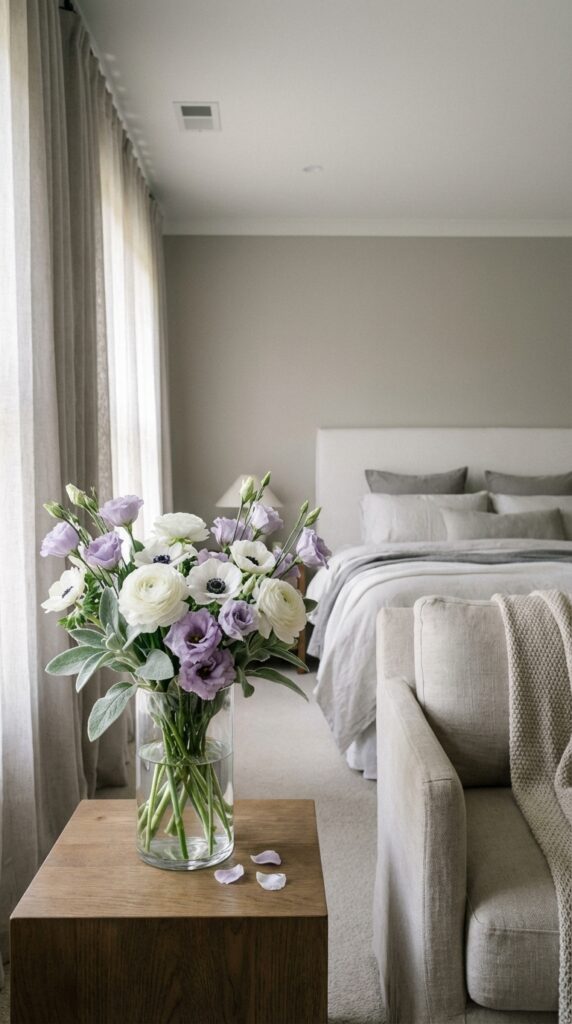
The Easter color palette doesn’t have to mean a rainbow explosion in every room. A restrained combination of lavender and white creates something that feels serene and sophisticated – and it photographs exceptionally well against neutral walls.
Building the palette: Use white ranunculus or white anemones as your base bloom, then add lavender lisianthus or sweet peas to introduce color gradually.
Adding depth: Incorporate silvery-green lamb’s ear leaves as filler – they soften the edges of the arrangement and add textural contrast that keeps the white-and-purple combo from looking flat or bridal.
14. Arrange Hyacinths in a Row of Matching Bud Vases
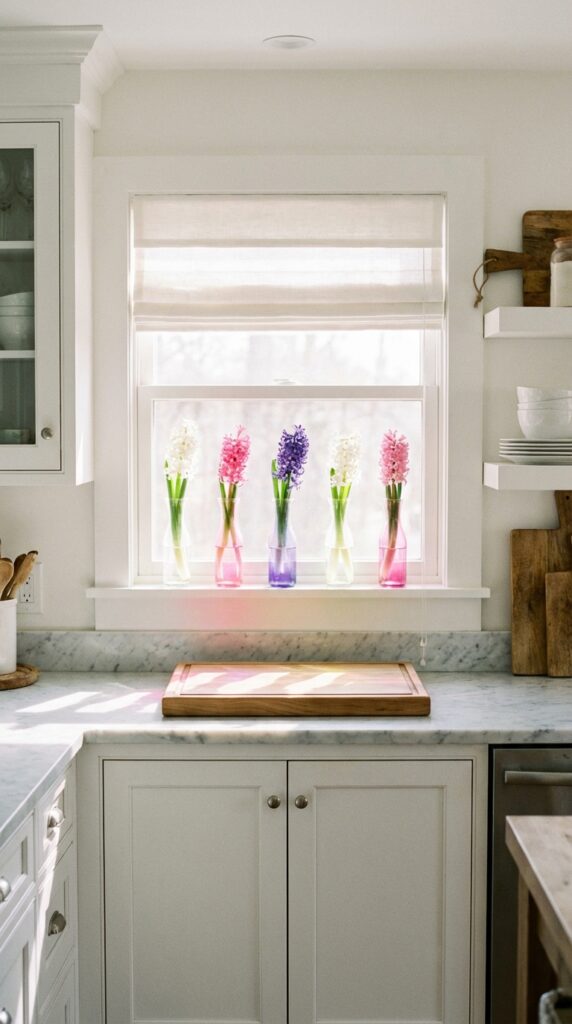
Hyacinths are criminally underused in home decor, probably because people forget they exist outside of potted bulb form. But a single hyacinth stem in a slim glass vase smells extraordinary and lasts longer than most cut flowers.
Sourcing the stems: Cut fresh hyacinths from potted plants at the base with a clean cut and immediately place them in cool water. They transition seamlessly from potted to vase life.
Arranging for impact: Line five matching slim vases in a row on a windowsill or kitchen shelf, each holding one hyacinth stem in alternating colors – white, pink, purple, white, pink. The repetition feels intentional and designed.
15. Add Wildflowers for an Effortless, Just-Picked Look
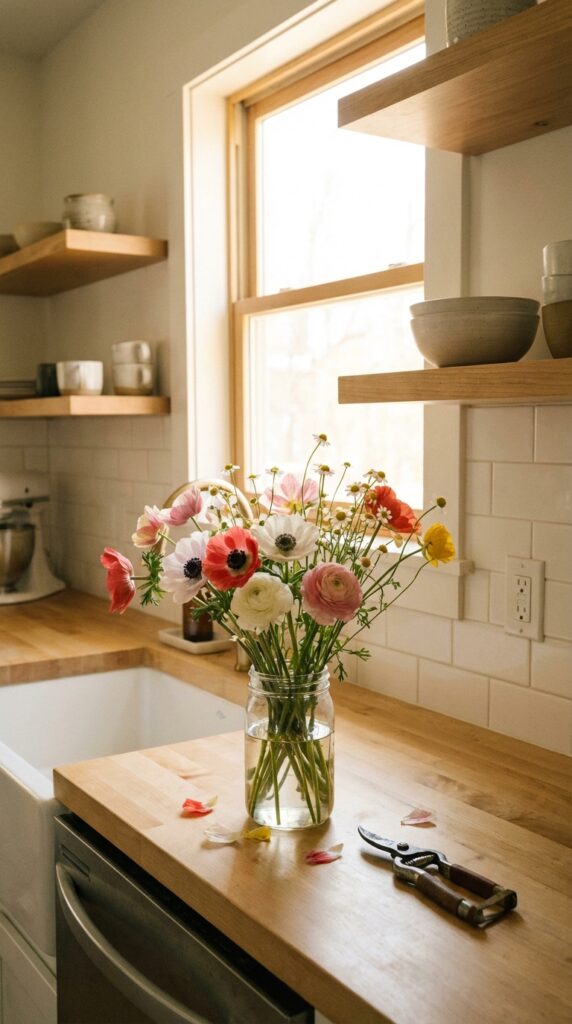
Not everything needs to look formal or engineered. A loose gathering of wildflowers – anemones, poppies, ranunculus, chamomile – tossed into a simple glass jar creates an arrangement that feels genuinely alive and spontaneous.
Buying wildflowers: Farmers markets carry the best selection in spring. Grocery store wildflower bunches work too – just remove any filler greens that look limp or yellowed before arranging.
Styling the jar: Don’t overthink the placement. Fill the jar two-thirds with water, drop the stems in at slightly different heights, and stop there. Over-adjusting a wildflower arrangement removes exactly the natural energy that makes it work.
16. Style a Floral Arrangement With Candles for Evening Ambiance
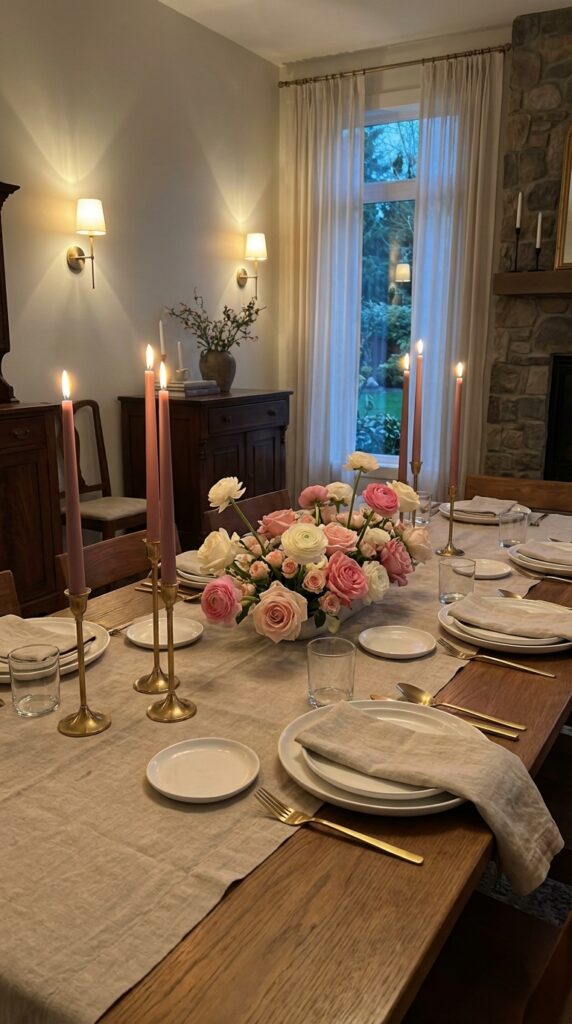
Daytime arrangements look great in natural light – but an Easter dinner table needs something that performs equally well at night. Flowers paired strategically with candles creates warmth that overhead lighting simply cannot replicate.
Choosing candle heights: Use taper candles in tall candlesticks flanking a lower floral centerpiece – this avoids the fire-and-flowers collision problem entirely.
Coordinating the colors: Match your candle color to the secondary hue in your arrangement. If your flowers run pink and white, pull a dusty rose taper. If you’re working with yellows and greens, try a warm ivory or sage candle. The coordination reads as intentional without requiring serious effort.
17. Make a Floral Terrarium With Spring Blooms and Moss
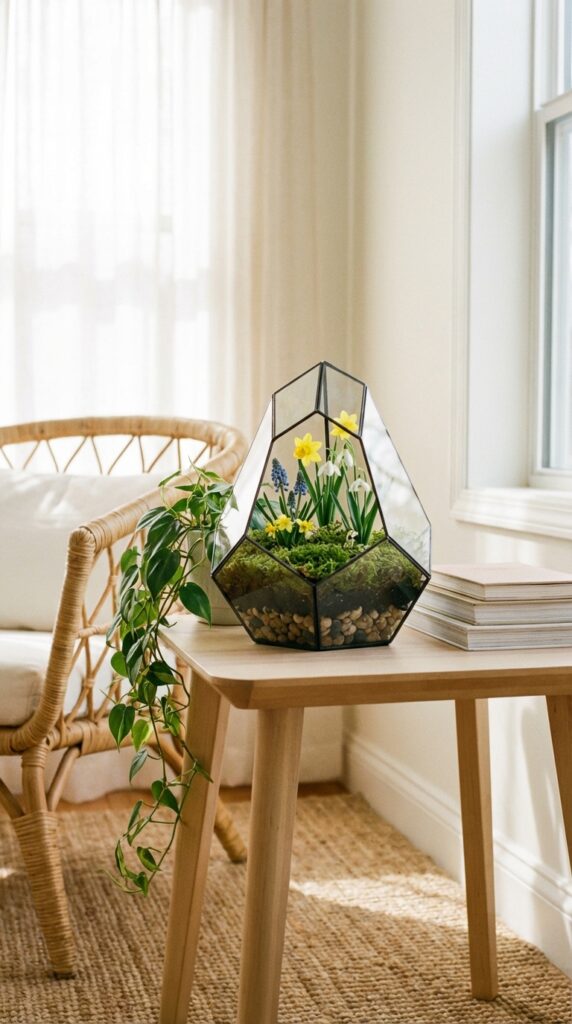
A glass terrarium – even a simple geometric one – becomes a surprisingly sophisticated display when you add moss, small stones, and spring blooms inside.
Setting up the base: Layer small pebbles at the bottom for drainage, add a thin layer of activated charcoal to prevent mold, then pack in damp sheet moss.
Adding the florals: Cut stems very short – you want just the bloom heads nestled into the moss at different angles. Miniature daffodils, muscari, and snowdrops work brilliantly for scale. Keep the terrarium away from direct sun to prevent overheating, and mist the moss every few days to maintain humidity.
18. Hang Bud Vases on a Wall-Mounted Display
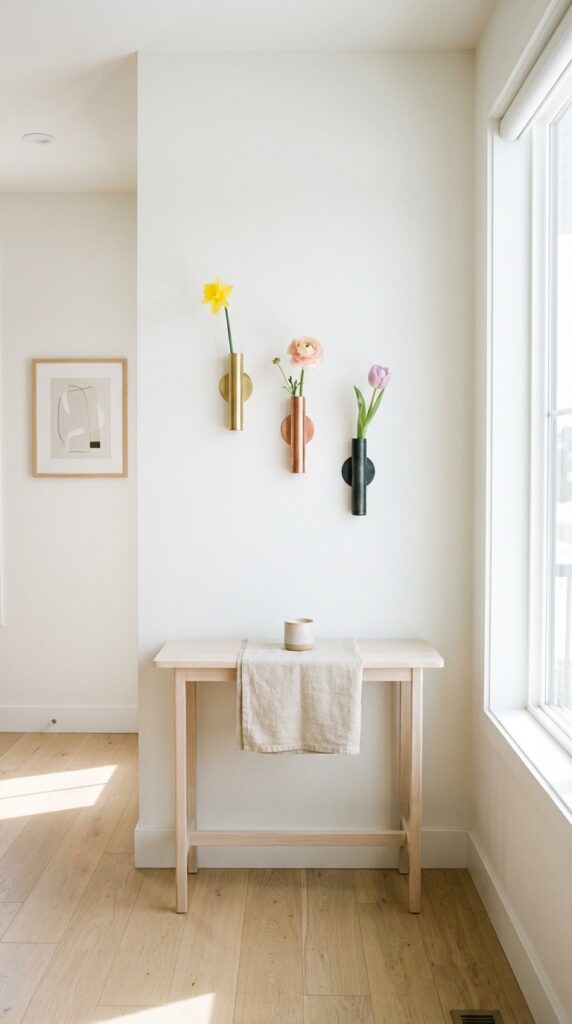
Wall-mounted bud vases have dominated home decor for good reason – they take arrangements vertical and free up every surface in the process.
Choosing the display: Metal wall-mounted bud vase holders come in single, three-vase, and five-vase configurations. The asymmetric three-vase style photographs best – it creates visual interest without looking symmetrical and rigid.
Selecting your blooms: Change these out weekly for maximum impact. In the weeks leading to Easter, run the vases through a rotation of daffodils, ranunculus, and tulips in coordinated pastels. The wall becomes a living, evolving part of your decor rather than a static display.
19. Arrange Potted Bulbs as a Longer-Lasting Alternative
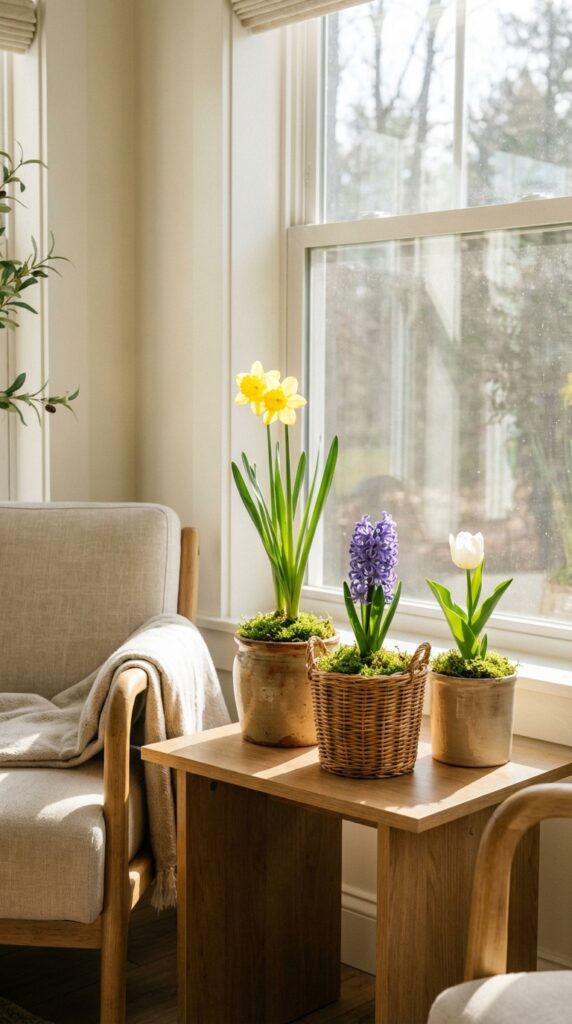
Cut flowers last a week. Potted flowering bulbs last considerably longer and continue growing as you watch – which honestly feels like a better deal.
Best bulbs for Easter: Potted daffodils, hyacinths, tulips, and paperwhites all work beautifully indoors and hit peak bloom right around Easter weekend in most climates.
Styling the pots: Slip plain nursery pots into woven baskets, ceramic cache pots, or even simple paper bags with the tops rolled down. Add a layer of moss on top of the soil to cover the unglamorous root situation underneath. Group three pots together at different heights for a display that reads as intentionally designed.
20. Mix Faux and Fresh Flowers for a Budget-Friendly Display
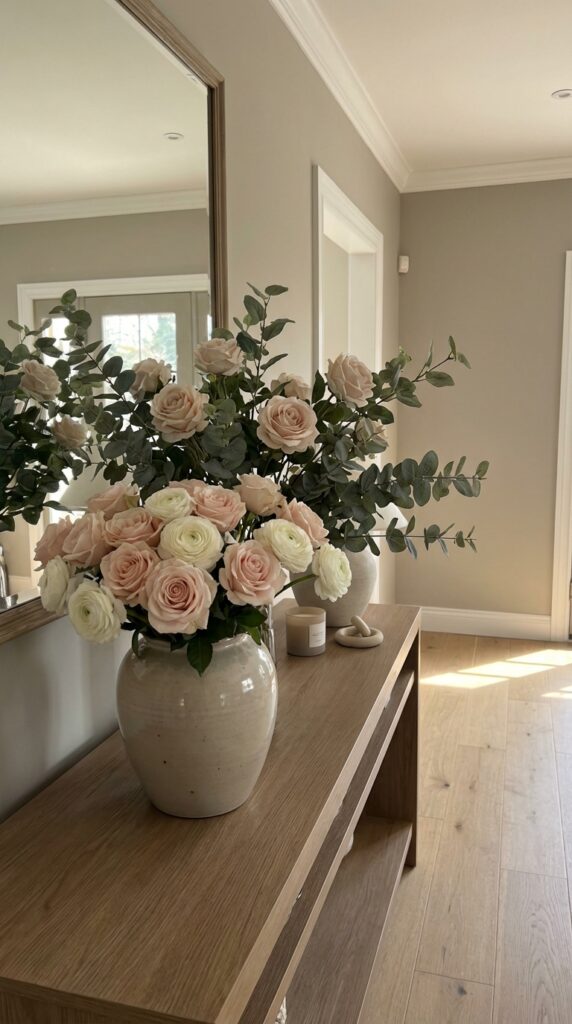
Here’s the honest truth that most decor articles skip: combining high-quality faux stems with fresh flowers cuts your costs dramatically while the arrangement still looks entirely real.
Choosing faux wisely: Only mix faux stems that pass the “squint test” – meaning they look convincingly real from a normal viewing distance. Silk roses and faux eucalyptus both integrate seamlessly with fresh blooms. Plastic daisies with visible seams do not.
Building the arrangement: Place the faux stems toward the back and outer edges of the arrangement where they’re less scrutinized, and put your fresh blooms front and center. Nobody examines the back of a centerpiece. Use this trick confidently.
Bring Spring Inside – Your Home Deserves It
You don’t need a florist’s budget or a designer’s eye to pull off a genuinely beautiful Easter floral arrangement. You need a few good blooms, a clean vase, and the willingness to try something a little outside your usual comfort zone. Start with one idea from this list – just one – and see how much a handful of fresh flowers changes the energy of a room. Spring shows up every year ready to do half the work for you. All you have to do is grab the flowers and get started.
FAQ
What flowers work best for Easter floral arrangements?
Tulips, daffodils, hyacinths, ranunculus, and sweet peas are the top choices for Easter floral arrangements. They bloom naturally in spring, come in perfect pastel shades, and stay fresh for a solid week when you trim the stems properly and change the water every two days. Muscari and fritillaria work beautifully as filler blooms if you want something a little less expected.
How do I make my Easter floral arrangement last longer?
Trim stems at a diagonal cut before placing them in water – this increases the surface area and helps the flower drink more efficiently. Add a copper penny or a small packet of flower food to the vase water. Keep arrangements away from direct sunlight, heating vents, and ripening fruit, which releases ethylene gas that speeds up wilting. Change the water every two days and re-trim the stems each time.
How far in advance can I make an Easter floral arrangement?
Most cut flower arrangements stay fresh for five to seven days, so you can safely build your Easter arrangements two to three days before the holiday. If you use potted flowering bulbs like hyacinths or daffodils instead of cut flowers, you can set those up a full week ahead without any quality loss. Faux-and-fresh mixed arrangements give you even more flexibility since the faux stems never wilt.
What containers work well for Easter floral arrangements besides traditional vases?
Vintage teacups, mason jars, wicker baskets, egg cartons, wide glass bowls, ceramic pitchers, and glass terrariums all make excellent containers for Easter floral arrangements. The key is matching the container style to your existing home decor – a farmhouse kitchen suits a chalk-painted mason jar, while a more formal dining room calls for a clean ceramic vessel. Any waterproof container with the right proportions works beautifully.
Can I create beautiful Easter floral arrangements on a tight budget?
Absolutely. Farmers markets and grocery stores carry affordable spring blooms that work just as well as florist arrangements. Mixing high-quality faux stems with a few fresh flowers cuts costs significantly while the arrangement still looks completely real. Wildflowers gathered loosely in a glass jar cost almost nothing and photograph beautifully. Forced branches cut from your own backyard – forsythia, cherry blossom, or quince – give you dramatic height and impact for free.